
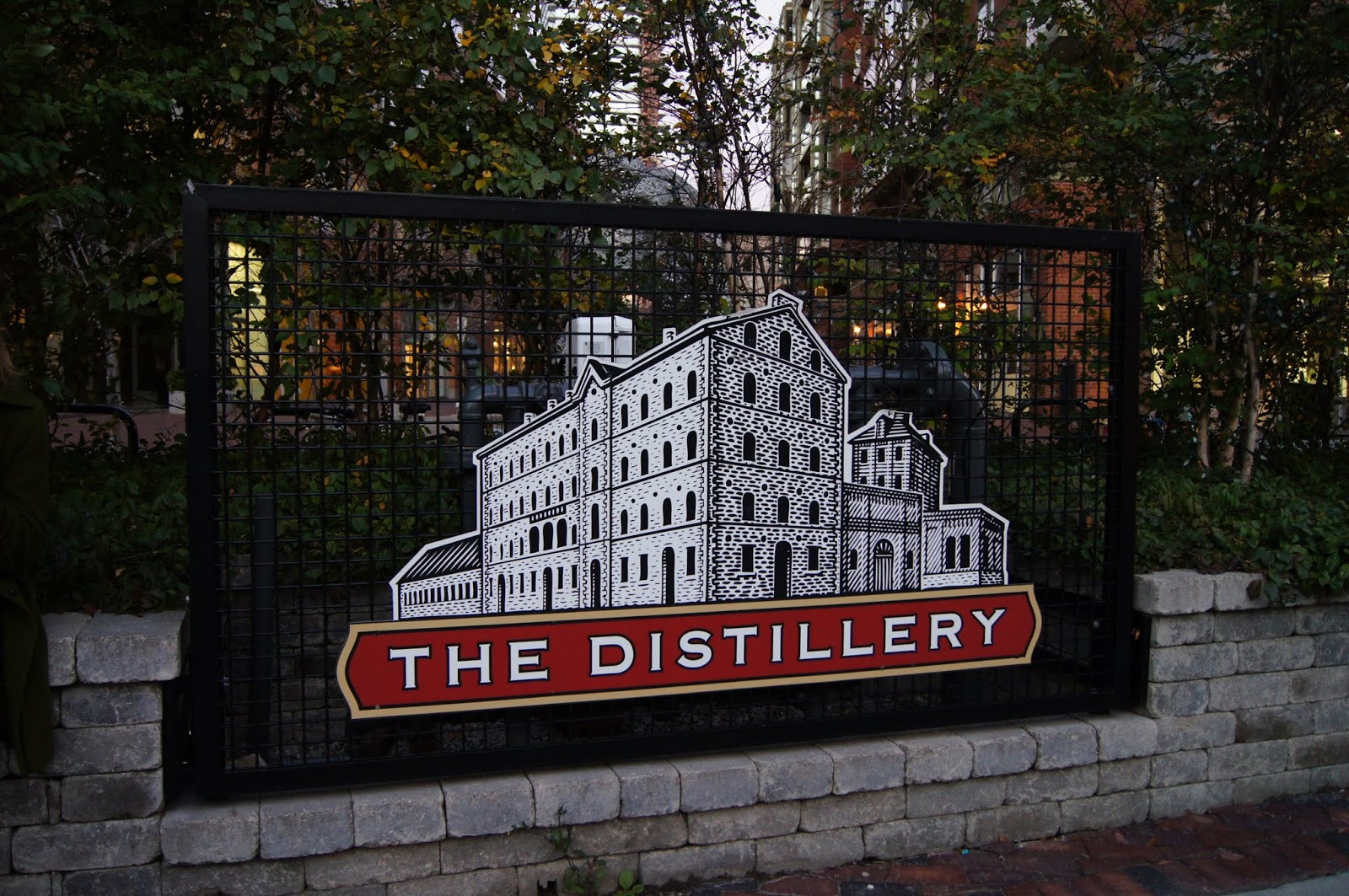
Nestled in the heart of Toronto, on the eastern edge of downtown, is a unique historic district called The Distillery Historic District. It is a place where magnificent 19th century Victorian industrial architecture blends seamlessly with dynamic contemporary art to create a unique cultural space that attracts both locals and tourists from around the world.
Historical heritage: from distillery to cultural center
The history of Distillery Quarter dates back to 1832, when English immigrants and relatives by marriage, James Worths and William Gooderham, built a 22-foot brick windmill on the edge of Toronto Bay. This modest facility soon grew into one of North America’s largest distilleries, the Gooderham & Worts Distillery.

Between 1859 and 1861, Gooderham & Worts built one of the most modern distilleries in Canada at the time, capable of producing over two million gallons of whiskey per year. The oldest surviving building in the complex is the Stone Distillery, built in 1859. The buildings were designed by father and son, David Roberts Sr. and David Roberts Jr. who created a harmonious ensemble of Victorian-era industrial structures.
The Gooderham & Worts Distillery continued to operate throughout the twentieth century until it was acquired by Hiram Walker in 1927. Eventually, the production of spirits in the original buildings ceased and by the end of the twentieth century the area was deserted. For a time, the area was known as a popular location for movie shoots due to its atmospheric industrial landscapes.
A turning point in the neighborhood’s history came in 2001, when a group of entrepreneurs led by John Berman purchased the area from a British pension fund for $10 million. Berman had an idea to turn the industrial buildings into a center for arts, culture and entertainment.
“We said we would build a neighborhood that everyone would want to live next to. And then people would follow us,” recalled John Berman, principal of Cityscape Development Corp. which owns the neighbourhood with real estate company Dream. CBC News
Despite the skepticism of many experts who argued that a pedestrian-friendly district not surrounded by offices or other retail areas didn’t make sense, Berman and his partners decided to act quickly. In a record 13 months, they restored the buildings, preserving the original materials and architectural elements as much as possible. The Historic Distillery Quarter officially opened on May 22, 2003 and today is one of Toronto’s top tourist attractions.
Architectural splendor: Victorian industrial heritage
The Distillery Quarter covers an area of approximately 5.3 hectares and includes more than 40 historic buildings and 10 streets. It is the largest and best-preserved collection of Victorian industrial architecture in North America and is recognized as a National Historic Site of Canada.

The architectural ensemble of the district is characterized by a remarkable harmony and unity of style. The red brick and cast iron buildings, erected between 1864 and 1927, are outstanding examples of Victorian industrial construction. Of particular note are:
- TheStone Distillery Building, the oldest building in the complex, built of limestone in 1859. Its massive structure and semi-circular windows are a fine example of mid-19th century industrial architecture.
- TheTank Houses are several red brick buildings built in 1889 to store liquor during the aging process. They were later converted into Rack Houses.
- Cobblestone Streets – All roads and alleys in the neighborhood are paved with the original stone paving stones, which creates a unique atmosphere of antiquity.
- Cast Iron Elements – decorative and functional cast iron details, including columns, staircases and balconies that give the buildings a distinctive character.
- Theclock tower is one of the architectural dominants of the district and served as a landmark for ships entering Toronto Bay.
In restoring the neighborhood in the early 2000s, architects and craftsmen sought to preserve as many original elements as possible. As architect Jamie Goad recalls, they reused many materials from the area, such as the wood that used to hold the barrels went into making windows.
Architect Jamie Goad notes: “Two hundred years later, we still look at these buildings and say, ‘This is incredible.’ It’s a testament to the talent of Gooderham and Worths that they invested in creating something that has stood the test of time.” CBC News
Modern buildings constructed in the neighbourhood blend into the historic context through the use of comparable materials and proportions. For example, residential condominiums built over the original brewery frame retain Victorian architecture while adding modern amenities.
Contemporary art: transforming an industrial space
Today, the Distillery Quarter is a vibrant cultural center where the historic past meets contemporary art. The district has become an art lover’s paradise with numerous galleries, artists’ studios, theaters and exhibition spaces.

Some of the neighborhood’s most prominent art venues include:
- Thompson Landry Gallery, one of the area’s leading galleries specializing exclusively in Quebec art. Housed in two historic buildings – Cooperage Space (4,300 square feet) and Stone Distillery (2,700 square feet) – the gallery features works by both established masters and a new generation of contemporary Quebec artists. The venue has been called the “Temple of Quebec Art” in Toronto.
- Arta Gallery is a contemporary art gallery in the heart of the historic Distillery Quarter. Founded in 2003 by Faye Atari Aghdashlou, the gallery offers an impressive collection of contemporary art by Canadian and international artists. It regularly hosts exhibitions and events dedicated to contemporary art.
- Corkin Gallery is a gallery featuring works by both Canadian and international artists. Photography and contemporary art are emphasized.
- Outdoor Sculptures – Numerous sculptures and installations created by contemporary artists can be found throughout the neighborhood. They blend seamlessly into the historic landscape, creating an interesting contrast between past and present.
- TheYoung Center for the Performing Arts is the home stage for Soulpepper Theatre Company and other theater groups. Housed in a converted historic building, the Center offers a variety of plays, concerts and performances.
Gideon Arthurs, executive director of Soulpepper Theatre Company and the Young Center for the Performing Arts, notes the transformation of the neighborhood: “The main difference now is that this place once felt like an island and now it’s become part of the fabric of the city.” CBC News
The Distillery Quarter has become a center of gravity for artists, designers, jewelers and other creative professionals who open studios and workshops here. This creates a unique ecosystem where creativity and innovation thrive within historic walls.
Cultural life: festivals, events and impact on the city
The Distillery Quarter is not only home to permanent exhibitions and galleries, but is also the site of numerous cultural events and festivals that attract thousands of visitors throughout the year:

- Distillery Winter Village (formerly known as Toronto Christmas Market) is one of the most popular Christmas markets in Canada, held annually from mid-November to early January. The festive atmosphere, decorations, booths with handmade gifts, hot drinks and seasonal treats transform the historic district into a true winter fairy tale.
- Art After Hours – An evening event during which area galleries open their doors late, offering visitors special exhibitions, live demonstrations of the creative process and interactive art events.
- Toronto Light Festival – An annual winter event that transforms the neighborhood into an outdoor gallery of light installations. Works by local and international artists illuminate dark winter nights, creating a magical atmosphere.
- Summer Music Series – outdoor concerts that take place during the warmer months of the year in the neighborhood.
- Artfest Toronto – an annual arts festival showcasing the work of over 75 artists and artisans from across Canada.
The Distillery Quarter’s impact on Toronto’s cultural life cannot be overstated. It has been an example of the successful revitalization of a historic industrial district and its transformation into a world-class cultural center. This experience has inspired similar projects in other parts of the city and beyond.
The neighborhood has also contributed to the gentrification of the surrounding areas and increased interest in the city’s historic and cultural heritage. As the developers noted, their goal was to create “a neighborhood that everyone would want to live next to” – and that goal was achieved. Today, the Distillery Quarter neighborhoods are prestigious residential areas with modern condominiums and developed infrastructure.
Balancing the past and the future: challenges and achievements
Transforming an abandoned industrial area into a thriving cultural center is a success story, but the process was not without challenges and compromises. Developers and architects faced the challenge of preserving the historic integrity of the buildings while adapting them for modern use.

One of the key principles of the restoration was to minimize interference with the original structures. Where possible, original brick walls, wood floors and ceilings, cast iron columns and other historic elements were preserved. Where materials had to be replaced, authentic techniques and materials appropriate to the era of construction were used.
Modern additions such as HVAC systems and wiring were integrated in a manner that minimized their visual impact on the historic interiors and exteriors. This required innovative engineering solutions and close collaboration between architects, engineers and architectural historians.
As Jamie Goad notes, “Many people say that insufficient funds actually contribute to the creation of good architectural heritage restoration.” This observation reflects an important aspect of the project – the limited budget forced the developers to be resourceful and frugal, which often resulted in more authentic and creative solutions.
Author Information

I’m a journalist specializing in urban issues and city politics in the Vancouver region, which I’ve covered since 1994, and I also have a strong focus on the iGaming industry. In this endlessly changing city, I cover a broad range of issues: from drug policy, bike lanes, billion-dollar development projects, homelessness, and garbage debates, to the rapidly evolving world of online gaming, including regulatory landscapes, technological advancements, and market trends. I write frequently for the Globe and Mail’s B.C. section and Report on Business. From 2008 to 2015, I had a regular column in Vancouver magazine, “Urban Fix,” which apparently resonated with readers so much that it earned me a few regional and national awards.
