
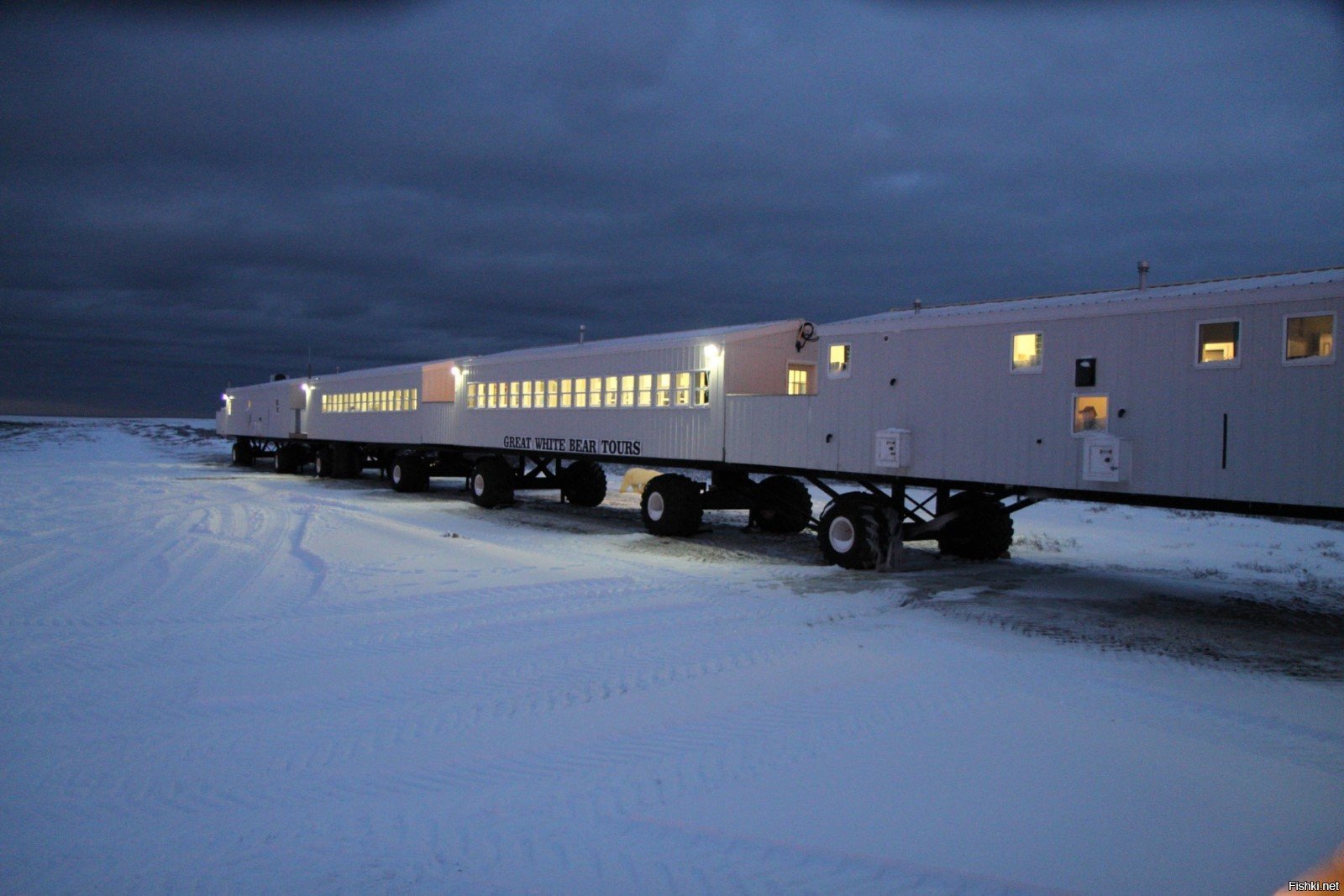
There are many exciting rail routes around the world, but only a few offer travelers the opportunity to get in touch with true Arctic wildlife. The Polar Bear Express, which runs between Winnipeg and Churchill in the Canadian province of Manitoba, is widely regarded as one of the most unique rail adventures in North America, leading to the heart of the “Polar Bear Capital of the World.”
The story behind the special route
Rail service to the remote Arctic town of Churchill has deep historical roots. Construction of the Hudson Bay Railway began as early as 1910, but was not completed until 1929. The line was created to provide transportation of grain from the Canadian prairies to the deep-water port of Churchill on the shores of Hudson Bay.
Today, the modern VIA Rail train that runs along this route is officially called the Winnipeg-Churchill train, although in the past it was known as the Hudson Bay or Northern Spirits. Despite the advent of air service, the train remains the only overland connection between Churchill and the rest of Canada, making it not just a tourist attraction but a vital transportation artery for the local community.

A railroad through three climate zones
Traveling on the Polar Bear Express is an impressive 1,697-kilometer adventure that takes approximately 48 hours and includes two nights on the road. The route winds through three distinct climate zones: starting in the Manitoba prairies, the train gradually penetrates the boreal forests before emerging to the rugged Arctic tundra.
During this journey, passengers can observe the dramatic changes in the landscape outside the window. The golden wheat fields of southern Manitoba gradually give way to dense coniferous forests studded with countless lakes and bogs. As you move north, the trees get lower and lower and then virtually disappear, revealing a harsh and beautiful world of tundra with vast expanses of moss, lichens and stunted shrubs.
The train leaves Winnipeg twice a week – Tuesdays and Sundays at 9:00 am. Along the way, it makes stops at several small communities including Thompson and Gillam before reaching its terminus in Churchill.
Travel Comfort
Even though the route passes through some of the most remote areas of Canada, VIA Rail provides passengers with the comfort they need. The train offers several classes of service, the most popular of which is the Sleeper Plus. This class includes a cozy private compartment with seats that transform into comfortable beds for the night. Each compartment is equipped with its own sink and toilet, and shared showers are available in each coach.
Meals on board are organized in the style of traditional rail travel. Three meals a day are included in the price of Sleeper Plus class tickets, and meals are served in the elegant dining car. Menus often include regional Canadian specialties and seasonal produce.
It’s important to note that cell phone service is often unavailable throughout the journey and Wi-Fi is not provided – but this only emphasizes the remoteness of the route and allows passengers to truly disconnect from the hustle and bustle of everyday life and immerse themselves in contemplating the northern landscapes outside the window.

Churchill – a city on the edge of the Arctic
After two days of travel, the Polar Bear Express arrives in Churchill, a small town of less than 900 people on the western shore of Hudson Bay. Despite its modest size, Churchill is world-renowned for its unique location on the polar bear migration route.
The city sits at a peculiar crossroads of ecosystems, from boreal forests to tundra to seashore. This makes it an ideal place to observe not only polar bears, but also other Arctic species. Depending on the season, visitors can see polar bears, beluga whales, Arctic foxes, polar owls and many other northern fauna.
Churchill’s history is rich and multi-layered. Long before the arrival of Europeans, the area was home to the Inuit and Denver peoples. In 1717, the Hudson’s Bay Company built the Prince of Wales Fort here, which still stands today and is an impressive historical monument. Today, visitors can take a guided tour of the fort from Parks Canada and learn about the early years of European colonization.

Hudson Bay Polar Bears
Churchill’s main attraction is undoubtedly the polar bears. Each fall, from October to early November, hundreds of these majestic animals gather along the coast waiting for the waters of Hudson Bay to be covered with ice, allowing them to go out to hunt for seals.
This unique ecological feature is related to the melting and freezing cycle of Hudson Bay. By mid-summer, the ice in the bay completely melts, forcing the bears to come ashore. During the summer months, they live off their accumulated fat reserves, as they cannot hunt their primary prey, ringed seals, without ice cover. As fall arrives and temperatures drop, bears begin to congregate along the coast, preparing to return to the ice as soon as it becomes strong enough.
This annual phenomenon has set the stage for ecotourism in Churchill. Special tall all-terrain vehicles with large wheels, known as Tundra Buggy’s, are used to safely observe bears. These vehicles allow tourists to observe wild polar bears at close range without endangering people or animals.

The Western Hudson Bay polar bear population is one of the most studied in the world. Unfortunately, recent studies show a disturbing downward trend in their numbers – according to a 2021 study, there are about 618 bears in Western Hudson Bay, down 27% from five years ago. This decline is attributed to climate change and a shorter period when the bay is covered in ice, limiting the time available for bears to hunt.
Churchill’s seasons: not just polar bears
Although Churchill is best known for its polar bears, each season here offers unique wildlife viewing opportunities.
Summer (June-August): It’s beluga whale time, when some 60,000 of these amazing marine mammals gather at the mouth of the Churchill River and Hudson Bay to breed. Visitors can take boat tours, kayak tours, or even dive into the water in special Arctic wetsuits to get a closer look at these friendly “sea canaries” (so named for their vocal abilities).
Fall (September-November): Polar bear season begins in late October and runs through mid-November. This is the most popular time to visit Churchill, when dozens of bears can be seen waiting for ice to form.
Winter (December-March): After the ice forms, most bears head out to sea, but winter Churchill offers other unique experiences. It’s an ideal time to see the northern lights (Aurora Borealis), which often illuminate the night sky with their mesmerizing green, purple and red light. Churchill is located directly below the auroral oval, making it one of the best places in the world to observe this phenomenon.
Spring (April-May): This is the time of year when the tundra comes alive after a long winter. Melting snow reveals mosses and lichens, the first flowers appear, and migratory birds return in late May. It’s also a time to see other Arctic animals, including caribou and Arctic foxes.

Trip Planning
Traveling to Churchill on the Polar Bear Express requires careful planning. Here are some important tips:
- Book early: Especially if you plan to visit Churchill during polar bear season (October-November), train tickets and accommodations should be booked months inadvance.
- Choose the right season: Depending on whether you want to see polar bears, beluga whales or the northern lights, choose the appropriate time of year.
- Prepare for the weather: Even in summer, it can be chilly in Churchill, and temperatures can drop to -40°C in winter. Bring appropriate clothing including warm waterproof jackets, thermal underwear, hats and gloves.
- Join an organized tour: Independent travel around Churchill is limited due to the risk of encountering polar bears. Most visitors opt for organized tours with experienced guides.
- Calculate your budget: Traveling to Churchill is not cheap. Sleeper Plus class train tickets start at $350 one way. Polar bear watching tours can cost between $400 and $500 per day. Accommodations during the season are also more expensive than usual.
Unique experiences and sustainable tourism
Traveling on the Polar Bear Express is not just an opportunity to see Arctic wildlife, but also a chance to learn about the region’s delicate ecological balance and the importance of conservation. Many tour operators in Churchill partner with organizations, such as Polar Bears International, that research and protect polar bears.
Visitors can learn about the effects of climate change on Arctic ecosystems and how the Churchill community is working to promote sustainable tourism that benefits both the local economy and the environment.
At the same time, it’s important to remember that Churchill is not only a tourist destination, but also home to people, many of whom are indigenous with a rich cultural heritage. Visiting cultural centers and museums, such as the Itsanitaq Museum with its impressive collection of Inuit art, provides a deeper understanding of the cultural context of the region.
Author Information

I’m a journalist specializing in urban issues and city politics in the Vancouver region, which I’ve covered since 1994, and I also have a strong focus on the iGaming industry. In this endlessly changing city, I cover a broad range of issues: from drug policy, bike lanes, billion-dollar development projects, homelessness, and garbage debates, to the rapidly evolving world of online gaming, including regulatory landscapes, technological advancements, and market trends. I write frequently for the Globe and Mail’s B.C. section and Report on Business. From 2008 to 2015, I had a regular column in Vancouver magazine, “Urban Fix,” which apparently resonated with readers so much that it earned me a few regional and national awards.
