
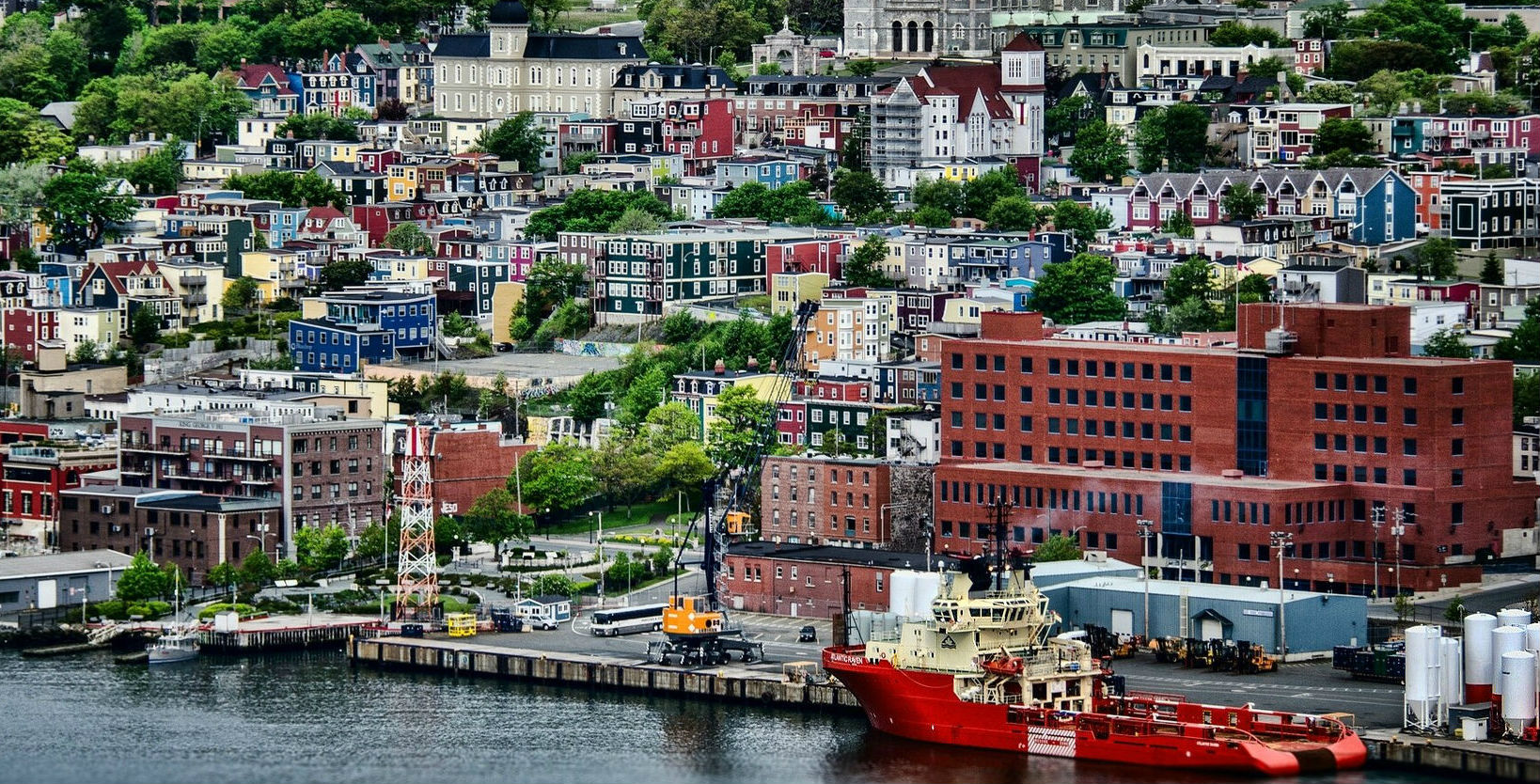
At the easternmost point of the Canadian continent, on the island of Newfoundland, lies the amazing city of St. John’s, the capital of the province of Newfoundland and Labrador. This small picturesque city of about 110,500 people has a rich history and unique culture, and its unique look with brightly colored houses has made it one of the most photogenic places in Canada.
History: the origins of the European presence in North America
St. John’s is not just an old town – it is one of the oldest European settlements on the North American continent. Its history begins at the end of the XV century, when the Italian navigator in the English service John Cabot (Giovanni Caboto) supposedly reached these shores on June 24, 1497, on the feast day of St. John the Baptist, after whom the city was named.
The first permanent residents settled here in the early 16th century, about a decade after the discovery of America by Columbus. The official date of the city’s foundation is August 5, 1583, when English explorer Humphrey Gilbert declared Newfoundland a possession of the British Empire. For many decades afterward, however, the town’s population was seasonal – most residents were fishermen who came here only for the summer season.
Throughout its turbulent history, St. John’s has repeatedly been the site of clashes between European powers. The city survived attacks by the Dutch in 1665 and 1673, and was twice captured and destroyed by the French in 1696 and 1708. The last major military engagement took place here in 1762, during the Seven Years’ War, when the British recaptured the town from the French at the Battle of Signal Hill.
From 1907 to 1949, St. John’s was the capital of the Dominion of Newfoundland, a formally independent state within the British Empire until a referendum made Newfoundland part of Canada.

Jellybean Row: the city’s rainbow-colored calling card
St. John’s trademark, which has made it world famous, is the colorful houses of Jellybean Row. These bright buildings, painted in all colors of the rainbow, create a unique image of the city and attract tourists from all over the world.
Contrary to popular belief, “Jellybean Row” is not the name of a particular street, but a collective designation for all the colorful houses in the city center, located on different streets and alleys. Walking along the narrow, winding streets of downtown St. John’s, you will see a magnificent palette of colors: pastel pinks, bright blues, sunny yellows, rich greens and many other shades.
There are several versions of the origin of this colorful tradition. According to one legend, the bright coloring of houses helped fishermen to find their homes more easily when returning from the sea in foggy weather. Another version says that if a person got too carried away at the local pub, the bright color of the house helped them find their way home. A third version claims that the inhabitants simply used whatever paint was available in this remote region.
The historical truth, however, is more prosaic. The mass tradition of bright colors appeared relatively recently, in the 1970s, as part of a downtown revitalization program. The initiative was so successful that it has become a hallmark of St. John’s and an integral part of its identity.
Each home in Jellybean Row is unique not only for its coloring, but also for its architectural details. Many are decorated with intricate carvings, whimsical fish-shaped doorknobs, round picture windows, and other nautical motifs that reflect the city’s connection to the ocean.

Architecture and cityscape
St. John’s is situated on steep hills that slope down to a natural harbor, giving the city an extra scenic feel. The downtown area has retained its historic layout with narrow, winding streets that, as legend has it, were originally laid out along routes traced by horses and carriages.
Most of the historic buildings we see today were built after the Great Fire of 1892, which destroyed two-thirds of the city. Despite this, architects have maintained the traditional style of the colonial era, and many of the houses are built in the typical Newfoundland fisherman’s cottage style.
The row houses typical of Jellybean Row are tightly packed structures, sometimes sharing a common wall. This design was practical in northern climates because it saved heat and also maximized the use of limited space on steep slopes.
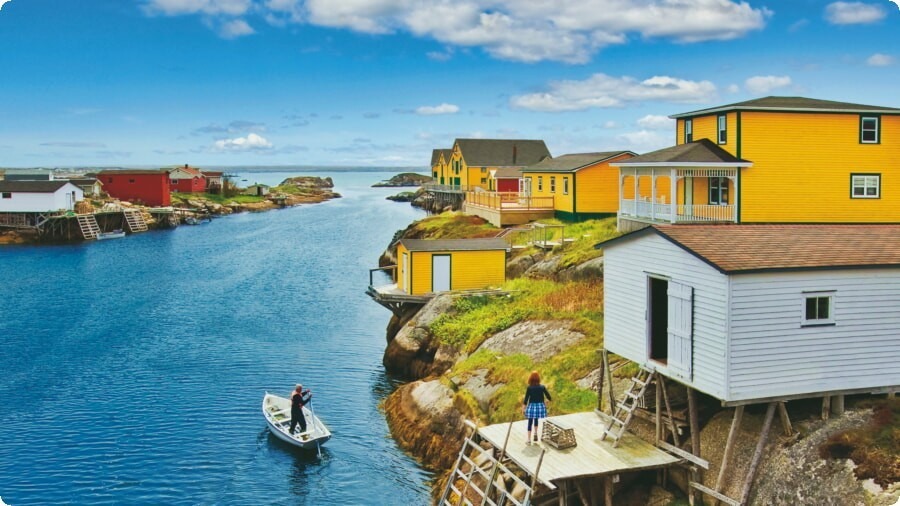
St. John’s Cultural Heritage
St. Johns is known not only for its colorful homes, but also for its rich cultural life, shaped by its unique history and geographic location.
Cultural Diversity
Although the city’s main population has Anglo-Irish roots, the influence of different cultures is evident in the historical panorama of St. John’s. Over the centuries, the paths of English, French, Portuguese and Irish sailors and settlers have crossed here. This blend of cultural traditions is reflected in the local cuisine, music, architecture and festivals.
Musical Traditions
Music plays an important role in the cultural life of the city. Newfoundland folklore, primarily folk songs, has retained many elements of Irish and English tradition. In the city’s many pubs you can hear live performances of traditional music – fiddle, accordion and percussion instruments create a distinctive sound to which local dances are often performed.
Culinary traditions
The cuisine of St. John’s, like that of all of Newfoundland, is traditionally based on seafood. Cod has historically been the main commercial fish species and is still an important part of the local gastronomy. Popular dishes include Newfoundland-style fish-and-chips, jiggs dinner (a traditional Sunday corned beef and vegetable dish), and mussel, shrimp and lobster dishes.
Historical Sights
In addition to colorful homes, St. John’s boasts many historic landmarks:
- Signal Hill, an elevatedhill that offers panoramic views of the city and harbor. This is where Guglielmo Marconi received the first transatlantic radio signal in history in 1901.
- Cabot Tower – located on Signal Hill and built to commemorate the 400th anniversary of John Cabot’s discovery of Newfoundland.
- Cape Spear – the easternmost point in North America, home to a historic lighthouse.
- The Rooms is a modern cultural complex including a museum, archive and art gallery that showcases Newfoundland’s history and culture.

Modern city life
Today, St. John’s is not only a historic site, but also a dynamic city that is the economic and cultural center of the province of Newfoundland and Labrador.
New industries have replaced the traditional fishing industry, which has long been the backbone of the city’s economy. St. John’s is now the main service center for the province’s offshore oil and gas industry. The service industry, education and, of course, tourism also play a significant role in the economy.
The city is known for its rich cultural life. Music and theater festivals, art exhibitions and literary readings are regularly held here. St. John’s distinct local flavor attracts creative people from all over Canada, contributing to the development of local arts and preservation of cultural traditions.
Author Information

I’m a journalist specializing in urban issues and city politics in the Vancouver region, which I’ve covered since 1994, and I also have a strong focus on the iGaming industry. In this endlessly changing city, I cover a broad range of issues: from drug policy, bike lanes, billion-dollar development projects, homelessness, and garbage debates, to the rapidly evolving world of online gaming, including regulatory landscapes, technological advancements, and market trends. I write frequently for the Globe and Mail’s B.C. section and Report on Business. From 2008 to 2015, I had a regular column in Vancouver magazine, “Urban Fix,” which apparently resonated with readers so much that it earned me a few regional and national awards.
