

On the east coast of Canada, on Cape Breton Island in the province of Nova Scotia, lies one of the most impressive historical monuments in North America, Fortress Louisbourg. This large-scale reconstruction of a French colonial fortress of the XVIII century is a unique example of military-defensive architecture and a living testament to the uneasy relations between European powers in their struggle for influence in the New World. Fortress Louisbourg is not just an open-air museum, but an entire revitalized city where history comes alive and allows visitors to immerse themselves in the atmosphere of French colonial life in the 18th century.
History of Louisbourg’s founding
French presence in North America
Louisbourg’s history is inextricably linked to French colonial policy in North America. In the early eighteenth century, the confrontation between France and Great Britain for dominance in the New World reached a peak. After the end of the War of the Spanish Succession and the signing of the Treaty of Utrecht in 1713, France was forced to cede to Great Britain a significant part of its North American possessions, including Newfoundland and Acadia (modern Nova Scotia). Only the islands of Cape Breton (then called Ile Royale) and Prince Edward Island (Ile Saint-Jean) remained at the disposal of the French crown on the Atlantic coast.
Under these circumstances, the French government made a strategic decision to strengthen its presence in the remaining territories and to establish a powerful naval base capable of protecting France’s vital interests in the region. Key objectives were to protect the entrance to the Gulf of St. Lawrence leading to Quebec and Montreal, and to secure control of the rich fisheries of the Grand Banks of Newfoundland.
Founding of the settlement
In 1713, French settlers from Newfoundland established a small settlement on the southeast shore of Cape Breton Island, originally called Havre à l’Anglois. The location was not chosen by chance – the well-protected, ice-free harbor provided ideal conditions for the establishment of a port city and a naval base.
In 1719, construction of fortifications began and the settlement was renamed Louisbourg in honor of French King Louis XIV. Over the next 20 years, extensive defenses were erected here, including fortress walls, bastions and batteries. By the late 1730s, Louisbourg had become a well-fortified city and one of the most important French outposts in North America.
The strategic importance of the fortress
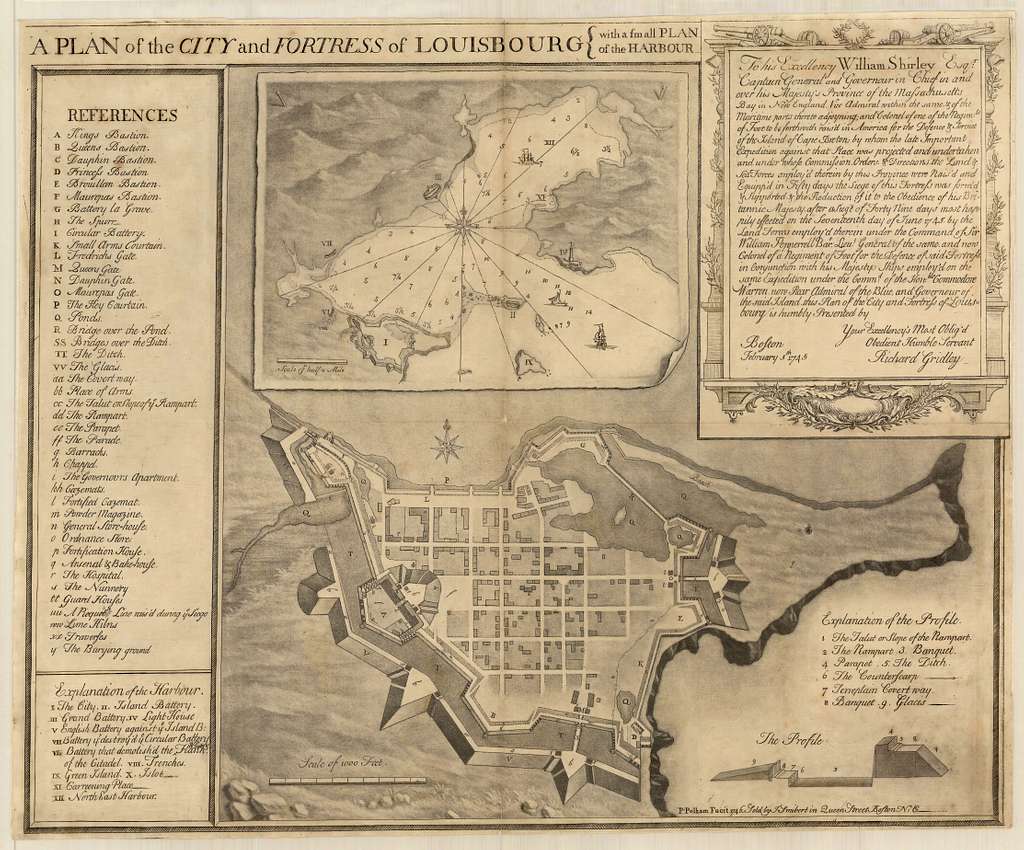
By the mid-1740s, Louisbourg had become one of the most powerful fortresses on the North American continent. Its importance to the French crown was truly immense:
- Military and strategic importance – the fortress controlled the entrance to the Gulf of St. Lawrence, protecting the sea lanes to Quebec and the interior of the French dominions.
- Economic importance – Louisbourg was the center of a lucrative fishing industry and served as an important trading hub between France, the West Indies, Quebec, and the New England colonies.
- Political significance – the presence of a powerful French fortress deterred British expansion and demonstrated France’s determination to maintain its influence in North America.
The French government invested a whopping 30 million livres in the construction of Louisbourg, an unprecedented investment for the time. King Louis XV even joked that for that amount of money he would have to see the spires of the fortress’ towers from his palace in Versailles.
Louisbourg’s heyday as a colonial city
Population and social structure
Louisbourg was originally inhabited in 1713 by only 116 men, 10 women, and 23 children. However, over several decades, the city’s population grew rapidly. By 1719 there were 823 residents, by 1726 there were 1,296 residents, by 1734 there were 1,616 residents, and by 1752 the population reached 4,174. This demographic growth reflected the growing importance of the city and its attraction to new settlers.
Louisburg’s social structure was typical of colonial society. At the top of the social hierarchy were members of the royal administration-the governor, the intendant, and the high officers. The middle class was represented by traders, artisans and petty officials. The lowest social strata were fishermen, sailors, soldiers and employees of various services. Clergymen, doctors, and other professions were also present in the city.
What made Louisbourg special was the ethnic diversity of its residents. Although the majority of the population was French, there were also Basques, Bretons, Acadians (descendants of the French colonists of Acadia), representatives of various German-speaking states, and even natives of the British colonies. In addition, the city was home to a small number of African slaves who served in the homes of wealthy citizens.
Economic life
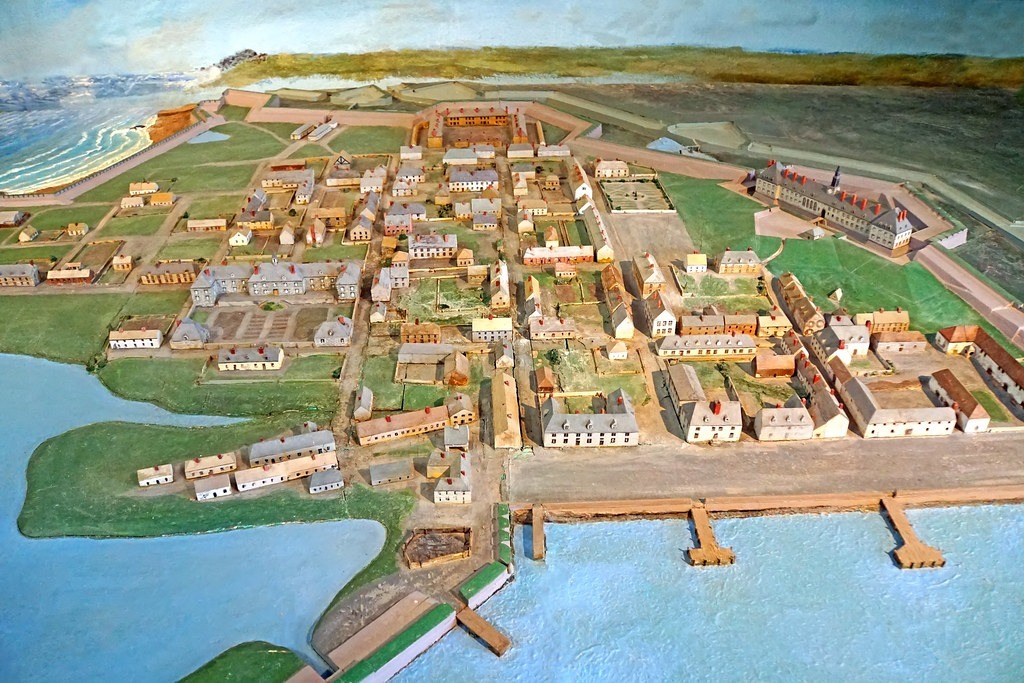
Unlike most cities in New France, Louisbourg’s economy was not based on agriculture and the feudal liege system. The city developed as an important trading and fishing center, the third busiest port in North America after Boston and Philadelphia.
The fishing industry was the foundation of Louisburg’s economic prosperity. The rich fish stocks of the Great Newfoundland Bank provided a steady and substantial income. Approximately 400 fishing sloops left the harbor daily, and another 60-70 ocean-going schooners went fishing along the coast. In 1731, Louisburg fishermen exported 167,000 quintals (about 8,350 tons) of cod and 1,600 barrels of fish oil.
The fishing industry employed more than ten thousand people and was even more lucrative for France than the fur trade. Caught fish (mostly cod) was salted and dried on special platforms along the coast and then exported to Europe and the West Indies.
In addition to fishing, trade played an important role in the city’s economy. Louisbourg became a key node in a complex trade network linking France, the French colonies in the Caribbean, Quebec, Acadia, and the British colonies of New England. The city brought manufactured goods from France, rum and sugar from the West Indies, wheat and timber from Quebec, and food from Acadia.
Urban infrastructure and architecture
Louisbourg was a carefully planned city built according to the advanced principles of the French school of urban planning. The city had a clear layout with a division into military, commercial, and residential districts.
The center of military life was the Royal Bastion, an imposing structure that housed the garrison and the official residence of the governor. It also housed a chapel where religious services were held for the military and civilian population.
The commercial district was formed around the harbor, where warehouses, stores, markets, taverns and hotels were concentrated. This area was bustling with activity, especially during the arrival of merchant ships.
Louisburg’s dwellings reflected the different social status of their owners. Administration officials and wealthy merchants lived in spacious stone houses, often two stories high, with elegant interiors. Middle-class citizens lived in more modest stone or wooden houses, while the poorer classes were content with small wooden buildings.
Among Louisburg’s important public buildings were:
- TheHospital, the largest building in the city after the King’s Bastion, operated by the Brothers of the Order of St. John of God. It was the most advanced medical facility in North America at the time, equipped to perform surgery and provide a variety of medical care. The hospital had 100 beds and included auxiliary facilities such as a bakery, kitchen, laundry, well and stables.
- Themilitary chapel was a significant religious center of the fortress, where services were conducted by Recollet monks (missionaries). The chapel was open to all Louisbourg residents.
- Thebakery was an important element of the city’s infrastructure, providing bread for both the garrison and the civilian population.
- Blacksmith shops, breweries, and warehouses – a variety of manufacturing and storage facilities necessary for the city to function.
Louisbourg’s defensive structures
The engineering genius of the era
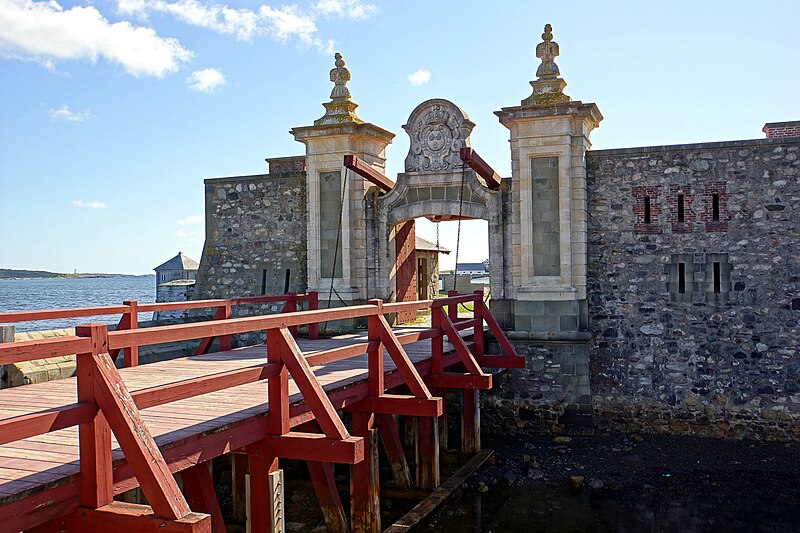
The construction of Louisbourg’s fortifications lasted 28 years under the direction of three outstanding French military engineers. The first was Jean-François du Verger de Verville, who chose the site for the fortress because of its natural defensive advantages. The work was continued by Etienne Verrier and completed by Louis Franquet, a high-ranking engineering officer of New France.
The fortifications of Louisbourg represented an impressive example of military engineering art of their time and embodied the advanced ideas of the famous French marshal and military engineer Sebastien de Vauban. The total length of the fortress walls was about 4 kilometers, surrounding the city in a semicircle from the land side.
Features of the fortifications
The fortification system of Louisbourg was a real work of military engineering art:
- Bastions – the fortress had a total of six bastions: the Dauphin (a semi-bastion because of its modified shape), the King, the Queen, the Princess, Morep and Bruillon. The bastions were protrusions of the fortress wall in a pentagonal shape that allowed flanking fire along the fortress walls.
- Fortresswalls – On the western (land) side of the fortress, the walls reached impressive dimensions: 30 feet (9.1 meters) high and 36 feet (11 meters) wide. These massive structures were further protected by a wide moat and ramparts. On the east side facing the harbor, the walls were lower, 16 feet (4.9 meters) high and 6 feet (1.8 meters) wide.
- City Gate – There were four gates leading into Louisbourg:
- Dauphin’s Gate – the busiest, leading out to the fishing grounds around the harbor and to the main road leading inland.
- Frederick’s Gate – the sea entrance to the fortress.
- Morep’s Gate – facing the strait, connected the fishing grounds, dwellings and cemeteries on Cape Rochefort.
- King’s Gate – on the sparsely populated sea side, rarely used.
- Artillery armament – the fort had embrasures for mounting 148 guns, although historians believe that about 100 guns were actually mounted. On the east side of the fort, 15 guns were aimed at the harbor.
- Additional fortifications – In addition to the main fort, separate fortifications supplemented Louisbourg’s defense system:
- Island Battery – a small fortified island at the harbor entrance that housed 31 24-pounder cannon aimed at the harbor entrance.
- King’s Battery, a larger fortification on the opposite side of the harbor, equipped with 40 guns to protect the harbor entrance.
Despite the impressiveness of the defenses, Fortress Louisbourg had a number of strategic weaknesses. Chief among them was the location of the main land fortifications surrounded by low hills, some of which were dangerously close to the fortifications. These hills provided excellent positions for placing siege batteries. In addition, the fortress was designed primarily to repel naval attacks, leaving the land fortifications relatively weak.
First Siege of Louisbourg (1745)
Causes of conflict
In 1744, France and Great Britain became embroiled in another military conflict, the War of the Austrian Succession. Inevitably, hostilities spread to their North American colonies. Fortress Louisbourg, which controlled crucial sea lanes and threatened British settlements in New England, became a prime target for British colonial authorities.
The governor of Massachusetts, William Shirley, having received information about the deplorable condition of the French garrison (discontent among the soldiers due to delays in salaries, which led to a mutiny in December 1744) and insufficient food supplies in the fortress, decided to take advantage of the situation and organize an expedition to capture Louisbourg.
The course of the first siege
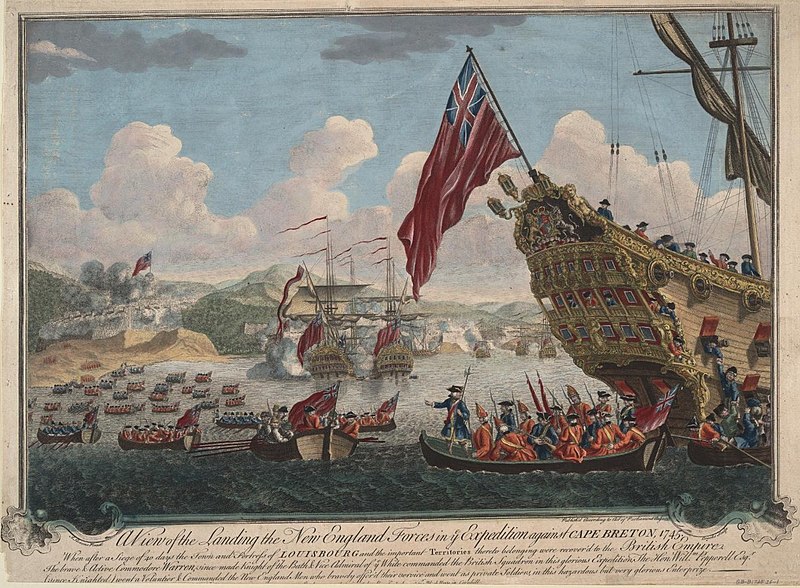
In April 1745, an expeditionary force from New England under William Pepperrell, supported by a Royal Navy squadron under Commodore Peter Warren, approached Louisbourg. The colonial forces numbered about 4,000 militia, mostly farmers and fishermen with minimal military training but encouraged by religious fervor and anti-Catholic sentiment.
The siege began with the landing of colonial troops at Gabarus Bay, a few kilometers from the fortress. The New England militia, despite their lack of experience in siege warfare, acted decisively. They set up batteries on the surrounding hills from which they could bombard the fortress and harbor. Particularly effective was the capture of the King’s Battery, which the French had abandoned for lack of gunpowder. The colonists deployed the captured guns against the fortress itself.
The siege lasted 46 days. The French garrison under the command of Louis Dupont Duchambon de Vergor, despite limited resources and low morale, put up a stubborn resistance. However, the situation of the defenders was becoming increasingly difficult: food and ammunition supplies were running low, and artillery fire was causing serious damage to the fortifications.
on June 16, 1745, after six weeks of siege, the French governor was forced to capitulate. The British colonists were triumphant – they had succeeded in capturing one of the most powerful fortresses in North America. This was the first major victory of the colonial forces without significant support from regular British troops.
Consequences of the first siege
The capture of Louisbourg was a heavy blow to France. In response, a large-scale expedition under the command of the Duc d’Anville was organized to retake the fortress, but it failed due to storms, disease, and attacks by the British fleet.
Despite military success, the fate of Louisbourg was decided at the negotiating table. In 1748, the Treaty of Aachen was signed, ending the War of the Austrian Succession. Much to the disappointment of New Englanders, Louisbourg was returned to France in exchange for territories captured by France in the Netherlands and a British trading post in Indian Madras.
After Louisbourg’s return, the French government devoted considerable resources to rebuilding and reinforcing the fortifications. A strong garrison was sent to the fortress, and life in the colonial city began to gradually return to normal.
The Second Siege and Fall of Louisbourg (1758)
Background to the second siege
The peace between France and Great Britain was short-lived. In the mid-1750s, territorial disputes between French and British colonies escalated, leading to the outbreak of the North American phase of the Seven Years’ War, also known as the Franco-Indian War.
As part of an overall strategy to drive France out of North America, the British government decided to organize a new expedition against Louisbourg. The fortress remained a key French stronghold controlling access to the St. Lawrence River and the interior of New France. It also served as a base for French privates damaging British shipping.
The progress of the second siege
In 1758, a British force under General Geoffrey Amherst and Admiral Edward Boscawen approached Louisbourg. This was a much more serious military expedition than in 1745. The invasion force consisted of 13,100 regular British Army soldiers supported by a powerful squadron of 150 ships with a crew of 14,000 men.
on June 2, 1758, the British fleet appeared in front of Louisbourg. After several days of reconnaissance and exploration of the coast, the British began landing at Cormoran Bay on June 8, despite strong French resistance and unfavorable weather conditions.
The French garrison, commanded by Governor Augustin de Bonshenry de Drucourt, numbered about 3,500 soldiers and sailors. In addition, there were five line ships of the French fleet in Louisbourg harbor.
British troops methodically pulled up artillery and set up siege batteries, gradually tightening the ring around the fortress. Heavy British artillery inflicted serious damage to the fortifications and buildings of the city. on July 21, two British ships penetrated the harbor and sank two French line ships, the remaining French ships were burned or captured.
By the end of July, the situation of the besieged had become critical. The walls of the fortress were seriously damaged, many of the guns were put out of action, supplies were running low, and the number of dead and wounded among the defenders was growing. on July 26, 1758, after seven weeks of heroic defense, Governor Drucourt was forced to sign the surrender.
Destruction of the fortress
After the second capture of Louisbourg, the British decided to permanently eliminate this threat to their domination of the region. Unlike the situation in 1745, this time they were determined to prevent the fortress from being returned to France.
British engineers were ordered to systematically destroy all of Louisbourg’s fortifications. The demolition work began in 1760 and lasted six years. Fortress walls were blown up, bastions destroyed, and guns removed or destroyed. The town’s inhabitants were deported to France.
By 1768, when the British garrison finally abandoned Louisbourg, only ruins remained of the once mighty fortress and prosperous city. Some cut stone blocks from Louisbourg were later used for construction in Halifax and Sidney, Nova Scotia.
Louisbourg’s rebirth: from ruins to historic reconstruction
National Historic Landmark
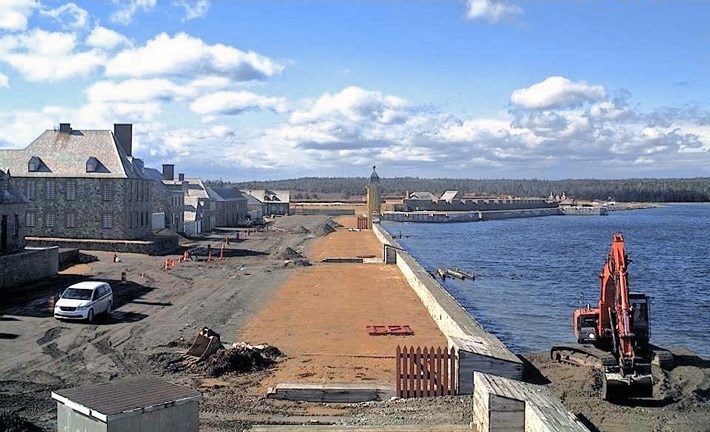
For nearly two centuries, Louisburg remained abandoned, with only a few fishing families living among the ruins of the once majestic city. This began to change in the early twentieth century when there was an increased interest in historic preservation in Canada.
In 1920, the Canadian government declared the site of the former Fortress of Louisbourg a National Historic Site. This was the first step towards preserving and revitalizing this unique piece of colonial history.
However, serious work to restore Louisbourg did not begin until the 1960s. With the economic crisis in the Cape Breton region caused by the decline of the coal industry, the federal government of Canada made an ambitious decision – to restore part of Fortress Louisbourg as it existed in the 1740s, at the peak of its prosperity.
The reconstruction project
In 1961, one of the most ambitious historical reconstruction projects in North America was launched. The goal was to recreate about one-fifth of the original city and its fortifications. The budget for the project was $26 million dollars, a huge sum for the time.
The Louisbourg reconstruction project required an unprecedented interdisciplinary effort. It involved archaeologists, historians, engineers, architects, and craftsmen of various specialties. Many of the workers were former miners from the industrial areas of Cape Breton, who received specialized training and mastered eighteenth-century construction techniques.
Extensive research was conducted to ensure historical accuracy. Archaeologists scrutinized the ruins and excavated the site, uncovering more than a million artifacts that helped to better understand the daily lives of the residents of colonial Louisbourg. Historians have studied some 750,000 pages of documents and 500 maps and plans copied from archives in France, England, Scotland, the United States and Canada.
Some 60 buildings and two bastions were reconstructed over several decades. The chief architect on the project was Yvon Leblanc, one of the first Acadian architects, who was responsible for most of the buildings on the town site with the assistance of researchers from various committees.
Fortress Louisbourg today
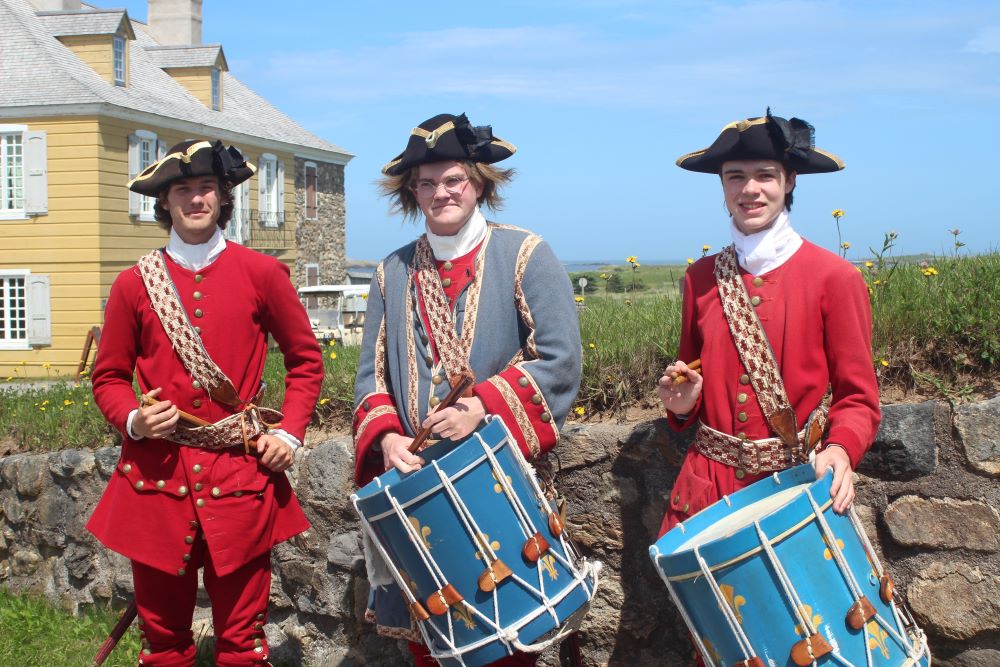
Today, Fortress Louisbourg is a National Historic Site of Canada, managed by the federal Parks Canada organization. It is the largest eighteenth-century historical reconstruction in North America and one of Atlantic Canada’s premier tourist attractions.
Visitors to Louisbourg have a unique opportunity to immerse themselves in the atmosphere of a French colonial city of the 1740s. The reconstruction is done with maximum historical authenticity – from the fortress walls and bastions to the interiors of buildings and everyday objects.

One of the features of modern Louisbourg is the “living history” program. On the territory of the fortress there are actors-animators dressed in historical costumes, who demonstrate various aspects of life of the XVIII century: soldiers conduct military exercises and shoot from muskets and cannons; cooks prepare dishes according to the recipes of that era; artisans demonstrate their skills – blacksmiths forge metal products, tailors sew clothes, bakers bake bread.
Visitors can not only observe these processes, but also interact with the “inhabitants” of Louisbourg, ask them questions and even participate in some of the activities. This creates a “time machine” effect, allowing guests to literally touch history.
The restored buildings house historical exhibits on various aspects of life in the colonial city, from the military to everyday life. Of particular interest are:
- TheKing’s Bastion, the most imposing structure of the fortress, which housed the governor’s residence and barracks for soldiers.
- TheMilitary Chapel, the restored religious center of the fortress, demonstrating the important role of the church in colonial society.
- Thehomes of wealthy citizens – with elegant furnishings and household items reflecting the lifestyle of Louisbourg’s elite.
- Taverns and Inns – where visitors can not only see what 18th-century eating places looked like, but also sample dishes prepared according to historic recipes.
Daily life in colonial Louisbourg
Life and culture in the French colony
Daily life in 18th-century Louisbourg was filled with the labor and concerns typical of a colonial port city. The daily routine of most residents was determined by sunrise and sunset, the seasons, and the religious calendar.
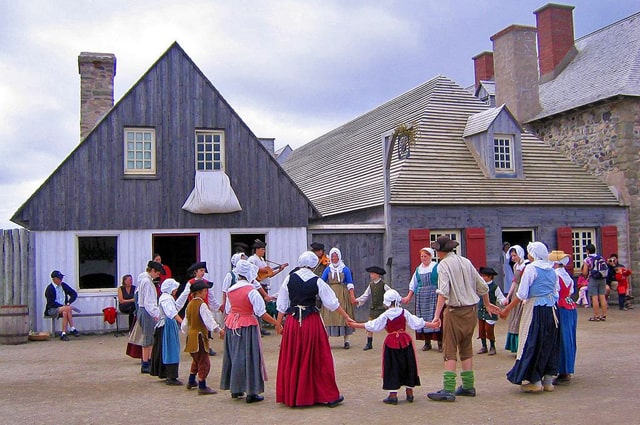
The bulk of the population was employed in the fishing industry. During the fishing season, which lasted from April to October, fishermen spent most of the day at sea or processing their catch on shore. The process of salting and drying cod was labor-intensive and involved several steps: gutting the fish, salting, rinsing, and finally drying on special wooden platforms called flaks.
Louisbourg women, as in most societies of the time, were involved in housekeeping, child rearing, cooking, sewing, and other domestic tasks. In some families, women also helped in the family business, especially if the husband was a merchant or craftsman. Widowed women were known to have successfully carried on their husbands’ business by running taverns, stores, or even fishing enterprises.
The diet of Louisburg’s residents was relatively varied for a colonial city. The diet was based on seafood, especially cod, which was prepared in a variety of ways. Bread was an important dietary staple for all walks of life. The wealthy could afford imported wine, fruits, spices, meat, and other delicacies. The poor, on the other hand, were content with simpler food – bread, fish, sometimes meat, and vegetables grown in small vegetable gardens.
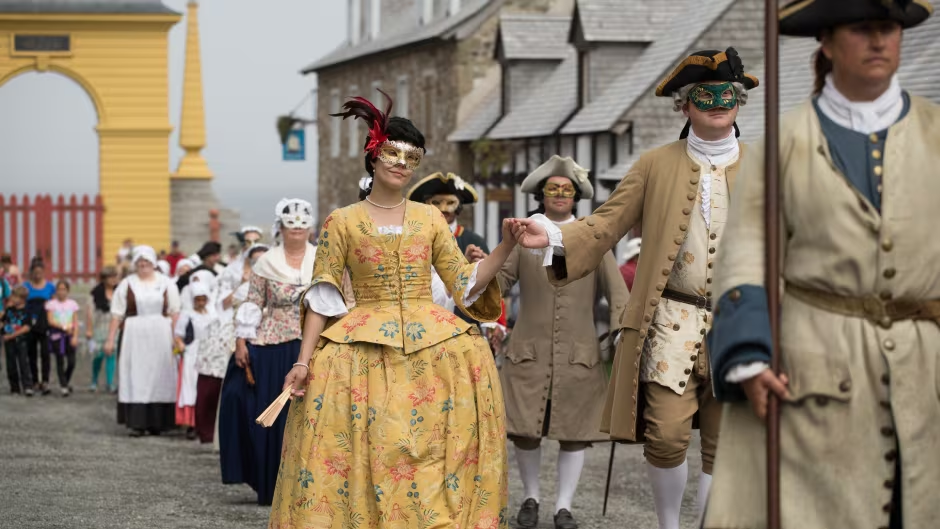
The clothing of Louisbourg’s inhabitants reflected their social status and profession. The elite followed French fashions, albeit with some delay. Men wore camisoles, vests, culottes (short pants to the knee), stockings, and shoes with buckles. Upper-class women wore dresses with corsets, petticoats, and bonnets. Fishermen and other laborers dressed more simply and practically in coarse wool or linen shirts, vests, long pants or breeches, and hats or caps.
Social and cultural life

Louisbourg’s social life was centered around a few public spaces. Taverns and taverns served not only as places to drink and eat, but also as centers for socializing, exchanging news, and conducting business negotiations. People of different social strata gathered here, although there were establishments oriented to a certain public – from simple sailors to officers and merchants.
Religion played an important role in the life of colonial Louisbourg. Most residents were Catholic, and church services were an important element of community life. Sunday masses, baptisms, weddings, and funerals were not only religious rites but also significant social events. Nevertheless, the influence of the church in Louisbourg was less strong than in Old France or Quebec, which was typical of a frontier port city with a diverse population.
Education in Louisbourg was available to a limited number of people. Formal schooling as such did not exist. Children from wealthy families received their elementary education at home from their parents or hired teachers. Boys from simpler families were often taught a trade through an apprenticeship system. Children of the poor usually remained illiterate and were put to work from an early age.
Entertainment in colonial Louisbourg was varied but relatively simple. Various games, including card and dice games, were popular (although gambling was often prohibited by the authorities). Music and dancing were an important part of holidays and celebrations. Public festivities were held on Christmas, Easter, St. John the Baptist Day, and other religious holidays.
The harbor played a special role in the life of Louisbourg. The arrival of ships from France, the West Indies, or other colonies was always a significant event. They brought not only goods, but also news, letters, and new people. The port was a window to the larger world for the inhabitants of this remote colonial outpost.
Scientific and cultural significance of Louisbourg
Archaeological and historical heritage
The reconstruction of Fortress Louisbourg is of great scientific importance. The archaeological excavations that preceded the reconstruction uncovered more than one million artifacts that significantly enriched our knowledge of the material culture of eighteenth-century French colonial North America.
Items found include ceramics, glassware, coins, weapons, tools, household items, jewelry, and other material evidence of the era. These finds have helped historians and archaeologists better understand the daily life of colonial society, Louisburg’s trade connections, diet, medical practices, military practices, and many other aspects.
Of particular value is the fact that Louisbourg, unlike many other historic towns, has not been developed with modern buildings since its destruction. This made it an archaeological “time capsule” that preserved the eighteenth-century layers virtually intact.
Louisbourg’s redevelopment project also stimulated extensive historical research. Hundreds of thousands of documents from archives in different countries were studied to recreate the most accurate picture of the life of the fortress. This work has made a significant contribution to understanding not only the history of Louisbourg itself, but also the broader context of the colonial era, Franco-British rivalry, and early Canadian development.
Cultural and educational significance
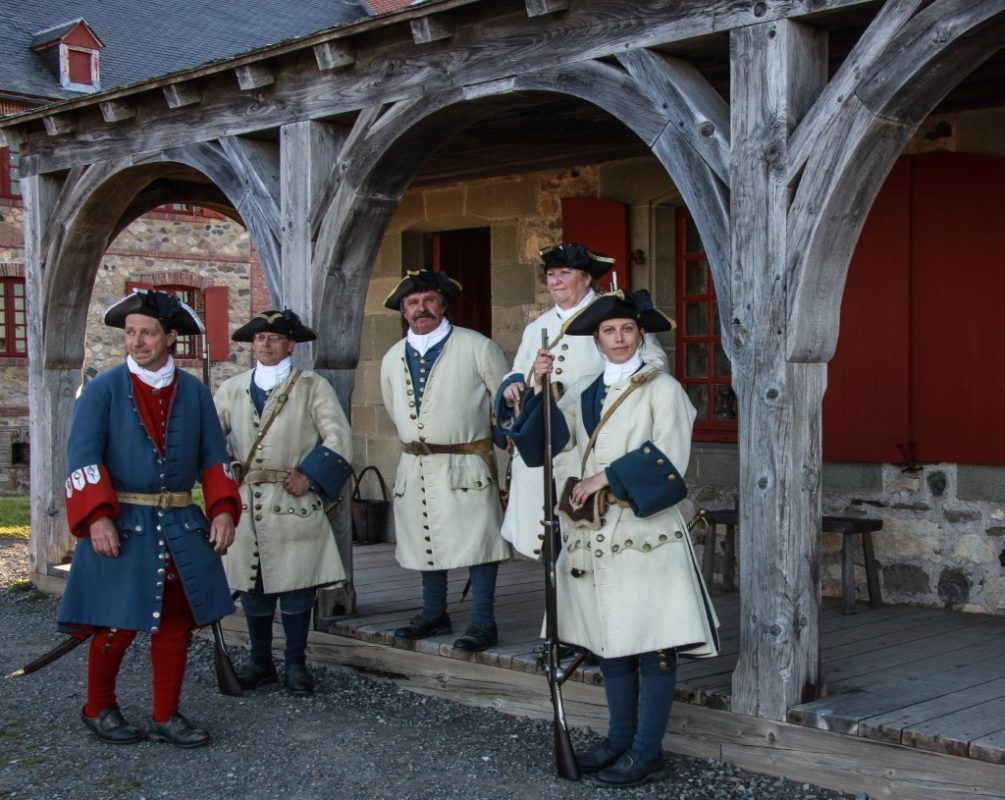
Modern Louisbourg serves an important educational function. Each year, thousands of school children and students visit the fortress, where they learn about colonial history through interactive programs, tours and workshops. This visual, “living” approach to learning history is much more effective than the dry pages of textbooks.
The fortress also serves as an important cultural center. Historical festivals, reconstructions of past events, concerts of ancient music and other cultural events are regularly held here. Particularly popular are reenactments of military exercises, demonstrations of traditional crafts, and culinary workshops where dishes are prepared according to 18th century recipes.
For the academic community, Louisbourg is an important site for research and conferences on colonial history, archaeology, architecture, and other related disciplines. Many universities in Canada and the United States send students here for internships and research.
Louisbourg in the context of Franco-British rivalry
Geopolitical significance of the fortress
The history of Louisbourg is inextricably linked to the long struggle between France and Great Britain for dominance in North America and, more broadly, for the status of the leading European and world power. This struggle, sometimes referred to as the “Second Hundred Years’ War,” lasted from the late seventeenth through the early nineteenth centuries and involved several major military conflicts.
Louisbourg was a key figure on this complex geopolitical chessboard. For France, it represented:
- A strategic base to control the approach to the interior of New France via the St. Lawrence River
- A defense of the rich fisheries of the Grand Banks of Newfoundland
- A stronghold to protect French trade routes in the North Atlantic
- A base for privateers to attack British merchant shipping in wartime
For Britain, Louisbourg was:
- A constant threat to her colonies in New England and Nova Scotia
- An obstacle to the expansion of British influence to the north
- a “thorn in the side” of British trade and fisheries
The two sieges of Louisbourg (1745 and 1758) were turning points in this confrontation. Especially important was the second siege, the success of which opened the British to Quebec and ultimately led to the fall of New France in 1760.
Symbolic significance in history and culture
Beyond a purely military and political context, Louisbourg has acquired important symbolic significance in the national narratives of several countries.
For French Canadians and Acadians, Louisbourg symbolizes an important chapter in their history, a reminder of a time when the French presence in North America was strong and influential. It is material evidence of the French cultural heritage in the region.
For Anglo-Canadians and especially for New Englanders, the first capture of Louisbourg in 1745 was a source of pride as the first major military victory by a colonial force acting relatively independently. This event played an important role in shaping the emerging colonial consciousness that later manifested itself in the American Revolution.
In contemporary Canada, the restored Fortress of Louisbourg is a symbol of the country’s multicultural heritage and a reminder that Canadian identity has been shaped by both French and British cultures, as well as by interactions with Indigenous peoples.
Conclusion
Fortress Louisbourg is a unique place where history literally comes alive before the eyes of visitors. From its founding by French colonists in 1713 to its final destruction by British engineers in the 1760s, and then from decades of neglect to major reconstruction in the 20th century, Louisbourg’s journey reflects the complex historical processes that shaped modern North America.
Today, the restored Fortress of Louisbourg is not only a popular tourist attraction, but also an important educational and research center, a place of preservation and transmission of cultural heritage. A visit to the fortress allows for a true journey through time, to see, feel and better understand the life of an 18th century French colonial community.
In a broader context, the history of Louisbourg reminds us of the complex and often dramatic processes of formation of modern states and societies. It shows how geopolitical decisions made in distant European capitals affected the lives of thousands of ordinary people on another continent. It illustrates how military conflict, trade, cultural exchange, and everyday life were intertwined to form the multilayered fabric of the historical process.
Fortress Louisbourg, as a revitalized 18th-century French town, serves as a bridge between past and present, a material embodiment of history that can not only be studied but also experienced with all the senses. This makes it an invaluable cultural and historical treasure for Canada and the world.
Author Information

I’m a journalist specializing in urban issues and city politics in the Vancouver region, which I’ve covered since 1994, and I also have a strong focus on the iGaming industry. In this endlessly changing city, I cover a broad range of issues: from drug policy, bike lanes, billion-dollar development projects, homelessness, and garbage debates, to the rapidly evolving world of online gaming, including regulatory landscapes, technological advancements, and market trends. I write frequently for the Globe and Mail’s B.C. section and Report on Business. From 2008 to 2015, I had a regular column in Vancouver magazine, “Urban Fix,” which apparently resonated with readers so much that it earned me a few regional and national awards.
