

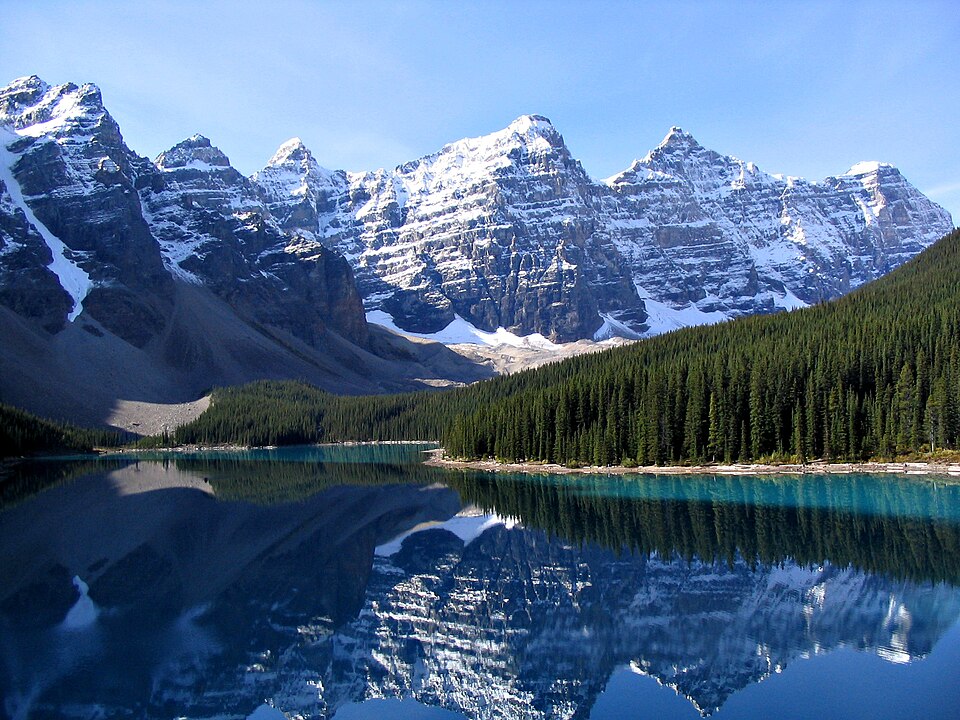
The jewel of the Canadian Rockies
Tucked away in the heart of majestic Banff National Park, tucked away among majestic peaks, lies glacial Moraine Lake, a place that rightfully holds the unofficial title of Canada’s most photographed landscape. Located 1885 meters above sea level in the picturesque Ten Peaks Valley, just 14 kilometers from the village of Lake Louise in the province of Alberta, this 50-hectare lake has become a true symbol of Canada’s natural beauty and a magnet for photographers from around the world.
A hypnotic color that is impossible to forget
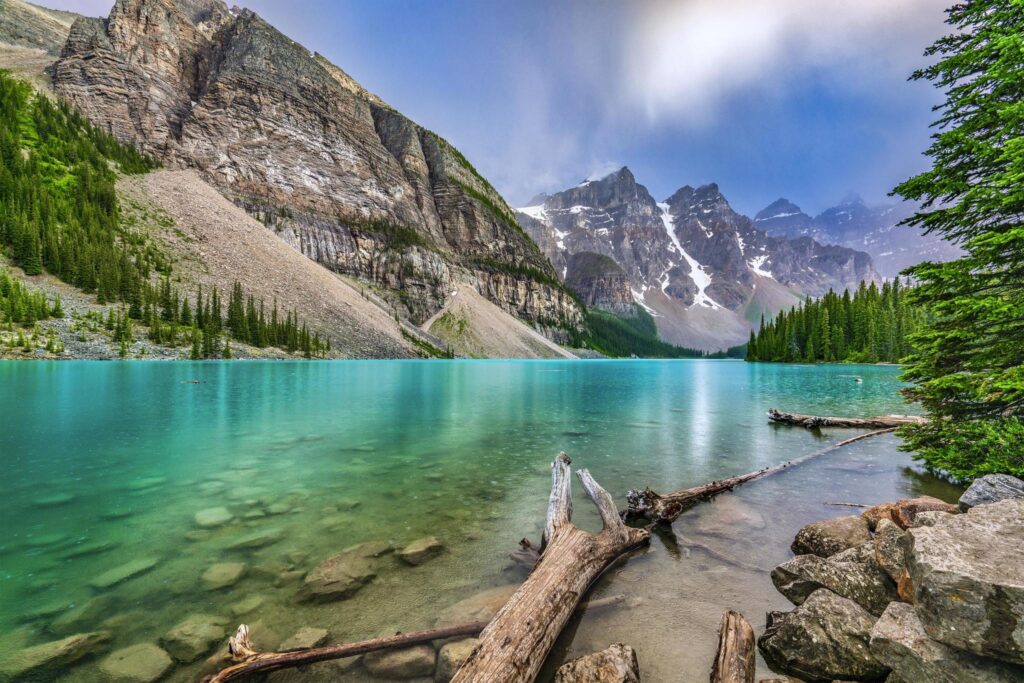
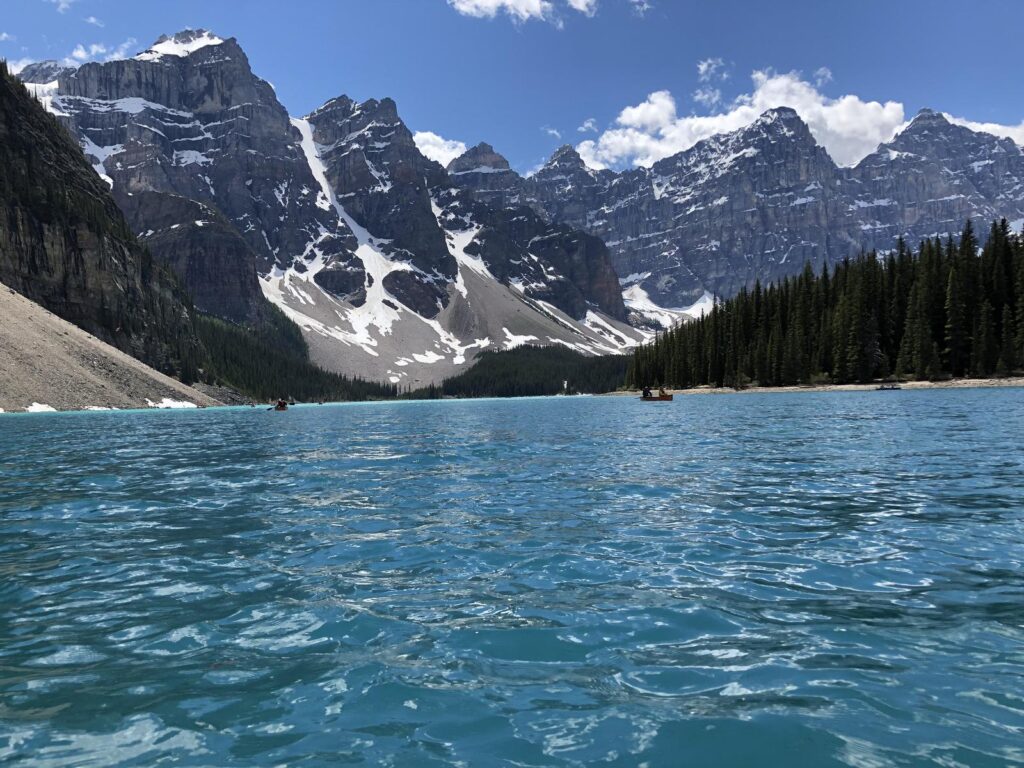
The main feature of Lake Moraine that makes it irresistible to photographers is the amazing color of the water. Azure blue shades, shimmering from turquoise to deep blue, create an impression of unreality of the landscape. Many travelers admit that the color of the lake is so vivid and unusual that photos often appear edited, although they actually convey reality.
This phenomenal color has a scientific explanation. When the lake is fully filled (usually from mid to late June), its waters reflect different shades of blue due to the special refraction of sunlight. This happens due to tiny rock particles known as “rock flour” or glacial till. These microscopic mineral particles enter the lake with melting glaciers and remain suspended in the water. Light passing through such water is refracted in a special way, which gives the lake this unearthly glow. The unique color changes depending on the time of day, lighting and angle of view, making each photo of the lake unique. Unknown Canada: Moraine Lake
Majestic framing: the Valley of the Ten Peaks
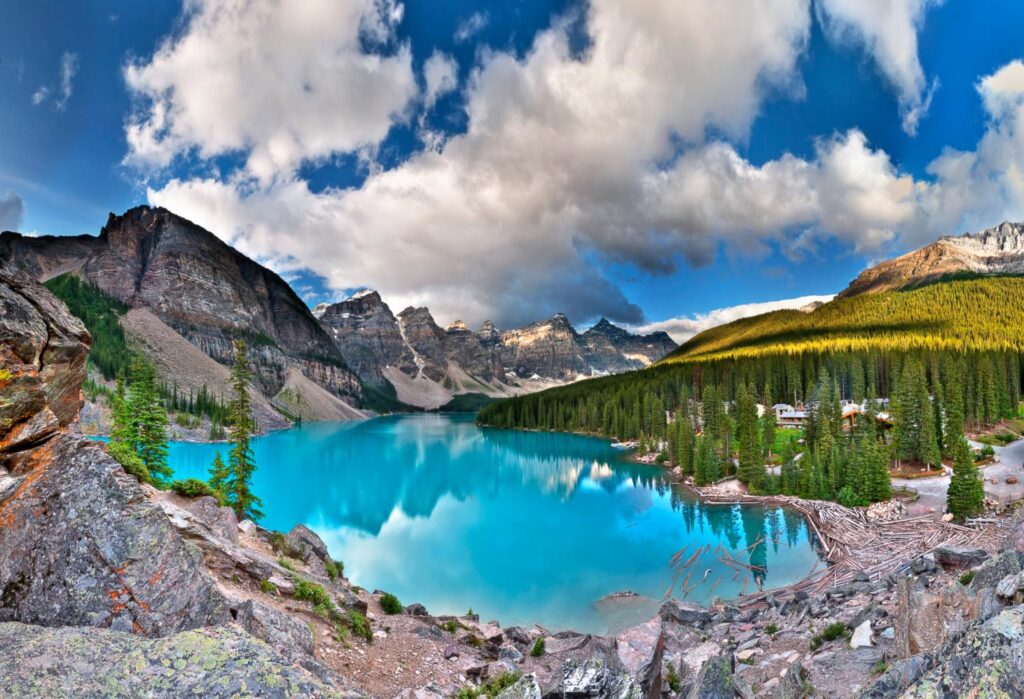
If Lake Moraine were on a plain, it would still draw attention with its amazing color. But what makes it truly irresistible to photographers is its dramatic mountainous backdrop. The lake is located in the Valley of Ten Peaks, a region named for the ten majestic mountain peaks that rise above the water’s surface.
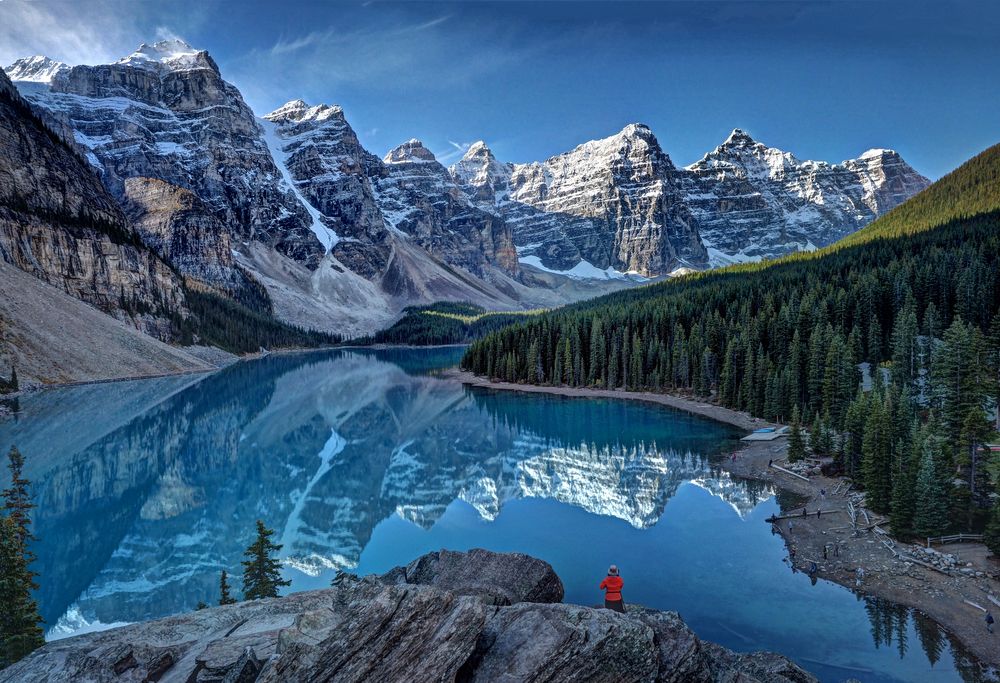
These peaks, part of the Woptai Range, provide a unique backdrop for photographs. Their snow-capped peaks reflected in the serene waters of the lake form a classic composition that has become a hallmark not only of Moraine Lake, but of all of Canada. The mountains surrounding the lake reach a height of over 3000 meters, which creates a stunning contrast between the dark rocks, white snow caps and the rich blue color of the water.
History of discovery and worldwide popularity
Lake Moraine owes its name and first famous photographs to Walter Wilcox, who discovered it in 1899 during his expedition through the Canadian Rocky Mountains. Impressed by the beauty of the place, Wilcox named the lake “Moraine” because of the surrounding moraines – clusters of rock left behind by retreating glaciers.
However, the lake’s real worldwide fame came in 1969-1979, when its image adorned the back of Canadian $20 bills. This was the first time an image of Lake Moraine was so widely distributed, and it greatly increased interest in the place.
With the rise of social media and digital photography, the popularity of Moraine Lake has grown to incredible proportions. The hashtag #MoraineLake on Instagram has hundreds of thousands of posts, and the view of the lake with the surrounding mountains has become one of the most recognizable landscapes in North America. Moraine Lake – Heritage Quest – Western Canadian Rocky Mountains
Ideal vantage point: The rock pile
One of the reasons why Lake Moraine is so popular with photographers is the presence of an ideal vantage point known as the Rockpile Trail. This short but steep trail leads to the top of a natural rock pile, which offers the classic view of the lake and the Ten Peaks Valley that can be seen in most photos of the area.
From this vantage point, photographers can capture the entire panorama of the lake with a perfect compositional balance: the foreground with rocks and trees, the centerpiece with the glowing blue lake, and the background with majestic mountain peaks. This versatility makes Lake Moraine photos visually rich and impressive even for those who have seen thousands of beautiful landscapes.
Seasonal changes: different faces of perfection
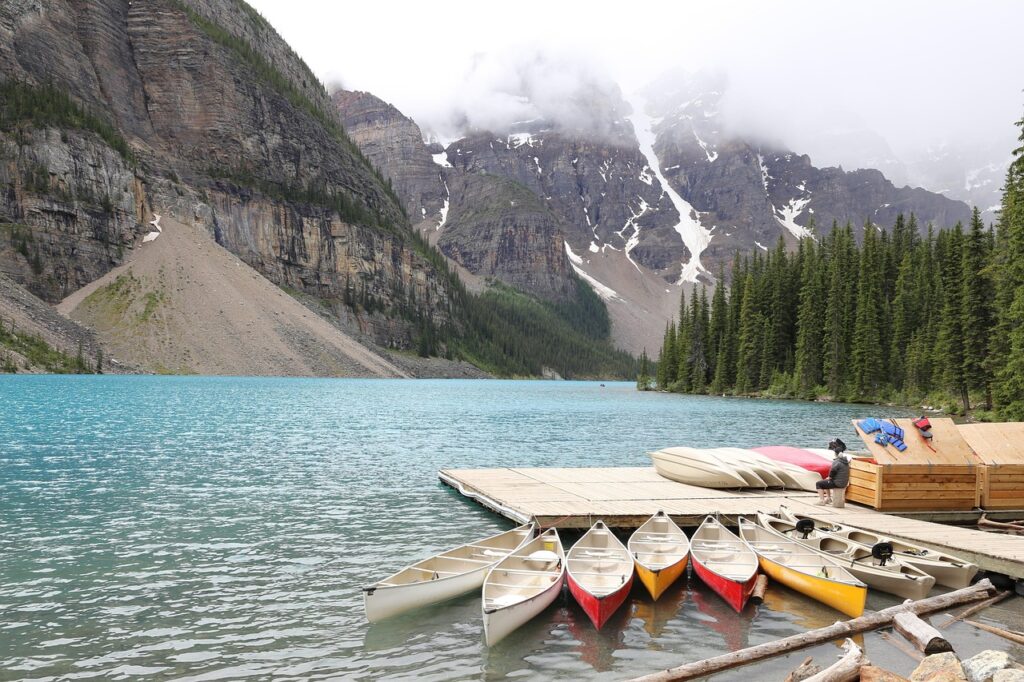
Another factor that makes Lake Moraine a magnet for photographers is its seasonal transformation. The lake is only accessible from late May to early October due to the high risk of avalanches during the winter months. But even during this short season, it presents an ever-changing landscape.
In late May and early June, the lake is just beginning to free itself from ice and its color has not yet reached its maximum intensity. By mid-June, it is completely filled with meltwater and the color turns deep turquoise. In July and August, at the height of the tourist season, the lake appears in all its glory with a perfect balance of water, color and surrounding vegetation. By September, the fall season begins when the larch trees around the lake turn golden in color, creating a stunning contrast to the blue water.
Each of these periods offers unique photographic opportunities, and many professional photographers return to Moraine Lake during the different seasons to capture all of its countenances.
Photographic challenge and visitation restrictions
Ironically, one of the reasons why Lake Moraine remains a desirable destination for photographers is the difficulty of visiting it. Because of its immense popularity and limited parking space, access to the lake is highly regulated. During peak summer months, the parking lot fills up by as early as 5-6am, and to see the lake in the perfect light of the rising sun, photographers often arrive before dawn.
Since 2023, a reservation system for visiting the lake by private car has been introduced, with special bus routes providing an alternative. These restrictions only fuel the desire of photographers to capture this legendary place and add value to each successful shot.
The lake also cannot be visited in winter, as the road to the lake is closed due to the high risk of avalanches. This limited access creates an effect of exclusivity and makes every opportunity to photograph Lake Moraine especially valuable.
Activities around the lake: more than just photography
Although Lake Moraine is primarily known as a photographic attraction, it offers other activities that also become subjects for photography. Visitors can rent a canoe and paddle out to the middle of the lake, which gives a whole new perspective for photos – now from the water to the surrounding mountains.
There are several scenic trails of varying difficulty around the lake, the most famous of which is the Lakeshore Trail that runs along the shore. More ambitious hikers can take the Consolation Lakes Trail, which starts at Moraine Lake and leads to another group of scenic mountain lakes.
These additional features allow photographers to create a variety of content and find unique angles even in a photographed location like Moraine Lake.
Conclusion: a symbol of natural perfection
Moraine Lake has earned its status as the most photographed location in Canada due to a unique combination of factors: the ethereal color of the water, the dramatic mountain backdrop, the perfect vantage point, and the seasonal changes that create an endless variety of visuals.
But perhaps the main reason for its popularity among photographers is the sense of perfection and harmony experienced by anyone who sees Lake Moraine with their own eyes. This landscape embodies the perfect balance of water, mountains and sky, creating an image of natural perfection that one wants to not only see, but also capture to share this beauty with the world.
Although there are millions of photographs of Moraine Lake in the digital age, each new image of this unique place carries a piece of the awe and excitement that a photographer feels when standing on the shore of the lake or atop Stone Pile and watching the first rays of sunlight illuminate the turquoise water surface and majestic mountain tops.
Unique lighting and photographic opportunities
For photographers, Moraine Lake provides a true creative playground where light plays a crucial role. The lake’s location in a valley surrounded by high mountains creates unique lighting conditions. The morning hours are especially prized by professional photographers when the first rays of sunlight begin to color the mountain tops, creating a striking contrast between the still shaded slopes and the lightened peaks.
Photographers call this moment the “alpine glow” – when the mountain peaks light up with golden light and the lake water begins to gradually change its color from dark blue to bright turquoise. At this time of the day, the surface of the lake often remains perfectly smooth, creating a flawless mirror image of the surrounding landscape.
Evening time also offers its own unique opportunities. As the sun dips behind the mountains, the so-called “blue hour” arrives, a period of soft, diffused light that gives the lake and surrounding mountains a mysterious bluish-purple glow. This time creates a completely different mood in photographs – more mysterious and dramatic.
For astrophotographers, Lake Moraine is of particular interest on summer nights when the Milky Way is visible above the mountain peaks. The lack of light pollution in this part of Banff National Park makes Lake Moraine an ideal location for photographing the night sky reflected in the dark waters.
Impact on popular culture and tourism
Images of Moraine Lake are deeply embedded in the cultural code of Canada and the world. In addition to appearing on the Canadian $20 bill in the 1970s, the lake has become a benchmark for the natural beauty of the Rocky Mountains and a symbol of Canadian tourism.
In the age of digital technology and social media, Lake Moraine has become one of the most Instagrammed places on the planet. Travel bloggers, professional photographers and ordinary travelers post thousands of photos of the place every year, creating the phenomenon of so-called “tourism for social media”. Many visitors come to Lake Moraine specifically to recreate photos they have seen on the internet.
This phenomenon has both positive and negative aspects. On the one hand, the popularity of the lake boosts the tourism industry in the Banff and Lake Louise region, creates jobs and draws attention to Canada’s natural environment. On the other hand, the massive influx of tourists creates challenges for the fragile ecosystem of the national park and requires continuous improvement of visitor flow management systems.
Ecological and conservation aspects
Banff National Park, home to Moraine Lake, was established in 1885 and is Canada’s oldest national park. Its protected area status has helped preserve the pristine beauty of the lake and surrounding landscapes despite growing tourist popularity.
The park administration makes significant efforts to minimize human impact on the lake’s ecosystem. Visitors are prohibited from leaving garbage, feeding wildlife or collecting plants. Information boards have been installed on the shore of the lake, telling about the geology, flora and fauna of the region, as well as the rules of behavior on the territory of the national park.
Although bathing in Lake Moraine is not illegal, few people take the plunge because of the extremely cold water temperature – about 5 degrees Celsius even in the height of summer. This naturally helps to keep the lake clean and naturally beautiful.
Climate change is also having an impact on Lake Moraine. Scientists have noted the gradual retreat of the glaciers that feed the lake, which may affect its level and famous color in the long run. This makes each photograph of the lake not only a work of art, but also a kind of document that records the state of nature at a certain point in time.
Chronology of visits: how to properly plan a trip
For those who dream of capturing the beauty of Lake Moraine with their camera, it is important to plan the trip correctly. The season for visiting the lake runs from around the end of May to the beginning of October, but these dates can vary depending on weather conditions and the thickness of the snow cover.
The optimal time for photography is considered to be from mid-June to mid-September. At this time, the lake is completely full, its color is most intense, and weather conditions in the mountains are relatively stable. The lake becomes especially photogenic in late September, when the surrounding larch trees are colored in golden tones, creating a stunning contrast with the turquoise water.
To capture the perfect photos, experienced photographers recommend arriving at the lake very early in the morning – about an hour before sunrise. This gives you the opportunity not only to get the best spots to shoot, but also to enjoy the beauty of the lake in relative seclusion, before the bulk of the tourists arrive.
Given the restrictions on access by private vehicles, photographers should book a pass in advance (months in advance) through the official Parks Canada system or a seat on the shuttle bus between Lake Louise and Moraine Lake.
Wildlife around the lake
In addition to the stunning scenery, the area surrounding Moraine Lake is home to a variety of wildlife, which creates additional opportunities for naturalist photographers. The forests around the lake are home to black bears, grizzlies, moose, snow goats, bighorn sheep and a variety of smaller animals.
Birds are also of interest to photographers: golden eagles, falcons, Canada geese and many species of songbirds can be found in the region. In spring and early summer, wildflowers such as Indian paintbrush, anemones, yellow lilies, mountain buttercups, and other alpine plants decorate the lake’s surroundings.
Wildlife photographers often spend entire days on the lakeshore and surrounding trails, hoping to capture a harmonious shot where wildlife and birds appear against the backdrop of the famous turquoise lake and majestic mountains.
Lake Moraine in various photographic genres
Lake Moraine’s versatile beauty makes it an ideal subject for a variety of photographic genres. Landscape photographers appreciate the classic panoramic views from Stone Pile. Macro photographers find interesting subjects among the coastal vegetation and minerals. For minimalist photographers, abstract compositions with water and reflections are of interest.
In recent years, aerial photography of the lake using drones has been growing in popularity, offering completely new angles and perspectives. However, it is important to note that the use of drones in Canada’s national parks is strictly regulated and requires special permits.
Due to its photogenic nature, Moraine Lake is also becoming a popular destination for wedding photo shoots and portrait photography. Couples from all over the world come here to capture one of the most important days of their lives against the backdrop of this incredible natural landscape.
Comparison with other famous lakes
Although Lake Moraine is considered the most photographed lake in Canada, there are other scenic lakes in the country and region that deserve attention. The closest competitor is Lake Louise, located just a few kilometers away. It also has turquoise-colored water and is surrounded by majestic mountains, and the famous Fairmont Chateau Lake Louise Hotel is located on its shores, which adds to the lake’s special charm.
Other famous photogenic lakes in the region include Lake Peyto, known for its unique wolf’s head shape and deep turquoise color; Lake Emerald with its emerald waters; and Lake Maline, striking with its deep blue.
However, most photographers agree that Lake Moraine tops them all because of its perfect combination of water color, dramatic mountain backdrop, and accessibility for photography.
Conclusion: enduring beauty
The phenomenon of Lake Moraine as the most photographed location in Canada is no accident, the result of a unique combination of natural factors that create a perfect landscape that continues to fascinate people from around the world no matter how many times they’ve seen images of it.
In an age where every corner of the Earth seems to be explored and photographed from every possible angle, Lake Moraine retains its magic and ability to evoke admiration. Each photograph of this place, whether taken with a professional camera or a smartphone, becomes a small testament that there are still places of such astounding beauty in our world.
For many photographers, capturing Lake Moraine with their eyes and their camera becomes a pilgrimage of sorts – an appreciation of natural beauty and the art of landscape photography. And although millions of photographs of Lake Moraine already exist, each new one conveys the author’s unique vision and a particular moment in time when light, weather and mood created a unique combination.
In this way, Moraine Lake continues to inspire new generations of photographers and travelers, remaining a living symbol of Canada’s natural beauty and a reminder that sometimes reality surpasses even the wildest fantasies.
Author Information

I’m a journalist specializing in urban issues and city politics in the Vancouver region, which I’ve covered since 1994, and I also have a strong focus on the iGaming industry. In this endlessly changing city, I cover a broad range of issues: from drug policy, bike lanes, billion-dollar development projects, homelessness, and garbage debates, to the rapidly evolving world of online gaming, including regulatory landscapes, technological advancements, and market trends. I write frequently for the Globe and Mail’s B.C. section and Report on Business. From 2008 to 2015, I had a regular column in Vancouver magazine, “Urban Fix,” which apparently resonated with readers so much that it earned me a few regional and national awards.