
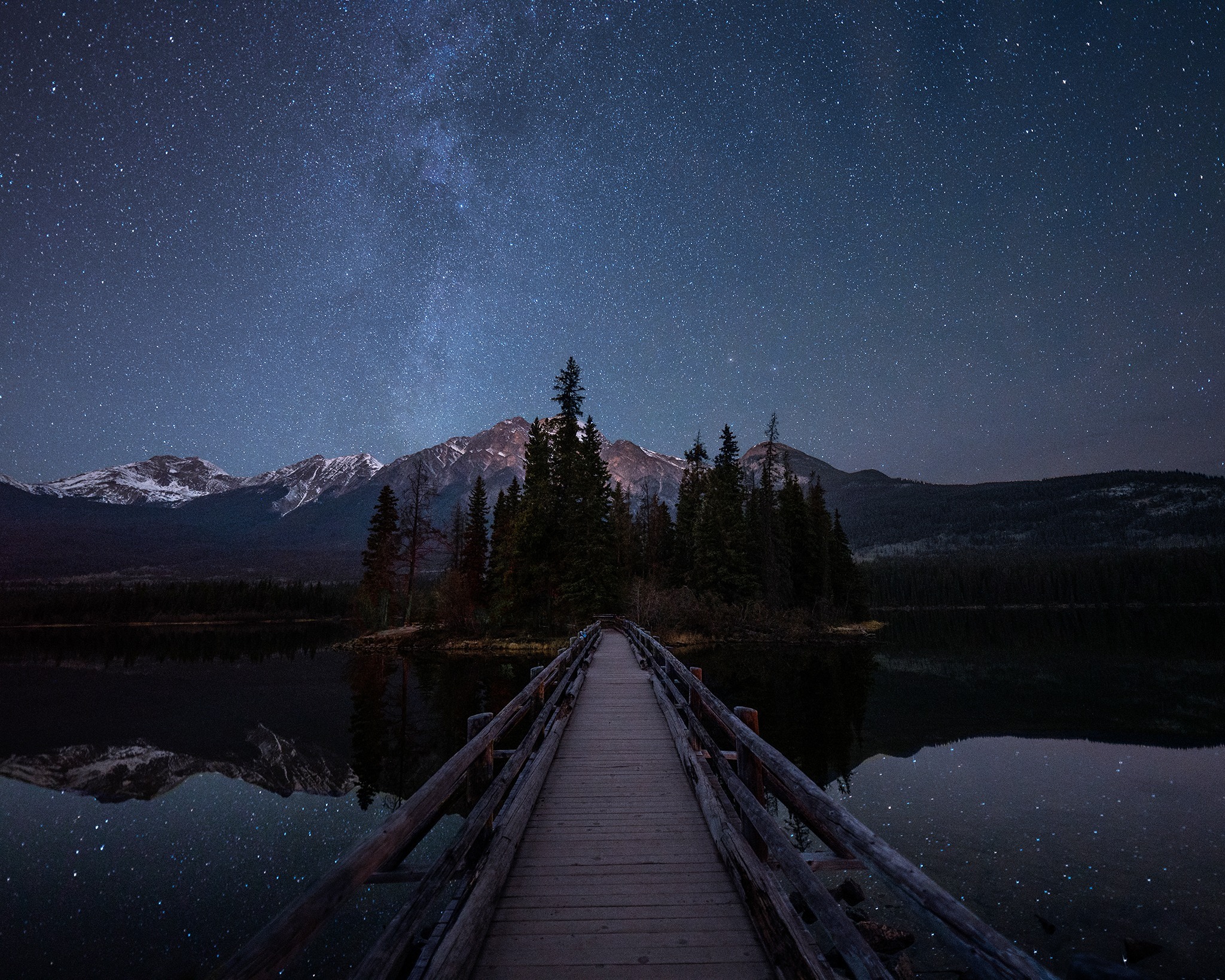
The jewel of the Canadian Rocky Mountains
Jasper National Park is a true natural treasure spread across the province of Alberta, Canada. Located 320 km west of Edmonton and 290 km northwest of Calgary, it is the largest national park in the Canadian Rocky Mountains, covering an area of over 11,000 square kilometers. Jasper is widely regarded as one of the most beautiful and pristine wilderness areas in North America and is a UNESCO World Heritage Site as part of the Canadian Rocky Mountains.
Established in 1907, Jasper Park was created to preserve the unique mountain ecosystems and protect the diversity of the region’s animal and plant life. Majestic mountain ranges, turquoise lakes, rushing rivers, ancient glaciers and vast forests form an incredibly scenic landscape that attracts hundreds of thousands of visitors from around the world each year.
Diversity of landscapes
The park’s territory impresses with the diversity of natural zones. From mountain valleys to alpine meadows, glacial fields to dense coniferous forests, each area of Jasper offers its own unique landscapes and ecosystems.
Columbia Icefield, one of the park’s main attractions, is the largest accumulation of ice in the Rocky Mountains. Several major rivers originate from here, feeding vast areas of Canada and the United States. The Athabasca Glacier, part of this ice field, attracts many tourists with the opportunity to walk on ancient ice that dates back thousands of years.
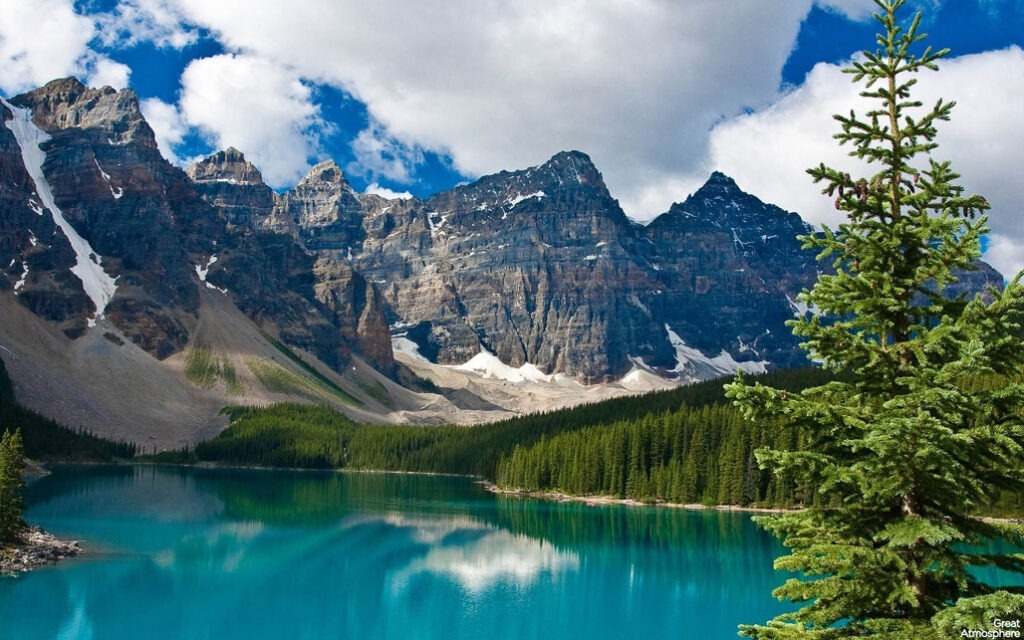
Jasper Park’s lakes are known for their incredible hues, ranging from emerald green to azure blue. Maligne Lake, the largest in the park, is surrounded by snow capped peaks and is famous for its Spirit Island, which is one of the most photographed spots in Canada. Maligne Canyon, a deep limestone canyon with waterfalls and scenic hiking trails, showcases the amazing power of erosion that has shaped this natural masterpiece over millions of years.
A wealth of wildlife
Jasper is rightly considered a paradise for wildlife lovers. It is home to an amazing variety of animals that have adapted to the harsh mountain environment. The park is home to many of the characteristic inhabitants of the Rocky Mountains, including large mammals, birds, and many smaller creatures.
Species that can be found within the park include:
- Large ungulates: moose, caribou (reindeer), bighorn sheep, mountain goats, and wapiti deer
- Predators: black and grizzly bears, wolves, bobcats, cougars, and coyotes
- Small mammals: marmots, pika, chipmunks, and beavers
- A variety of birds: white-headed eagles, osprey, falcons, owls, and many songbirds
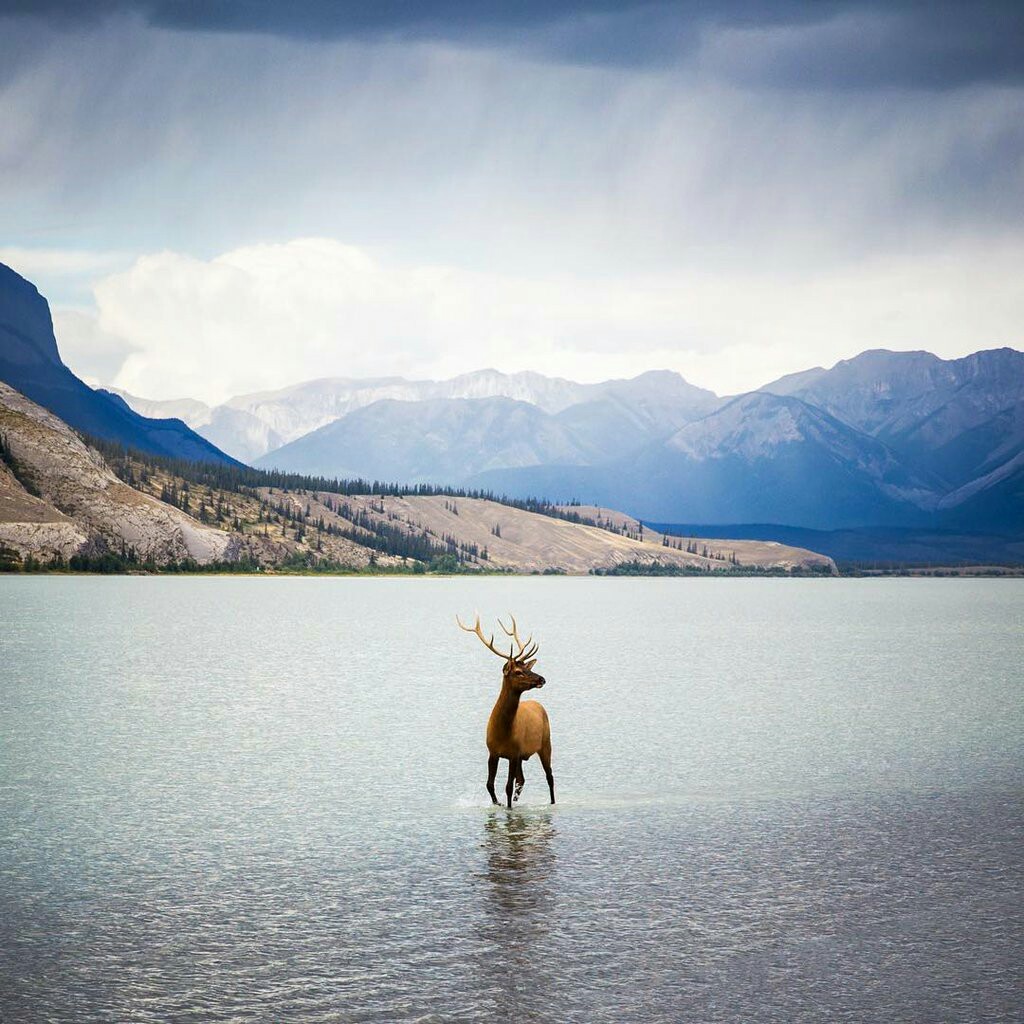
Wildlife watching is one of the popular activities at Jasper Park GetYourGuide
During spring and fall, the park’s nature is especially vibrant, offering ideal opportunities for wildlife watching. Many species are most active and visible during these seasons. Based on 2022-2023 sightings, about 32 wolves in 12 different packs use Jasper National Park for their habitat. Some wolf territories are entirely within the park, while for other packs the park is only part of their extensive territory.
The park’s forest ecosystems are represented by a variety of tree types, including majestic pines, firs, larches and spruces, some of which reach over 200 meters in height. Many species of wildflowers bloom in the alpine meadows, especially beautiful in the short summer period.
Dark Sky Reserve
One of the unique features of Jasper National Park is its status as the second largest dark sky reserve in the world. This status was awarded to the park in 2011 by the Royal Astronomical Society of Canada, recognizing the exceptional clarity of the night sky and minimal light pollution.
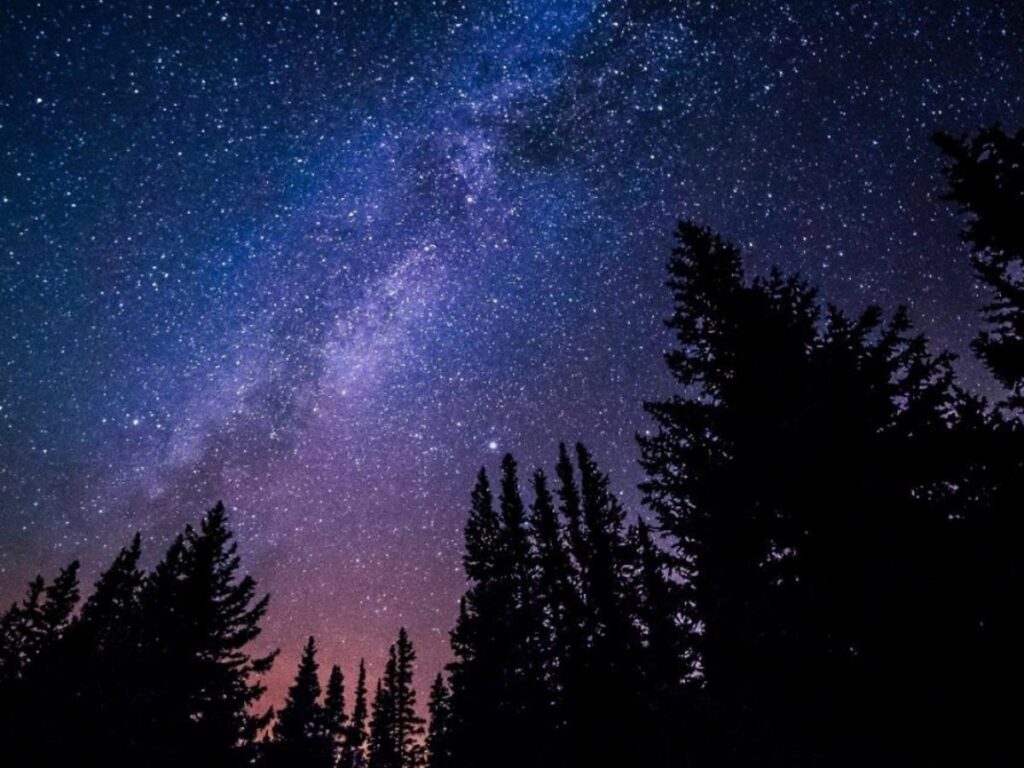
What makes Jasper the perfect place for stargazing:
- Minimal light pollution: Remoteness from major urban centers and strict policies to control lighting in the park itself and the town of Jasper
- High Altitude Location: Cleaner and clearer air at higher altitudes
- Wide open spaces: Many locations with unobstructed views of the entire sky
- Dark Sky Protection: An active program to preserve the natural darkness of the night sky
These conditions give park visitors the opportunity to observe thousands of stars, details of the Milky Way, meteor showers, and even the northern lights. The best time for stargazing is on moonless nights from October through March, when the sky is especially dark and clear.
Every October, Jasper hosts the Dark Sky Festival, which attracts amateur astronomers and professionals from all over the world. The festival program includes lectures by renowned scientists, telescope observations, photo exhibitions, and other events dedicated to the night sky.
Jasper National Park is also an excellent place to observe the northern lights (Aurora Borealis). Located at such a northern latitude, the park regularly provides opportunities to see this spectacular natural phenomenon. The bright green, red and purple waves of light dancing in the sky over the majestic mountains create a truly unforgettable spectacle.
Seasons and outdoor activities
Jasper National Park is a destination worth visiting at any time of year, although each season offers its own unique experiences and outdoor activities.
Spring (March-May)
Spring in Jasper is a time of nature’s awakening. It is the period when the valleys and lower slopes of the mountains are free of snow, the first flowers bloom, and animals become more active after winter hibernation. There are significantly fewer visitors than during the summer season, allowing you to enjoy the quiet and solitude of the park.
Popular spring activities:
- Wildlife watching
- Hiking on lowland trails
- Bicycling
- Photographing primary flowers and waterfalls filled with meltwater
Summer (June-August)
Summer is the peak tourist season in Jasper. Warm weather, long daylight hours, and fully accessible trails make this an ideal time to fully explore the park. Most of the high elevation trails are open and the lakes are warm enough for daredevil swimming.
Summer Activities:
- Long hikes, including multi-day trails
- Kayaking and canoeing on the lakes
- Rock climbing
- Rafting on mountain rivers
- Golf on one of the world’s most scenic courses
- Camping under the stars
Fall (September-November)
Autumn brings vibrant colors and cooler weather to Jasper. The foliage changes color, creating stunning contrasts with the evergreen coniferous forests and snowy mountain tops. Tourist traffic is greatly reduced, giving visitors the opportunity to enjoy the park in relative solitude.
Fall Activities:
- Photographing colorful landscapes
- Observing animals during mating season and migrations
- Hiking in golden forests
- Astrophotography on longer nights
Winter (December-February)
Winter transforms Jasper into a true snowy fairy tale. Snow-capped mountains, frozen lakes and crystal clear air create a unique atmosphere. Although some parts of the park become inaccessible due to snow, winter Jasper offers many unique outdoor activities.
Winter Activities:
- Skiing and snowboarding at Marmo Basin Ski Center
- Cross-country skiing on marked trails
- Snowshoeing to explore snowy trails
- Ice skating on frozen lakes
- Ice climbing in canyons
- Watching the northern lights on long winter nights
- Warming visits to Myette Hot Springs
Jasper Township – gateway to the wilderness
The small town of Jasper, located in the heart of the national park, serves as the main base for visitors. With a population of about 5,000, it retains the charm of a small mountain village despite its tourist importance.
The town offers all the necessary services for tourists: hotels of different categories, restaurants with Canadian and international cuisine, information center of the park, stores of equipment and souvenirs. At the same time, the town observes strict rules to minimize light pollution, using special street lamps directed downward, which allows you to observe the starry sky even within the limits of the settlement.

World significance and conservation
In 1984, Jasper National Park was designated a UNESCO World Heritage Site as part of the Canadian Rocky Mountain Parks. This recognition underscores the exceptional importance of the park in terms of conservation, geological history and biodiversity.
The park faces a variety of environmental challenges, including climate change affecting glaciers and alpine ecosystems, wildfires and increasing tourism. The Canadian Park Service is actively working to manage these threats by implementing sustainable tourism and natural resource conservation programs.
One example of conservation efforts is a project to restore an endangered caribou (reindeer) population. This involves creating special habitats, controlling predators and researching migration routes.
Practical information for visitors
For those planning to visit Jasper National Park, it’s important to keep a few practical aspects in mind:
- Best time to visit: The peak tourist season is June-August, but the spring (March-May) and fall (September-November) months are recommended to avoid crowds.
- EntranceTickets: Visiting the park requires the purchase of an entrance ticket (park pass), which can be purchased online or at the park entrance.
- Safety: When visiting the park, it is important to keep safety rules in mind, especially regarding wildlife. It is forbidden to feed or approach the animals, and food should be stored in secure areas.
- Preparation: Even in summer, the weather in the mountains can change quickly, so it is necessary to have appropriate equipment and a supply of water.
- Transportation: The most convenient way to explore the park is by car, although some tour companies offer organized tours and shuttles to major attractions.
- Accommodation: From campsites to luxury forest chalets, the park offers a variety of accommodation options that are best booked in advance, especially in high season.
Geological heritage of the park
Jasper National Park is a veritable outdoor geology textbook. The formation of this area began over 500 million years ago, when the west coast of North America was the bottom of an ancient sea. Subsequent tectonic plate movements have resulted in tremendous changes to the landscape – ancient marine sediments have been uplifted for kilometers and the mighty forces of nature have created the majestic mountain ranges we see today.
Of particular interest are the park’s many glacial formations. During the last ice age, which ended about 10,000 years ago, the area was covered by giant glaciers up to several kilometers thick. These massive ice blocks, moving slowly, carved the distinctive U-shaped valleys, cirques, and lake basins that today define the recognizable Jasper landscape.
The Columbia Icefield, one of the park’s most impressive geologic wonders, is the largest accumulation of ice in the Rocky Mountains at approximately 325 square kilometers. It is fed by abundant snowfall, and the meltwater gives rise to rivers that flow into three different oceans: the Pacific, Atlantic and Arctic. This fact makes the Columbia Icefield a unique hydrologic phenomenon known as the “triple watershed.”
The park features a variety of rocks ranging from the oldest metamorphic rocks of the Precambrian period to the relatively young sedimentary deposits of the Mesozoic era. The presence of various minerals gives the rocks an amazing variety of colors, from snow-white limestone to rusty red ferruginous shale.
Jasper’s Water Treasures
Water plays a key role in shaping Jasper’s landscape and ecosystems. From tiny streams to full-blown rivers, from small mountain lakes to vast glacial water bodies, the park is literally permeated with waterways.
The park’s lakes
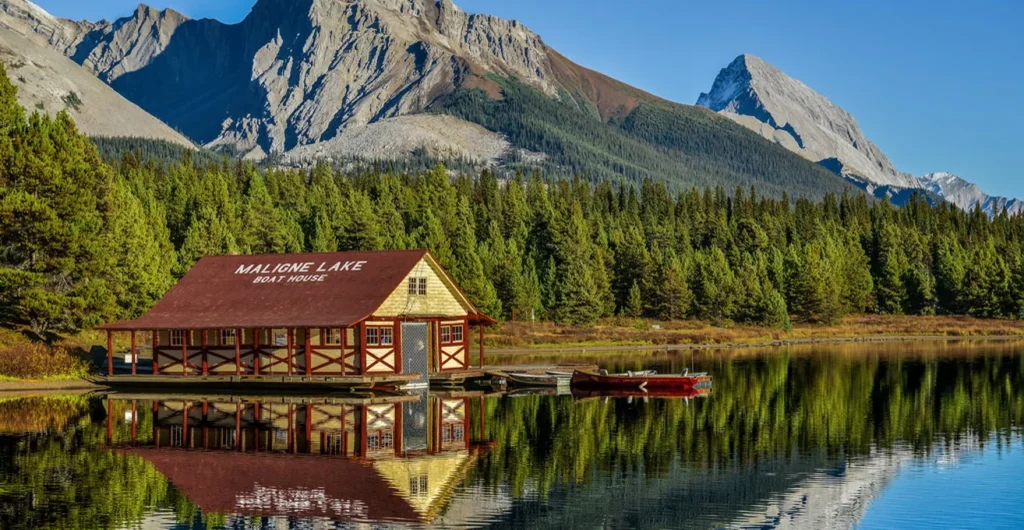
Maligne Lake is the jewel of the park, the largest glacial lake in the Canadian Rockies. It is 97 meters deep and 22 kilometers long. The lake is surrounded by an amphitheater of majestic mountains, which creates exceptionally scenic views. The lake is especially famous for its tiny Spirit Island, which is one of the symbols not only of Jasper Park, but of the whole Canada. The bluish-green color of the lake’s water is caused by rock particles suspended in the water – the so-called “glacial flour”.
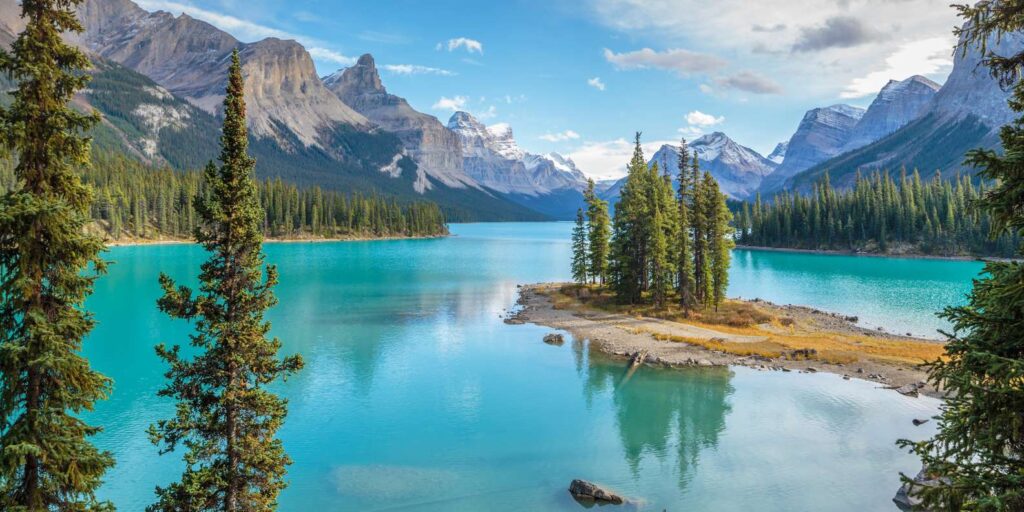
Spirit Island in Maline Lake is one of the most photographed places in Canada Red Hair Travel
Patricia Lake and PyramidLake are located just a few kilometers from the town of Jasper, making them popular destinations for day trips. These lakes are surrounded by dense coniferous forests and offer magnificent views of Pyramid Mountain reflected in the clear water.
MedicineLake is a unique natural phenomenon – it fills with meltwater in the summer and then almost completely disappears in the fall as the water flows into underground canals, forming one of the largest underground river systems in the world.
Rivers and waterfalls
TheAthabasca River is one of the park’s major rivers, originating in the Columbia Icefield and flowing through all of Jasper. The river is part of the Mackenzie River Basin, the longest river system in Canada. The Athabasca is known for its scenic bends and powerful rapids, making it popular with rafting enthusiasts.
MaligneCanyon is an impressive geological formation that is up to 50 meters deep and only a few meters wide in some places. Along the canyon there is a system of footbridges and paths that allow visitors to safely explore this natural wonder. In winter, the frozen waterfalls of the canyon turn into bizarre ice sculptures, attracting ice climbing enthusiasts.
Athabasca Falls is one of the most powerful waterfalls in the Rocky Mountains, where the Athabasca River rumbles down a narrow canyon. Although the falls are only 23 meters high, the volume of water and the force of the flow is impressive. A system of walkways allows you to see the waterfall from different angles and feel its power.
Sunwapta Falls is a cascade of two waterfalls on the Sunwapta River. The upper waterfall is more accessible to tourists, while the lower one is less traveled. The falls are especially spectacular in spring and early summer when they are fed by glacial meltwater.
Myette Hot Springs
Miette HotSprings is located in the eastern part of the park and is considered one of the hottest springs in Canada, with natural spring water temperatures reaching 54°C (cooled to a comfortable 40°C for swimming). The mineral-rich water, including sulphate, calcium, bicarbonate and magnesium, is considered beneficial to health. A modern complex with swimming pools built near the springs offers visitors the opportunity to relax and enjoy the hot mineral water with a magnificent view of the surrounding mountains.
Vegetation of the park
The ecosystems of Jasper National Park range from subalpine forests to alpine tundra, creating a unique diversity of vegetation adapted to different altitudes and climatic conditions.
Woodlands
The lower slopes of the mountains are covered with dense coniferous forests dominated by:
- Engelmann Spruce (Engelmann Spruce), a majestic tree reaching up to 40 meters in height, with its characteristic blue-green needles
- Subalpine Fir (Subalpine Fir) – a slender tree with soft needles and a cone-shaped crown
- LodgepolePine is a common species that recovers particularly well from wildfires
- WesternLarch is one of the few conifers that shed its needles for the winter, creating beautiful golden landscapes in the fall
Deciduous species such as aspen and cottonwood can also be found in the lower valleys, adding vibrant splashes of yellow and gold to the park’s fall landscape.
Alpine Meadows
Above the forest boundary, at an elevation of approximately 2,100-2,300 meters, the alpine meadows zone begins. This is a realm of colorful wildflowers and low-growing shrubs that have adapted to the harsh conditions of the high mountains. In summer these meadows turn into real natural gardens:
- Indian Paintbrush with bright red and orange inflorescences
- Alpine Bellflower with delicate blue flowers
- WesternAnemone with characteristic fluffy seed heads
- Alpine Lupine (AlpineLupine ), which creates purple carpets all over the slope
- Arctic Dryas with dainty white flowers and distinctive twisted fruits
Flowering in the alpine zone is brief and occurs in mid-summer, July and early August, when the snow finally melts and the plants hurry to complete their life cycle before the early mountain autumn.
Rare and endemic species
The park is home to several rare and endemic plants that can only be found in this region of the Rocky Mountains. For example, the rare Calypso Orchid (Calypso Orchid ) blooms in early spring in the shady coniferous forests. This small plant with a single bright pink flower is under special protection.
Also found in the park is the Mountain Heather, a low shrub with bell-shaped flowers that grows in the alpine zone and is an important component of high-altitude ecosystems.
Cultural Heritage
The history of Jasper National Park is inextricably linked to the history of indigenous peoples, European explorers, fur traders and early settlers.
Indigenous peoples
The area of present-day Jasper Park has been home to various indigenous groups for thousands of years, including the Beaver (Tsattine), Cree, Shuswap, Stoney Nakoda and Métis tribes. These peoples utilized the region’s rich natural resources to support their traditional way of life, including hunting, gathering and fishing.
Archaeological evidence indicates the presence of people in the park as far back as more than 10,000 years ago. Ancient trails built by indigenous people through mountain passes later became the basis for modern hiking trails and transportation routes.
The era of European exploration
The first European to explore these lands is believed to be David Thompson, who traveled through the Athabasca Pass in 1811 in search of a new route for the North West Company. The area soon became an important node in the fur trade network connecting eastern and western Canada.
The park itself was named in honor of Jasper Hawes, who ran a trading post for the North West Company in the early 19th century. The trading post, known as Jasper’s House, became the center of commercial activity in the region and an important point on the so-called Leatherback Trail, a trade route through the Rocky Mountains.
From railroad to national park
A decisive moment in the development of the region was the construction of the transcontinental railroad in the early 20th century. In 1907, the area was designated Jasper Forest Park, the first step toward the creation of a full-fledged national park, which was officially established in 1930.
In the 1920s and 30s, active development of tourist infrastructure began. The famous Jasper Park Lodge hotel was built, which became a symbol of a luxurious mountain vacation. The first highways were also built and campsites were developed to accommodate the growing flow of tourists.
Environmental Challenges and Conservation
Like many protected areas around the world, Jasper National Park faces a number of serious environmental issues and challenges.
Climate change
One of the most serious threats to the park is global climate change. Its effects are manifested in many ways:
- Glacier retreat: The park’s glaciers, including the famous Athabasca Glacier, are rapidly shrinking. Some glaciers have lost up to 60% of their volume in the last century, affecting not only the landscape but also the region’s water supply.
- Changing vegetation zones: Rising average temperatures are shifting the boundaries of vegetation zones – the forest line is rising higher into the mountains, reducing the area of alpine ecosystems.
- Disruption of life cycles: Many animal and plant species are experiencing a dis-synchronization of their life cycles. For example, flowering of some plants now occurs earlier, which may not coincide with the emergence of insect pollinators.
Forest fires
Forest fires are a natural part of the ecological cycle in the Rocky Mountains, but climate change and prolonged periods of drought are increasing their frequency and intensity. In 2024, the park was severely impacted by wildfires, causing some areas to remain closed to the public.
Despite their destructive nature, fires play an important role in renewing forest ecosystems by promoting the germination of seeds of certain tree species and creating a mosaic of different-aged woodlands, which contributes to biodiversity.
Wildlife conservation
Many animal species, especially large mammals, require large areas to maintain viable populations. However, even a large park like Jasper may not be enough, especially when it comes to migration corridors.
Of particular concern is the status of the endangered northern forest caribou population. One measure to protect this species has been the temporary closure of certain areas of the park to the public during breeding and calving season.
Also problematic is the possible habituation of wildlife to human presence and food. The Parks Service of Canada is actively working to educate visitors about the rules of behavior, including strict prohibitions on feeding animals and proper food storage.
Managing tourist traffic
With the growing popularity of ecotourism, Jasper Park receives more visitors each year. Mass tourism puts additional stress on the park’s ecosystems and infrastructure. To minimize the negative impact of tourist flow, the park administration:
- Implements a quota system for visiting certain routes and attractions
- Develops environmental education and propaganda of responsible tourism principles
- Modernize infrastructure to meet environmental requirements
- Expands transportation options, including public transportation within the park

Unique seasonal phenomena
Each season in Jasper National Park offers its own special natural phenomena and observation opportunities.
Spring awakening and snowmelt
Spring snowmelt is a stunning time when the park’s waterfalls and rivers fill to the brim and showcase their maximum power. As the snow melts on the lower slopes of the mountains, the first plants, including rare species of orchids, begin their blooming season. This is also the period when many animals emerge from hibernation or return from winter migration.
Summer riot of life
The summer peak of biological activity in the park occurs in July and August. During this period, the alpine meadows turn into flower carpets of incredible beauty. On the mountain slopes you can see families of ibex and rams with their youngsters mastering the difficult art of moving on steep cliffs.
During the summer months, the park’s lakes are finally free of ice and their waters are warm enough for swimming – although temperatures rarely rise above 18-20°C, even on the hottest days.
Autumnal transformation
Mid-September to early October is marked by a stunning autumn spectacle, when the western larch changes the color of its needles from green to golden. Combined with the purple undergrowth and evergreen conifers, this creates a delightful palette of colors.
Fall is also mating season for elk. Powerful males with impressive antlers stage loud contests to attract females. Their distinctive calling roar reverberates through the valleys and serves as one of the most recognizable sounds of Canadian wildlife.
Winter stillness and northern lights
Winter transforms the park beyond recognition. The snow-covered landscape and frozen waterfalls create almost surreal landscapes. Snowshoeing or cross-country skiing allows you to visit places inaccessible in summer due to abundant water or dense vegetation.
The long winter nights provide ideal conditions for observing the night sky and, under favorable geomagnetic conditions, the northern lights. The combination of green, purple and blue waves of light dancing over the snow-capped mountains is among the most impressive natural spectacles to be seen in the park.
International recognition and significance
UNESCO World Heritage Site status emphasizes the outstanding universal value of Jasper National Park. The park is more than just a place of recreation – it is a living laboratory for studying the natural processes occurring in mountain ecosystems and an important genetic reservoir for many species of plants and animals.
Together with neighboring Banff, Yoho and Kootenay National Parks, as well as Mount Assiniboine, Mount Robson and Humber Provincial Parks, Jasper forms one of the largest protected mountain landscapes in the world, which is critical to maintaining the ecological integrity of the region.
Exploring the park: trails and routes
To explore Jasper National Park, an extensive network of trails of varying length and difficulty has been developed, suitable for beginners and experienced hikers alike.
Popular one-day trails include
- MaligneCanyon Trail: This easily accessible trail is about 3 kilometers long and runs along a deep limestone canyon with six viewing bridges over a rushing river. In winter, the trail becomes an amazing icy journey among frozen waterfalls.
- Whistlers Trail: The climb up Whistlers Mountain takes about 3-4 hours and is a moderately challenging 6.2 kilometer route with an elevation gain of over 1200 meters. An alternative to hiking is the scenic Jasper SkyTram gondola ride.
- Valley of the Five Lakes: A popular moderate difficulty trail of about 4.5 kilometers that winds through magnificent forests to a series of five small lakes of stunning emerald and turquoise hues.
Multi-day hikes
- Skyline Trail: This famous 44 kilometer trail is considered one of the best multi-day treks in the Canadian Rockies. Much of the trail passes above the forest edge, providing stunning panoramic views. The hike usually takes two to four days.
- Tonquin ValleyTriangle (Tonquin Valley): This moderate difficulty multi-day hike passes through a scenic alpine valley surrounded by impressive mountain peaks. The views of the rock formations known as Ramparts reflecting in the waters of Lake Amefist are particularly beautiful.
- Brazeau Loop: This is a challenging multi-day trek of about 80 kilometers with numerous river crossings. The hike usually takes 5-7 days and passes through a variety of landscapes including alpine meadows, dense forests and mountain passes.
Practical tips for travelers
A few helpful tips for those planning to visit Jasper National Park:
Preparing for a visit
- Make advancereservations: During high season (June-September), it is recommended to reserve lodging and campgrounds in advance, as they fill up quickly.
- Check road and trail closures: Before your visit, it’s worth checking the park’s official website for information on closures due to weather, wildfires or maintenance work.
- Environmental fees: In addition to the park entrancefee, some activities (such as wilderness camping) may require additional permits.
Safety in the wilderness
- Bears and other predators: The park is home to black bears and grizzlies. Always carry bear spray, travel in groups, make noise on trails, and properly store food.
- Mountain Sickness: When climbing rapidly to high altitudes, some visitors may experience symptoms of mountain sickness. Plan for gradual acclimatization and carry basic medications.
- Changeable weather: Even in the summer, weather conditions can change dramatically in the mountains. Always bring extra warm clothing, a waterproof jacket and sunscreen.
- Orienteering: Cell phone service may not be available in remote areas of the park. Have a physical map and compass with you and know how to use them.
Environmentally Responsible Visiting
- Leave No Trace: Follow the principles of environmentally responsible tourism – take all trash with you, stay on marked trails, don’t pick plants or disturb wildlife.
- Fire safety: Observe fire regulations and use only designated areas.
- Respect for animals: Observe wildlife from a safe distance. Using flashes when taking photos and drones can disturb them.
Conclusion
Jasper National Park is not just a scenic vacation spot, but a true symbol of Earth’s natural heritage, preserved for current and future generations. Its majestic mountains, emerald lakes, vast forests and diverse wildlife represent a natural complex of exceptional beauty and ecological value.
A visit to this amazing park is an opportunity not only to enjoy stunning views and outdoor activities, but also to rethink your attitude to nature, feel a deep connection with wildlife and realize the need to preserve it in a world where there are fewer and fewer untouched corners.
The starry skies over the Jasper Rocky Mountains remind us of humanity’s place in the universe – we are only temporary guests on this planet, and it is our responsibility to leave it no less beautiful for those who come after us.
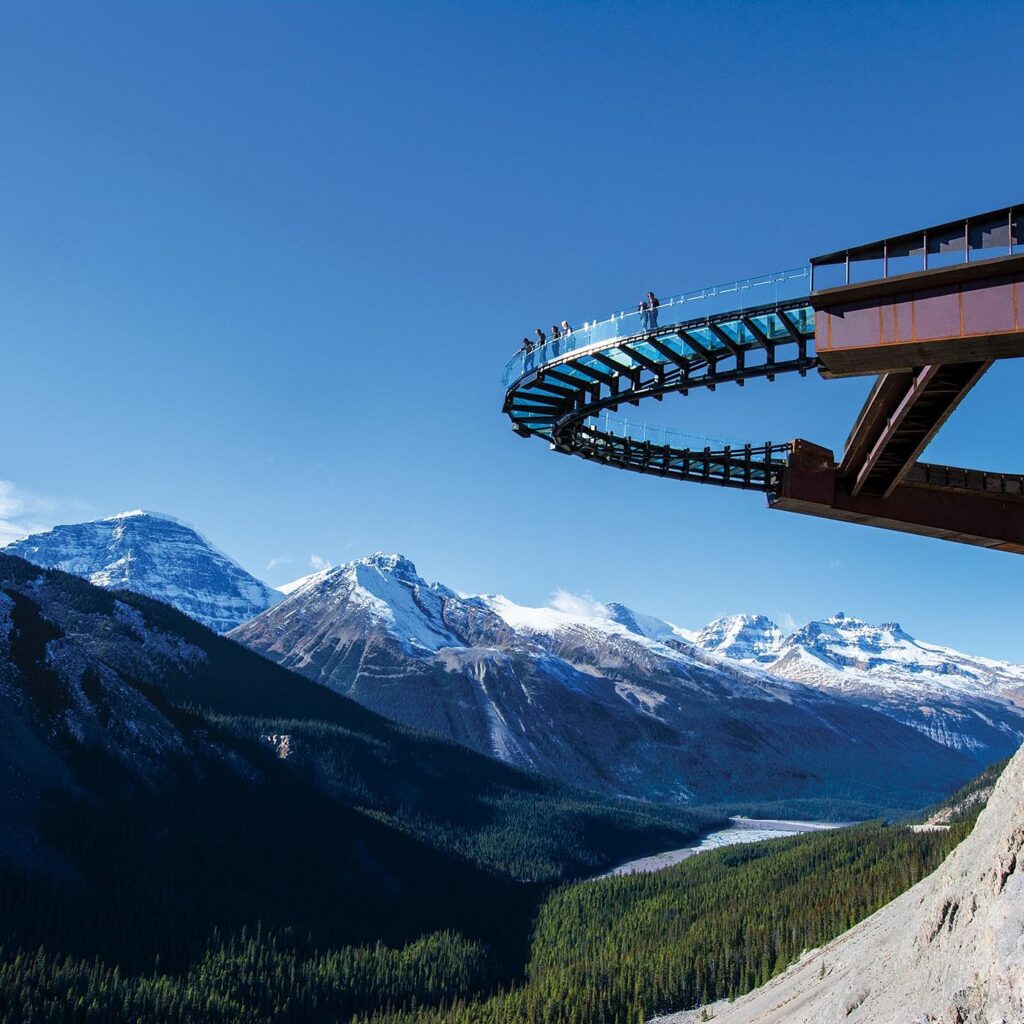
Spectacular views of Jasper National Park Red Hair Travel
Author Information

I’m a journalist specializing in urban issues and city politics in the Vancouver region, which I’ve covered since 1994, and I also have a strong focus on the iGaming industry. In this endlessly changing city, I cover a broad range of issues: from drug policy, bike lanes, billion-dollar development projects, homelessness, and garbage debates, to the rapidly evolving world of online gaming, including regulatory landscapes, technological advancements, and market trends. I write frequently for the Globe and Mail’s B.C. section and Report on Business. From 2008 to 2015, I had a regular column in Vancouver magazine, “Urban Fix,” which apparently resonated with readers so much that it earned me a few regional and national awards.
