
Introduction: a sanctuary at the end of the world
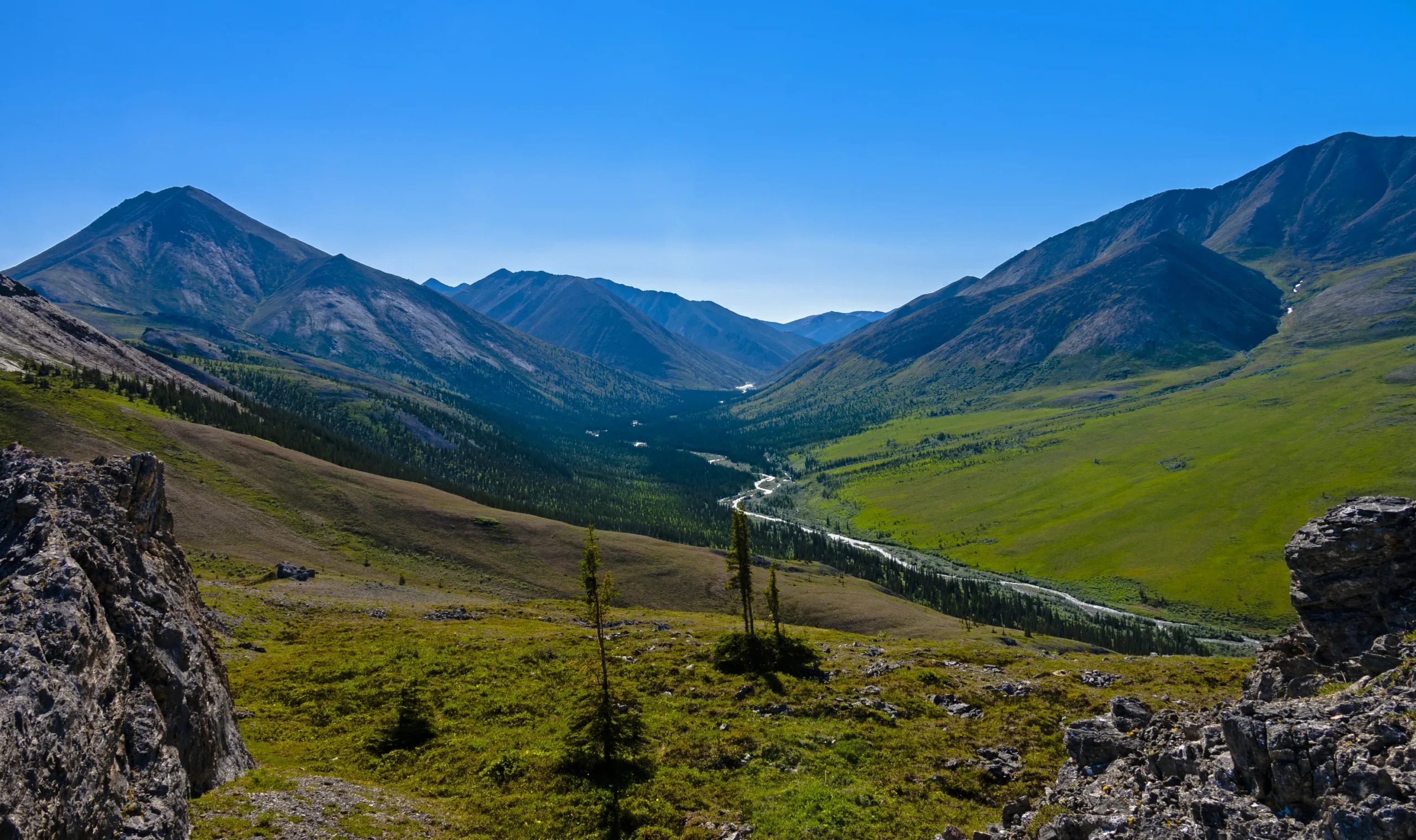
In the far northwest of Canada, in the Yukon Territory, there is an amazing natural oasis called Ivvayik National Park. Covering an area of 10,168 km², this reserve is an unspoiled corner of Arctic nature, located above the Arctic Circle, on the border with Alaska. The name “Ivvaik” (pronounced “Iee-v-week”) comes from the Inuvialuit language and means “nursery” or “birthplace,” a reference to the area’s critical role as a calving ground for Porcupine caribou.
Established in 1984 as a result of the Inuvialuit Final Agreement between the Government of Canada and the Inuvialuit Indigenous Nation, Ivvaik was the first national park in Canada to be established through an agreement with Indigenous peoples. This demonstrates the importance of these lands not only ecologically but also culturally. Today, the reserve remains one of the most inaccessible and sparsely visited parks in Canada – only about 100-200 people visit it annually, which allows the ecosystem to remain intact.

A unique landscape: between the mountains and the sea
Ivvaik’s landscape is surprisingly diverse for an Arctic area. It is home to the British Mountains, which run east-west parallel to the Arctic coast and transition into the Brooks Range in Alaska. Mountain peaks, alpine and Arctic tundra, plains and river valleys all add up to a stunning mosaic of natural landscapes.
Running through the park from south to north is the Firth River, Canada’s oldest river, which forms a vast gorge before forming a huge delta as it flows into the Beaufort Sea. The river is considered one of the best rivers in the world for rafting, although extreme weather conditions and seclusion make such trips a challenge even for experienced travelers.
The climate of Ivvaik is classic Arctic: long, harsh winters with temperatures dropping to -45°C and short, cool summers when the thermometer can rise to 30°C in July. Precipitation is low, mainly in summer, which is typical of tundra ecosystems.
Arctic tundra: a fragile ecosystem
The Arctic tundra is a biome characterized by extremely low temperatures, low precipitation, nutrient-poor soils and a short growing season. Despite these harsh conditions, the Ivvaika tundra is a complex and remarkably diverse ecosystem.
Vegetation here is adapted to the harsh conditions: low shrubs, sedges, grasses, mosses and lichens form the basis of the vegetation cover. Dwarf birches, willows and cranberries can be found in the river valleys. Higher up in the mountains, the Arctic tundra is replaced by alpine tundra, where lichens predominate.

One of the most important features of the Ivvaika Arctic tundra is permafrost, a layer of soil that remains frozen for at least two consecutive years. Parks Canada installed four permafrost sensors in collaboration with Carleton University in 2014 and 2015 to monitor soil temperatures at various depths. These data allow us to observe how seasonal thawing and air temperature affect permafrost and determine if significant permafrost decline is occurring in the park.
In the face of global climate change, monitoring permafrost becomes critical because its thawing could release significant amounts of greenhouse gases and alter the entire tundra ecosystem.
Ivvaika fauna: survival in extreme conditions
Ivvaik’s fauna is diverse and well adapted to the harsh Arctic conditions. Yukon wolves, grizzlies, and black bears inhabit the Beaufort Sea coast. Other animals that inhabit this park include two varieties of foxes, Yukon moose, lemmings, Dall’s snow sheep, gyrfalcons, musk oxen, and wolverines.
The area around Ship Creek River is the northernmost range of Dall’s snow sheep in Canada. The Firth River is home to one of the longest populations of Arctic char (Dolly Varden char) in western Canada.
Canada’s National Park Service uses a non-invasive remote camera program to monitor grizzly bear habitat use and occupancy. The park now has 30 cameras installed along the Firth River that take pictures when wildlife movement is detected, as well as once a day on a scheduled basis. This allows animal populations to be tracked without interfering with their natural habitat.
Porcupine caribou herd: the great migration
However, the best-known natural phenomenon of Ivvaik is the caribou reindeer. The Porcupine caribou herd (named after the Porcupine River) is one of the largest in North America, numbering about 218,000 individuals (according to a 2017 photographic census). This herd makes one of the most impressive migrations in the animal world, traveling more than 2,400 kilometers annually between wintering grounds and summer pastures.
The herd’s range covers more than 250,000 square kilometers, including northern Alaska, the Yukon, and the Northwest Territories. Iwvaik National Park protects much of the Porcupine caribou herd’s calving grounds, while neighboring Wuntut National Park protects the herd’s spring and fall migration routes.

Each spring, usually in April, the herd begins moving north from their wintering grounds in the boreal forests. By May, pregnant females reach the coastal plains of the Arctic National Wildlife Refuge in northern Alaska and Iwvaik National Park, where calving occurs in June. Here, on the open tundra, females give birth to calves that can follow their mothers almost immediately after birth.
The choice of these calving grounds is not accidental: the coastal plains of Ivvaik offer abundant summer vegetation to feed lactating females, and the open tundra expanse makes it easier to spot approaching predators such as wolves and grizzly bears. Between 40,000 and 75,000 caribou calves are born here each summer.
In mid-summer, the herd clusters together in large groups, which helps reduce exposure to the millions of insects that breed on the tundra during the warmer months. Caribou are constantly on the move to find enough food and avoid these blood-sucking parasites. By fall, the herd begins moving south again, returning to sheltered valleys and forests where it spends the winter.
To monitor the Porcupine caribou herd, satellite collars are used to provide information on the animals’ locations and movements throughout the year. This helps biologists estimate population size, breeding rates, and survival rates.
Ecological significance of caribou migration
The Porcupine herd caribou migration is of great ecological importance to the entire region. These animals are a keystone species for the tundra ecosystem:
- Seed dispersal: By traveling great distances, caribou help spread plant seeds across the tundra.
- Nutrient cycling: Their excrement enriches the poor tundra soil with nutrients.
- Food chain: Caribou are a key food source for predators such as wolves and grizzly bears, as well as scavengers.
- Impacts on vegetation: Caribou grazing helps maintain plant diversity on the tundra by preventing individual species from dominating.
The Porcupine herd is also of great cultural importance to the region’s indigenous peoples – the Inuvialuit, Gwich’in and others. For thousands of years, these peoples have depended on caribou as a source of food, materials for clothing and tools, and as an important part of their spiritual and cultural traditions.
Threats and challenges
Despite its remoteness and inaccessibility, the Ivwaika ecosystem and the migratory Porcupine caribou herd face a number of serious threats:
- Climate change: the Arctic is heating up faster than any other region on Earth. This is melting permafrost, changing vegetation, and potentially disrupting established caribou migration routes.
- Industrial Development: Oil and gas exploration and production, particularly in the Arctic National Wildlife Refuge area of Alaska (part of the migration route), poses a significant threat to caribou habitat.
- Changes in vegetation: Climate warming is favoring the spread of shrubs in the tundra, which may change the nature and quality of caribou grazing habitat.
- Increase in predators: Climate change may lead to an increase in predators on the tundra, increasing pressure on caribou populations.
National parks like Ivviaik play a critical role in protecting these vulnerable ecosystems and securing a future for the Porcupine caribou herd. The National Park Service of Canada conducts many research and monitoring programs, including observations of migratory birds, vegetation change and permafrost conditions, to better understand and protect this unique ecosystem.
Visiting Ivvaik: an immersive experience in the Arctic wilderness
For those few who dare to visit this remote reserve, Ivvaik offers a truly unique experience of immersion in the untouched Arctic wilderness. The most practical way to get to Ivvaik National Park is by chartered plane from Inuvik, which is 200 kilometers from the park.

Activities available in the park include river rafting, fishing, wildlife watching, camping and hiking. River rafting on the Firth River is particularly popular between late June and early August. A permit is required to fish in the park and there is a daily catch limit of one Arctic char with a limit of three fish total.
Camping is allowed in all areas of the park except archaeological sites, and there are no marked hiking trails in the park, making it a real adventure for experienced hikers.
Author Information

I’m a journalist specializing in urban issues and city politics in the Vancouver region, which I’ve covered since 1994, and I also have a strong focus on the iGaming industry. In this endlessly changing city, I cover a broad range of issues: from drug policy, bike lanes, billion-dollar development projects, homelessness, and garbage debates, to the rapidly evolving world of online gaming, including regulatory landscapes, technological advancements, and market trends. I write frequently for the Globe and Mail’s B.C. section and Report on Business. From 2008 to 2015, I had a regular column in Vancouver magazine, “Urban Fix,” which apparently resonated with readers so much that it earned me a few regional and national awards.
