
Introduction
In the vast expanse of Arctic Canada, where the landscape is often a monotonous white silence or rocky tundra without landmarks, mysterious stone structures have stood since ancient times. These figures, known as Inuksuk (singular: Inuksuk), have become not just navigational landmarks, but real symbols of the culture of the indigenous peoples of the North – the Inuit. The oldest Inuksuks are thousands of years old, and their practical and spiritual significance has been preserved to the present day.

Origin and etymology
AnInuksuk (plural Inuksuit, Inuktitut ᐃᓄᒃᒃᓱᒃ) is a stone figure with deep roots in Inuit culture. Literally translated from Inuktitut, the word “Inuksuk” means “replacing a person” or “acting as a person”. This name reflects one of the most important functions of these structures – to serve as a substitute for human presence in the harsh and sparsely populated Arctic expanses.
Archaeological evidence suggests that the first inuksuksuks were created in the Dorset era, around 2000 BC. Since then, the tradition of their construction has been continuously passed from generation to generation, ensuring the survival of people in the extreme conditions of the Arctic.
Types and construction of inuksuk
Researchers distinguish between eight and twenty-four different types of inuksuk. These stone structures are created in different shapes and sizes, depending on their purpose:
- Asimple signpost is a single vertically placed stone that serves as a basic landmark;
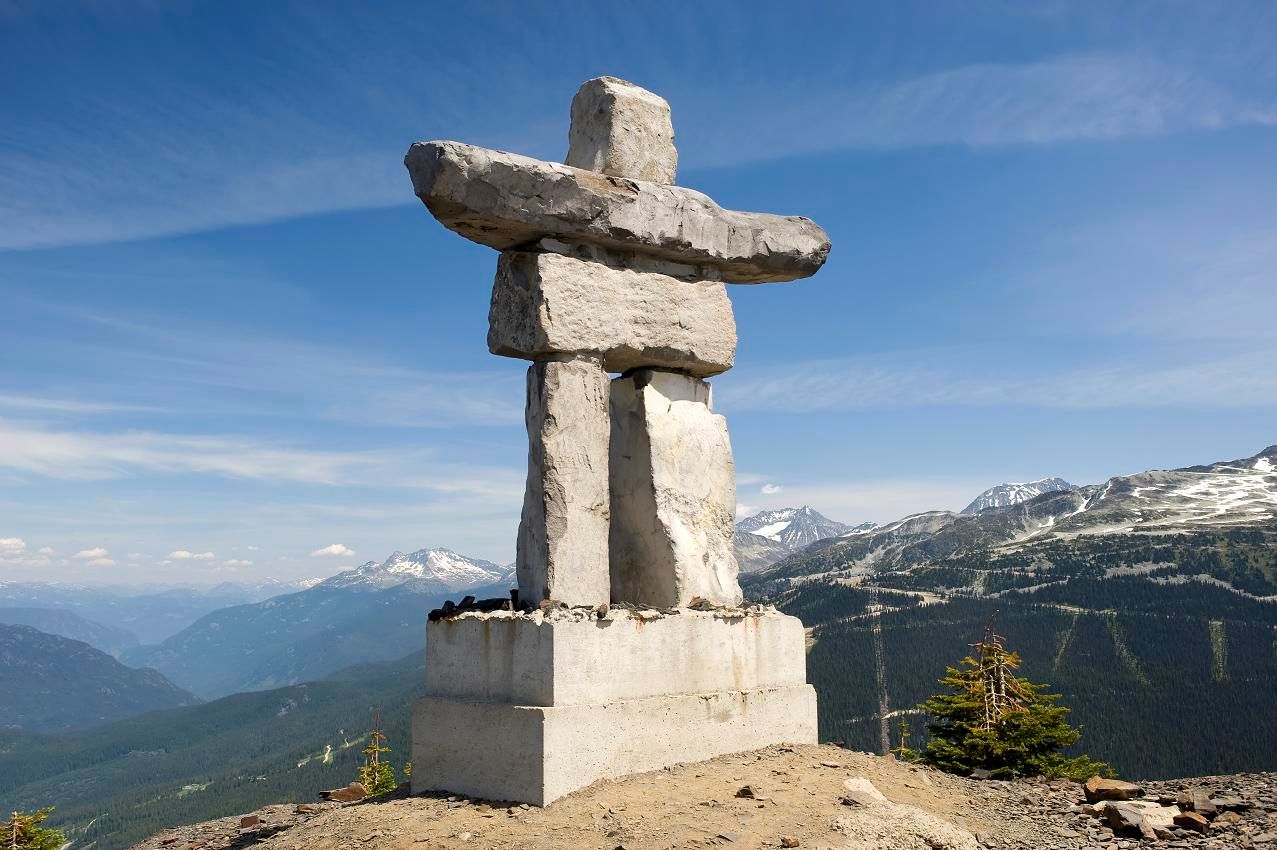
- Aclassic inuksuk is a pyramid-like or pillar-like structure made of several stones;
- Inunguak (translated as “imitating a human”) – a figure that is intentionally given the shape of a human body with distinguishable arms, legs, and head. Interestingly, the Encyclopedia Canadiana considers the Inunguak to be a later development of the idea of the Inuksuk, possibly appearing after contact with European whalers in the 19th century.
Inuksuaks vary in size from small (about 0.5 meters high) to imposing structures up to 2 meters wide. Most often they are erected on high ground so that they are clearly visible even above snow drifts. The material used for construction is local stones, laid in a special way to ensure the stability of the structure.
Bundles of Cassiope tetragona, an arctic shrub, were sometimes used as a special element of the Inuksuk design. They were placed on the tops of the poles, imitating human hair, which further enhanced the anthropomorphic character of these structures.

Function and purpose
Inuksuk performed many vital functions for the Inuit related to survival in the harsh Arctic environment:
1. Navigation marks
The primary function of the Inuksuk is to serve as landmarks in the vast expanse of snow where there are no natural landmarks. In conditions where blizzards could completely obscure tracks and trails, the tall stone figures placed on high ground became lifesaving landmarks for travelers. They helped Inuit find their way between settlements, marked safe routes across the icy expanse, and provided directions to important resources.
2. Hunting assistance
Inuit were particularly resourceful in using Inuksuk poles when hunting caribou (North American reindeer), an important source of food and clothing materials. Inuksuk poles, each made of several blocks, were placed along converging lines along the migration path of the herds. Caribou, frightened by these structures resembling human figures, would head toward the ambush where the hunters would wait for them. This strategy was critical to the survival of Inuit communities.
3. Storage and resource markers
Inuksuk were also used to mark locations where provisions were stored, a critical function in an environment where food was a seasonal and scarce resource. These “stone storehouses” allowed the Inuit to establish a system of strategic stockpiles in case of unsuccessful hunts or to support long journeys.
4. Marking sacred sites
In addition to their practical functions, Inuksuk had important spiritual and ritual significance. They marked ceremonial sites, sacred areas, and served as memorials to the dead. For example, on Iluvirctuk Island near Cape Dorset, one can see an Inuksuk erected in memory of each of those who died in a bloody clash between two Inuit settlements in 1940.
5. Information carriers
Skilled Inuit could “read” the Inuksuk as a kind of message. The shape, size, position of the stones and the direction of the anthropomorphic figures’ hands all carried certain information: they warned of danger, pointed to good places to hunt or fish, and signaled the proximity of a settlement.

Spiritual meaning and symbolism
For the Inuit, Inuksuk were more than just functional objects. They were attributed mystical powers and special spiritual significance. Inuksuk were believed to have their own “inua” (soul or spirit) and were therefore treated with reverence and caution.
Inuksuks were seen as symbols of ancestors who knew how to survive on the land in a traditional way. They represented the connection between generations, between man and nature, and between the material and spiritual world.
Inukshuk symbolizes the human spirit, reflecting the Inuit ability to succeed through cooperation where a lone individual would fail. It is a reminder of the need to belong to something greater than the individual and the value of collective survival in extreme conditions.
Inuksuk construction and preservation
Building an inuksuk was an art that required skill and knowledge passed down from generation to generation. A properly constructed Inuksuk had to be able to withstand the harsh Arctic conditions of high winds, temperature extremes and freeze-thaw soil movement.
A peculiarity of Inuit tradition is the prohibition of destroying already established Inuksuk. Moreover, there was a custom of regularly renewing and strengthening existing structures. It is because of this cultural practice that many Inuksuk have survived from antiquity to the present day as living witnesses to Inuit history.
The destruction of an Inuksuk is considered illegal in modern Canada. The Inuksuk has become a symbol of the Inuit and their homeland, honored as part of their cultural heritage. Each Inuksuk is a welcome sight for travelers visiting the Arctic territories.
Contemporary significance and cultural symbol
In the modern era, the Inuksuk has moved beyond its original purpose to become an important symbol of the Canadian North and Indigenous culture. In 1999, with the creation of the territory of Nunavut as part of Canada, the Inuksuk was placed on its flag and coat of arms.

The Inuksuk gained particular international recognition when an anthropomorphic Inunguaq named Ilanaak (meaning “friend” or “friendship”) was chosen as the official symbol of the 2010 Winter Olympics in Vancouver. The Inuksuk has also become the mascot for the Summits of the Americas, regular meetings of heads of state and government in the Western Hemisphere.
Inuksuksuks are currently under state protection. Of particular importance is the large assemblage of these structures at Enuxo Point Park in southwestern Baffin Land, which has been protected since 1969.
Since the mid-twentieth century, small models of inuksuk made from stones held together with glue or wire have become a popular souvenir, and stylized images of inuksuk have been used in design and branding.
Author Information

I’m a journalist specializing in urban issues and city politics in the Vancouver region, which I’ve covered since 1994, and I also have a strong focus on the iGaming industry. In this endlessly changing city, I cover a broad range of issues: from drug policy, bike lanes, billion-dollar development projects, homelessness, and garbage debates, to the rapidly evolving world of online gaming, including regulatory landscapes, technological advancements, and market trends. I write frequently for the Globe and Mail’s B.C. section and Report on Business. From 2008 to 2015, I had a regular column in Vancouver magazine, “Urban Fix,” which apparently resonated with readers so much that it earned me a few regional and national awards.
