
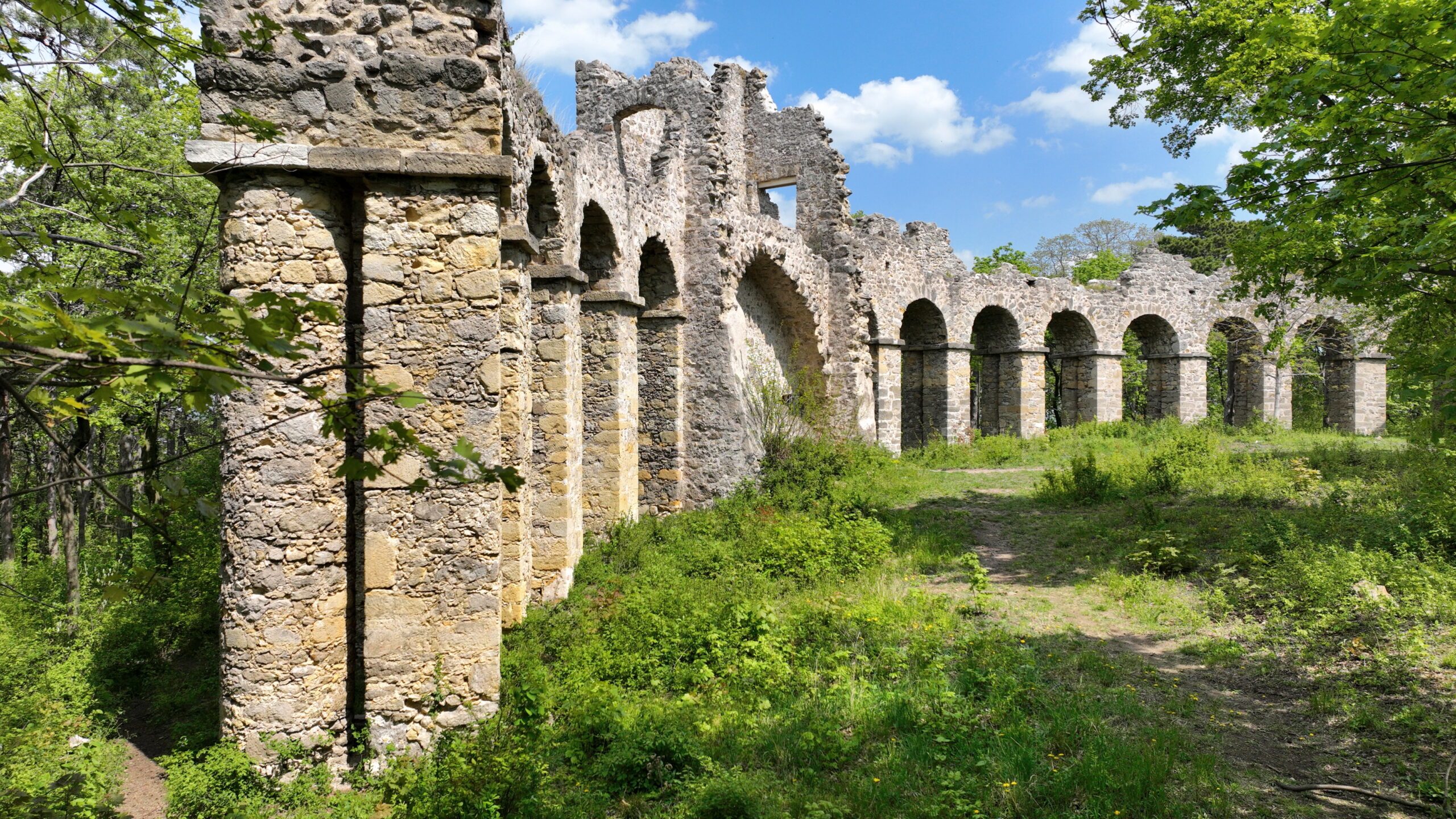
In the heart of Gatineau National Park, located near Ottawa, there is an amazing attraction that can make tourists believe they have been transported to ancient Europe. Fake Abbey Ruins, also known as Hadad Ruins, is a unique architectural ensemble created not by ancient masters, but by Canadian Prime Minister William Lyon Mackenzie King in the first half of the XX century.
The origin of the unusual attraction
William Lyon Mackenzie King was one of Canada’s most influential political figures, serving as the country’s prime minister for a total of 22 years (1921-1930 and 1935-1948). But in addition to his political career, King was known for his eccentric hobbies and unusual view of the world.
In 1901, while bicycling in the Gatineau hills, Mackenzie King discovered a picturesque place called Kingsmere (the name has nothing to do with King himself, it existed long before he came to the area). Falling in love with the area, in 1902 he purchased a piece of land by the lake where he built a small four-room cabin, which he named Kingswood, in 1903.
Over time, his estate grew to an impressive 231 acres. Here he received important guests, including Winston Churchill and the Duke of Windsor, and from May to October he conducted many affairs of state. But the most amazing part of the estate was the ruins, which King began creating in 1935.
The creation of the “ancient” ruins
Being a big fan of ancient Greek and Roman architecture, Mackenzie King decided to create his own version of the historic ruins on his estate. His idea came to life when, in 1935, he saw an old house being demolished in Ottawa. The prime minister offered the builders $50 for a semi-circular stone window and took it back to his estate.

This first purchase started a strange hobby of collecting architectural fragments from demolished or torn down buildings. The most significant acquisitions for his collection of ruins were:
- Stones from the Central Block of Canada’s Parliament Buildings that burned down in 1916.
- A mantelpiece from the House of Commons that survived the fire.
- A bay window from Batson House.
- Wall and door structure from the Batson House, demolished in 1935.
- Remnants of stones from the British House of Commons when renovations were carried out there.
The most surprising acquisition for his collection took place at the height of the Second World War. After the Palace of Westminster was bombed by the Germans, Mackenzie King formally requested some stones from the ruins be shipped to Canada to add “authenticity” to his man-made ruins at Kingsmere!
The Abbey architectural ensemble
Today, the artificial ruins of the Abbey are a picturesque ensemble of several architectural elements:
- A majestic arch that has become the centerpiece of the composition.
- A bay window at the edge of the woods.
- A complex of various architectural details on a small hill, named by King himself “Abbey Ruins”.
These elements are set in a picturesque setting among English and French gardens, carefully planned by Mackenzie King himself. Today, the site is a popular tourist attraction and a favorite location for photographers and weddings.

The eccentric personality of the creator
To understand why the head of the government of a country like Canada was keen on creating fake ruins, it is worth paying attention to the personality of Mackenzie King himself. After his death in 1950, his diaries, totaling more than 50,000 pages, were published, revealing surprising aspects of his private life.
According to these diaries, Mackenzie King:
- Communicated with the spirit of his late mother through Ouija sessions.
- Used a crystal ball to communicate with the dead, including his mentor and former Prime Minister Sir Wilfrid Laurier and even Renaissance artist Leonardo da Vinci.
- Talked to his deceased dogs – Irish terriers he called them all Pat.
- Saw signs and omens in tea leaves and even in his morning cup of shaving foam.
- Was fascinated by numerology and believed in the magical power of numbers.
Given these features, it becomes clearer why the Prime Minister created in his estate fake ruins reminiscent of a medieval abbey. They became a material embodiment of his romantic nature and unusual worldview.
A legacy for Canadians
Before his death in 1950, Mackenzie King bequeathed his entire Kingsmere estate “to the Government of Canada … in trust for the citizens of Canada.” Today, the site is administered by the National Capital Commission and is open to the public.
The estate includes:
- Kingswood and Moorside Cottages, meticulously restored and turned into museums
- English and French gardens
- Historic Abbey ruins
- Picturesque trails for hiking
- Day shelter for relaxation
- Gift store and children’s area with games
The Mackenzie King estate is one of the main tourist attractions in Gatineau National Park and is part of the Les Chemins d’eau tourist route.

Cultural significance of the faux ruins
Despite their artificiality, the ruins of Mackenzie King Abbey have become an important part of Canadian cultural heritage. They exemplify an architectural trend known as “faux ruins” or “architectural fads” (follies), which was popular in the landscape parks of England and France in the second half of the eighteenth century.
The ruins created by King not only add to the romantic charm of the estate, but also serve as a repository of architectural fragments from significant historic buildings. Each stone in these ruins has its own story and connection to important moments in Canadian and British history.
Visit the faux ruins today
The Mackenzie King Estate and Abbey Ruins are open to visitors year-round, with free access to the grounds. During the summer, there are museums, a gift store and a children’s area. Tourists can explore the estate with the help of interpretive guides or on their own, using the new “escape game” or a special activity booklet for children.
The most convenient way to get to the estate is via the Gatineau Park Shuttle. You can also reach by car using parkways (with limited access) or municipal roads. There is a parking fee from mid-June through October.
Author Information

I’m a journalist specializing in urban issues and city politics in the Vancouver region, which I’ve covered since 1994, and I also have a strong focus on the iGaming industry. In this endlessly changing city, I cover a broad range of issues: from drug policy, bike lanes, billion-dollar development projects, homelessness, and garbage debates, to the rapidly evolving world of online gaming, including regulatory landscapes, technological advancements, and market trends. I write frequently for the Globe and Mail’s B.C. section and Report on Business. From 2008 to 2015, I had a regular column in Vancouver magazine, “Urban Fix,” which apparently resonated with readers so much that it earned me a few regional and national awards.
