
Introduction
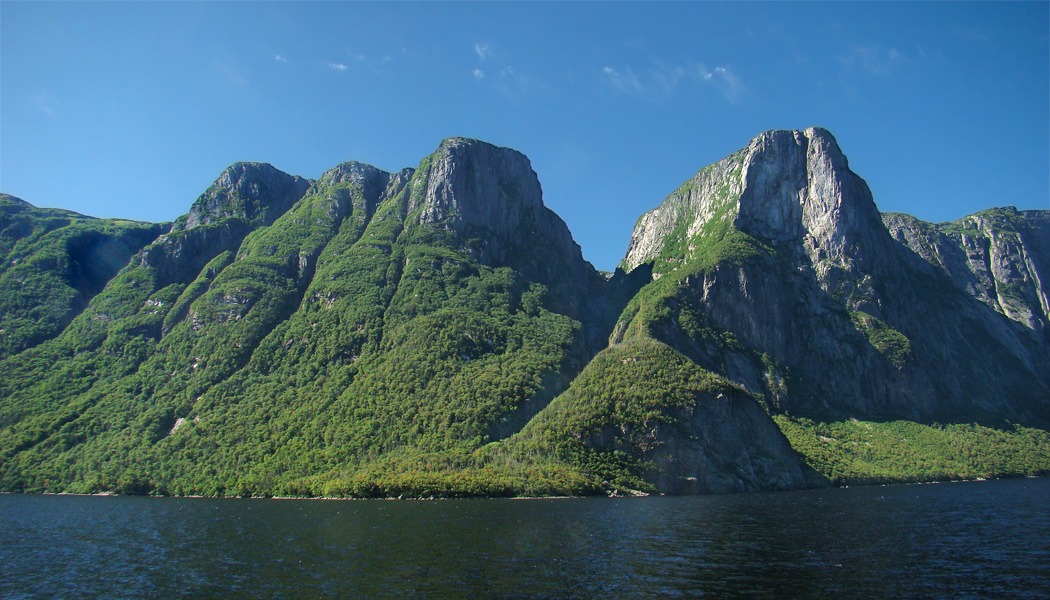
In the heart of Canada’s east coast, on the island of Newfoundland, lies an amazing natural complex – Gros Morne National Park. This unique reserve of about 1800 square kilometers is a true gem of Canadian nature, reflecting billions of years of our planet’s evolution. The park, which takes its name from the 806-metre-high mountain of the same name, was founded in 1970, and in 1987 UNESCO recognized it as a World Heritage Site. Gros Morne is not just a picturesque place with beautiful scenery. It is a true open-air natural museum that showcases the Earth’s fascinating geological history, unique ecosystems and, of course, spectacular fjords found nowhere else on the east coast of North America.
Located on the west coast of the island of Newfoundland, Gros Morne National Park attracts travelers from around the world who want to see the dizzying cliffs of the fjords, touch the rocks of the Earth’s mantle that floated to the surface millions of years ago, and enjoy the pristine beauty of Canadian nature. In this article, we will take a closer look at the geological features of the park, its amazing fjords, the diversity of flora and fauna, and how best to plan a trip to this amazing place.
History of the region’s formation
A geologic journey of billions of years
The territory of Gros Morne National Park is a true open book of the geologic history of the Earth. The formation of this amazing region began over a billion years ago when tectonic forces set ancient continents in motion. About 500 million years ago, powerful geological processes resulted in a phenomenon that today scientists call continental drift.
The uniqueness of Gros Morne Park lies in the fact that the evidence of this great geological event is clearly presented here. As a result of the collision and subsequent divergence of the ancient continents of Laurentia and Gondwana, rocks of the Earth’s mantle – the deep layer of our planet, which is usually hidden beneath the Earth’s crust at a depth of several tens of kilometers – came to the surface. This has made Gros Morne one of the few places on Earth where you can literally touch the “soul” of our planet.
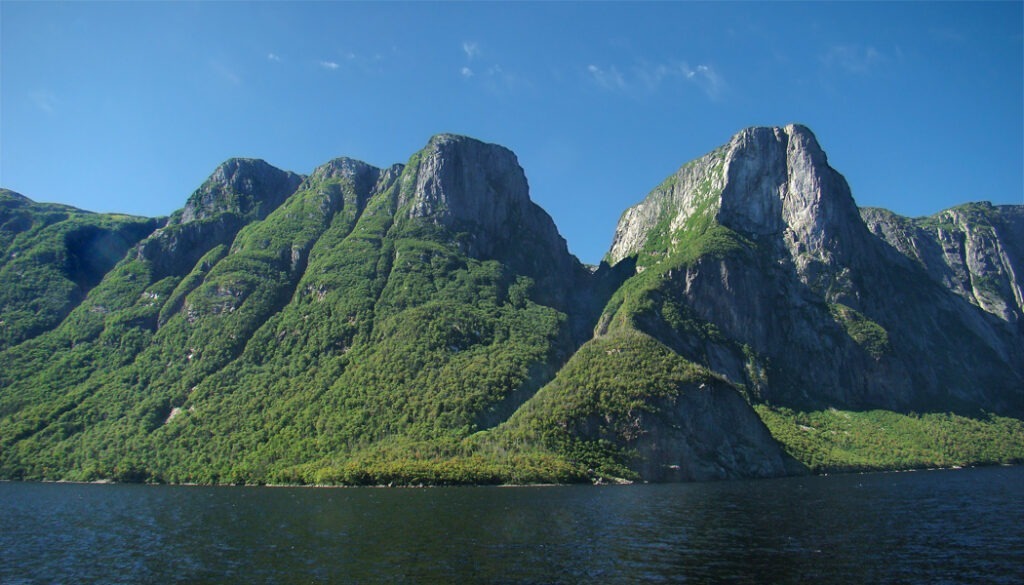
The formation of the modern relief of the park was completed by grandiose glaciers, which during the last ice age (25-10 thousand years ago) literally cut deep valleys in the rocks, thus creating the conditions for the emergence of fjords – narrow and deep sea bays with steep rocky shores. When the glaciers retreated, some of these fjords were cut off from the sea and became freshwater lakes, while retaining their characteristic topography.
From the first settlers to the national park
The history of human presence in what is now Gros Morne Park begins long before the arrival of Europeans. Archaeological evidence shows that the first indigenous Beotuk and Mi’kmaq people inhabited the land for thousands of years, adapting to the harsh conditions and taking advantage of the region’s rich natural resources.
European explorers and settlers began exploring Newfoundland’s coastline in the 16th century, attracted by the region’s rich fisheries resources. However, the interior of the island, including the area of the current park, remained poorly explored for a long time due to inaccessibility and harsh climatic conditions.
In the 20th century, with the development of interest in conservation and the creation of the national park system, the Gros Morne area attracted the attention of scientists and conservation organizations. In 1970 the Gros Morne National Park was officially established here, and seventeen years later, in 1987, UNESCO included the park in the list of World Heritage Sites, recognizing its exceptional geological and ecological value.
Gros Morne’s unique fjords are
Western Brook Pond is the jewel of the park
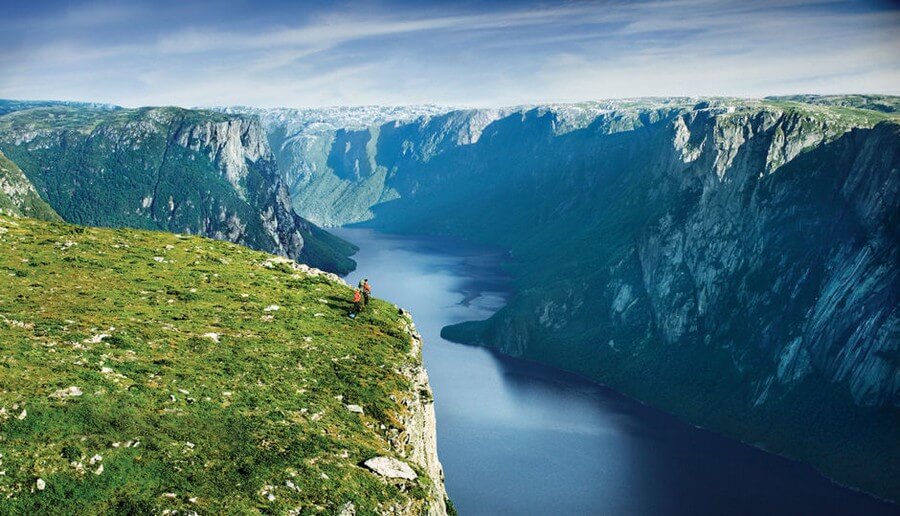
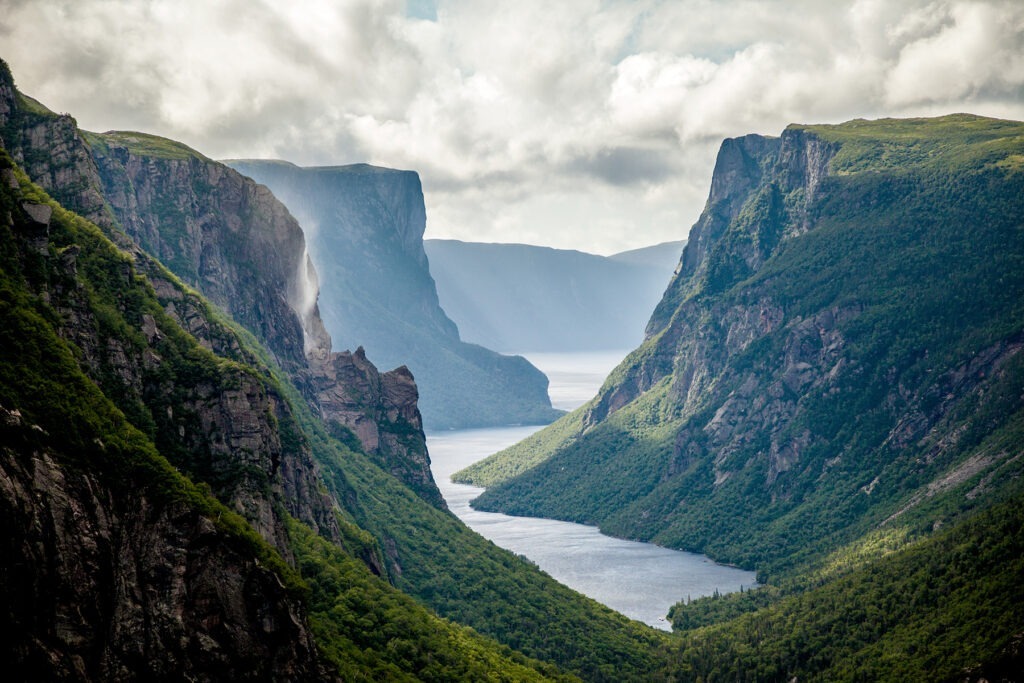
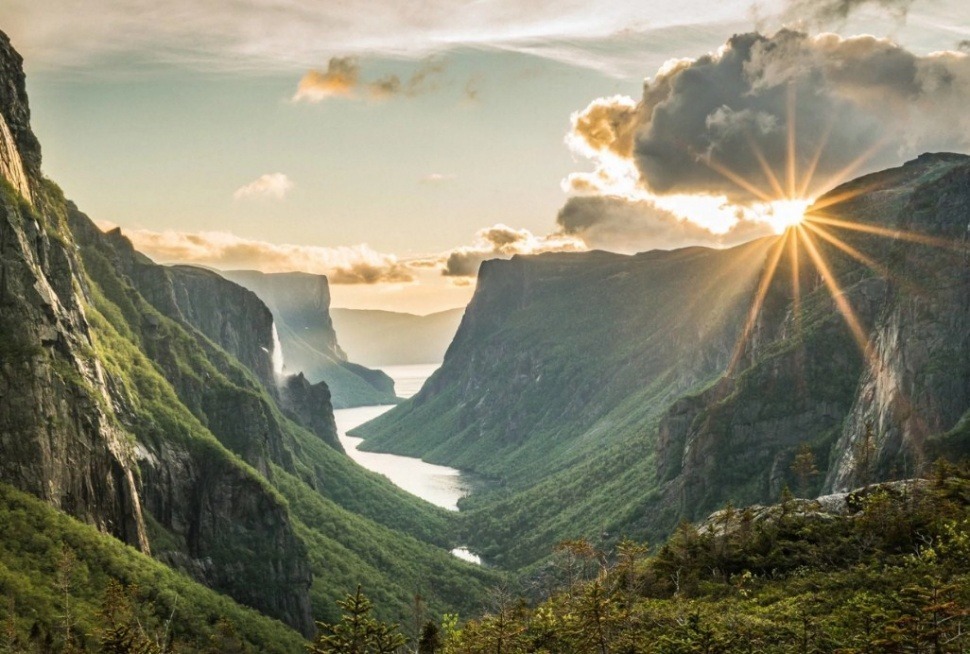
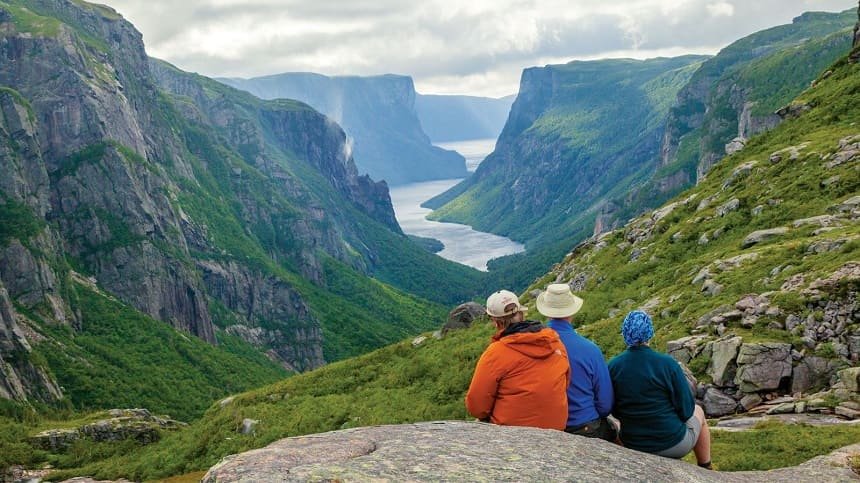
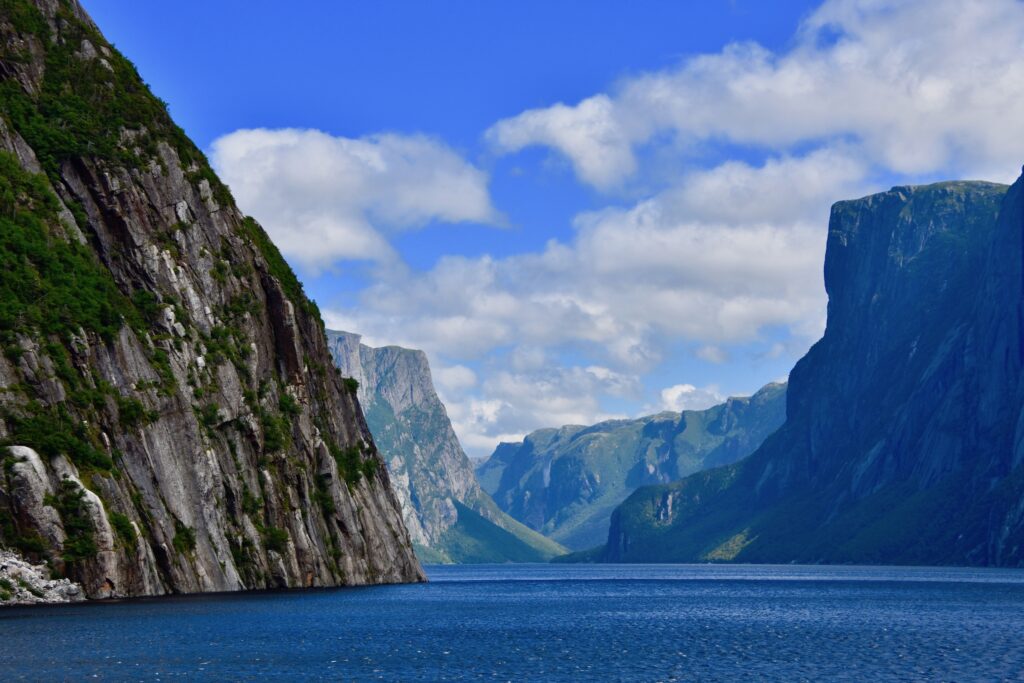
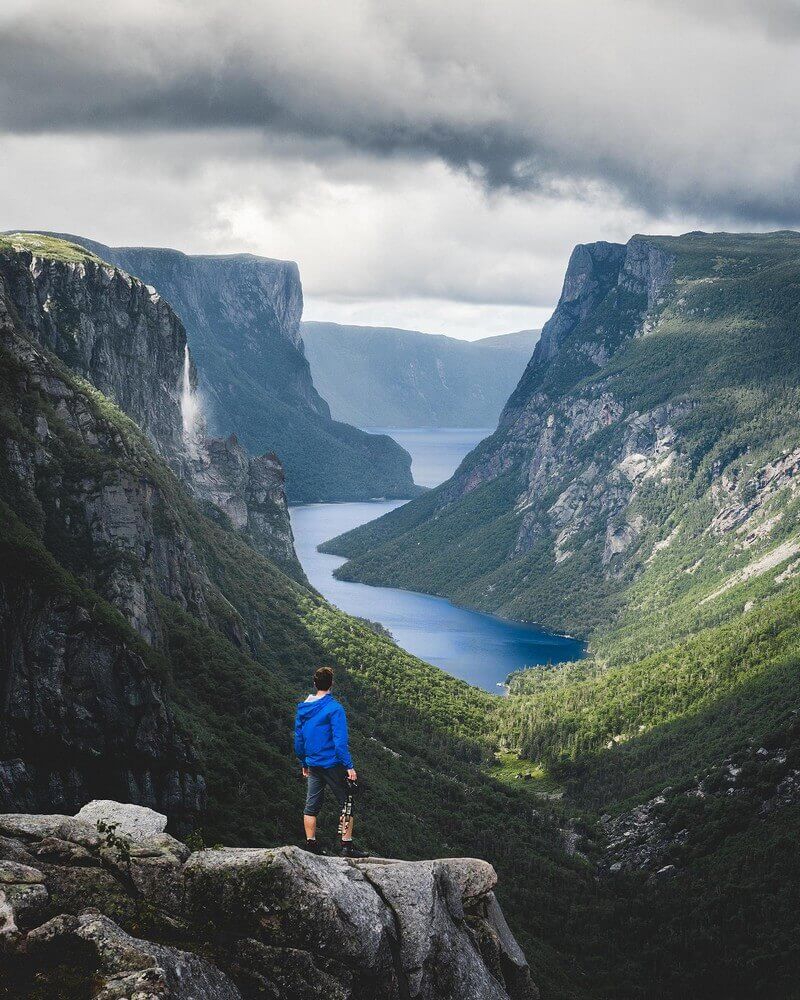
The main attraction of Gros Morne National Park is undoubtedly Western Brook Pond, an amazing freshwater fjord formed by the retreat of glaciers after the Ice Age. This natural wonder is a narrow lake about 16 kilometers long and up to 165 meters deep, surrounded by impressive cliffs, the height of which in some places reaches 600 meters.
Western Brook Pond is a former sea fjord that was cut off from the ocean by the uplift of the earth’s crust after the glaciers retreated. Over time, fresh water displaced sea water and the fjord became a freshwater lake, while retaining its classic topography of steep rocky walls and deep bottom. Today it is one of the deepest lakes in Canada and one of the few freshwater fjord lakes in the world.
Numerous waterfalls flow down the walls of the fjord, fed by rain and meltwater from the surrounding plateau. The most famous of these is Pissing Mare Falls, one of the highest waterfalls in eastern North America with water falling from a height of about 350 meters. Depending on the season and rainfall, the falls can be a powerful torrent or a gentle trickle, sometimes turning into mist before reaching the surface of the lake.
Fjord Ecosystem
Western Brook Pond’s aquatic ecosystem is a unique community of organisms that have adapted to life in the cold, clear waters of the former fjord. The lake is home to several species of fish, including Atlantic salmon, brook trout, and Arctic char, a relict species that has survived here since the Ice Age. These fish are not only important for the ecological balance of the reservoir, but are also of scientific interest as isolated populations developing in a closed ecosystem.
The shores of the fjord serve as nesting grounds for an unusual colony of gulls, which, contrary to their usual habits, do not nest on the shore but on rocky ledges. Western Brook Pond is also home to many species of birds, including white-tailed eagles, peregrine falcons and other Canadian avifauna.
The plant life around the fjord is also diverse and unique. Depending on the altitude and exposure of the slopes, one can find both typical boreal species (spruce, fir, birch) and Arctic plants that have taken refuge on high plateaus and in wind-protected rock crevices.
Exploring the fjords: boat trips and hiking trails
The best way to experience Gros Morne’s fjords is to take a boat tour of Western Brook Pond. The two-hour catamaran trip allows you to see the majestic cliffs, waterfalls flowing off the walls, and appreciate the scale of this natural wonder. Experienced guides will tell you about the history of the fjord’s formation, its unique ecosystem and interesting facts.
However, before boarding the ship, visitors will have to hike along a scenic trail about 3 kilometers long. This route passes through a variety of ecosystems, from coastal marshes to boreal forests, and is in itself of interest to nature lovers.
For the more adventurous hiker and trekker, the park offers a multi-day hike that takes you up to the top of the fjord from the famous viewpoint that offers panoramic views of the entire Western Brook Pond. This requires a good amount of physical fitness and usually takes a full day (about 8 hours), but the views are well worth the effort.
Geologic Wonders of the Park
Tablelands
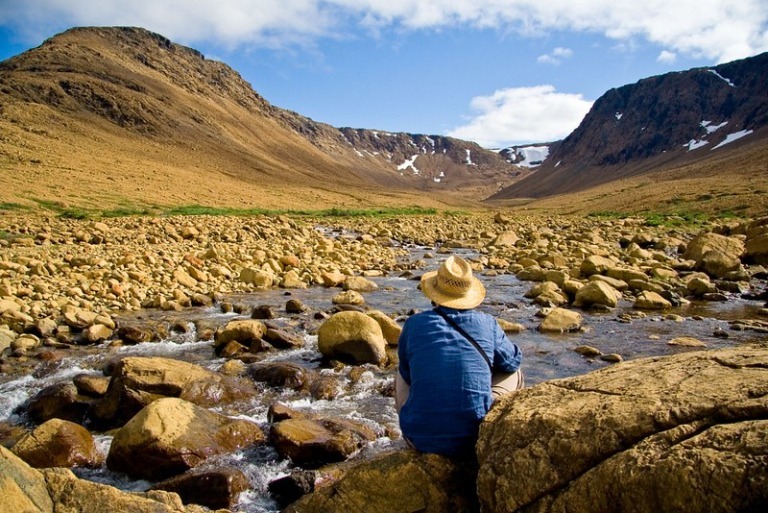
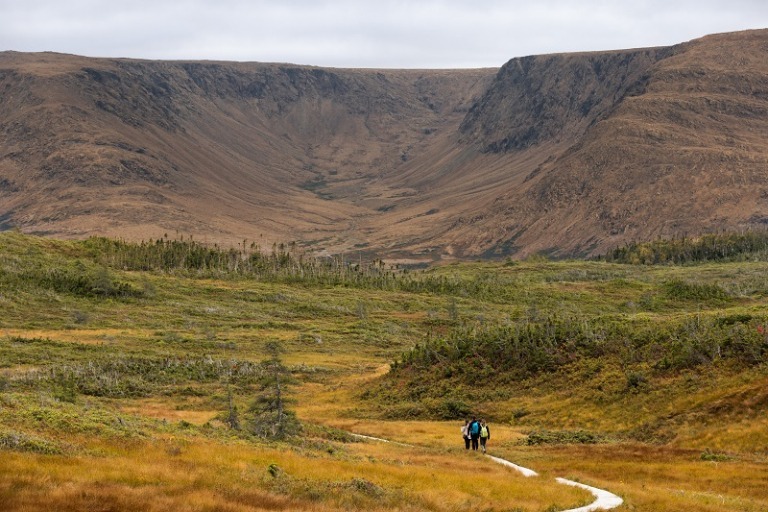
One of the most impressive geological features of Gros Morne Park is Tablelands, a vast rust-colored plateau in stark contrast to the surrounding green landscape. This area of about 100 square kilometers represents the exposed rocks of the Earth’s mantle – peridotite, an iron-rich mineral that is usually found deep beneath the Earth’s crust.
Tablelands is one of the few places on the planet where you can literally walk on rocks that are normally hidden tens of kilometers below the surface. This was made possible by the process of plate tectonics: when the ancient continents collided, part of the ocean floor and underlying mantle was pushed to the surface.
The harshness of this landscape is emphasized by the almost complete absence of vegetation. The soil formed by the weathering of peridotite contains high concentrations of magnesium and heavy metals that are toxic to most plants. It is also virtually devoid of essential plant nutrients such as nitrogen, phosphorus and potassium. As a result, the Tablelands are a Martian landscape – bare rust-colored rocks with rare islands of specialized plants that have managed to adapt to these extreme conditions.
Evidence of continental drift
Gros Morne National Park is one of the few places in the world where the theory of continental drift has been clearly confirmed. The geologic history recorded in its rocks and formations allows scientists and ordinary visitors to see the results of the grand processes that shaped the face of our planet.
About 500 million years ago, there was an ancient ocean called Japetus, located between the continents of Laurentia (the precursor to North America) and Baltica (the precursor to parts of Europe). As a result of tectonic plate movements, these continents began to converge, causing the ocean to close and a mountain range to form at the collision site. Part of the oceanic crust and underlying mantle was pushed to the surface, forming the Tablelands and other geologic features of the region.
Amazingly, fossils of marine organisms that lived hundreds of millions of years ago, when the area was the floor of an ancient ocean, can be found in the rocks of the park. Rocks from different geologic periods are represented in different parts of the park, allowing you to trace the evolution of this region from the seafloor to the mountain system and finally to the modern landscape formed by glaciers.
The unique geology of Bonne Bay
Bonne Bay is another amazing site in Gros Morne National Park, a classic fjord still connected to the sea. Its formation is also due to the activity of ancient glaciers, which carved a deep valley in the mountains and then, when they retreated, left it filled with seawater.
The geologic structure of Bonn Bay is of particular interest to scientists because of the contact between different types of rock on its shores. The eastern shore of the bay is composed of ancient metamorphic rocks of the continental crust, while the western shore consists of younger sedimentary rocks formed on the bottom of an ancient ocean.
Bonne Bay waters are home to the Memorial University of Newfoundland’s small Marine Biological Station (Bonne Bay Marine Station), which conducts research on the marine ecosystems and geology of the region. The station is also open to the public, offering interactive exhibits and educational programs about the marine life and geological features of the bay.
Diverse ecosystems and wildlife
Boreal forests and alpine plateaus
Gros Morne National Park is renowned for the diversity of its ecosystems, which change with altitude and distance from the coast. Nearly half of the park is covered by boreal forests, an ecosystem typical of the northern regions of North America.
Gros Morne’s boreal forests consist primarily of conifers such as black spruce and balsam fir, with an admixture of hardwoods such as paper birch. These forests play an important role in the park’s ecosystem, providing habitat for a multitude of animal and plant species, as well as serving an important function in the planet’s carbon cycle.
As you ascend into the mountains, the boreal forests are replaced by alpine plateaus – open spaces with low-growing vegetation adapted to the harsh conditions of the high mountains. Mosses, lichens, dwarf shrubs and herbaceous plants dominate, many of which are Arctic species that took refuge on the high plateaus of Newfoundland after the glaciers retreated.
The park’s flora: from coastal marshes to high-altitude tundras
The flora of Gros Morne National Park is amazingly diverse, with nearly 700 species of plants, representing approximately 60% of Newfoundland’s flora. This diversity is due to the park’s unique geographic location and the wide range of microclimatic conditions in different parts of the park.
In the coastal lowlands, bogs and wet meadows with their characteristic vegetation – sphagnum mosses, sedges, bog orchids – are common. In the forests of medium altitudes, many species of ferns, mosses and wildflowers, including rare orchids and other protected species, can be found under the canopy of trees.
Of particular interest is the vegetation of the Tablelands, these unusual “moonscapes” with soil that is toxic to most plants. Here one can observe impressive examples of plant adaptations to extreme conditions – specialized species such as serpentinite fern (Adiantum viridimontanum) that have evolved to live on soils with high levels of heavy metals.
The high plateaus are dominated by tundra vegetation – low-growing blueberry and lingonberry bushes, dwarf willows, alpine grasses and colorful flowers that hasten to bloom in the short summer season. Many of these species are relics of the Ice Age, surviving in these cold habitats from a time when much of North America was covered in ice.
Fauna: from shorebirds to forest mammals
Gros Morne National Park’s animal life is as diverse as its vegetation. There are about 239 species of birds, 37 species of mammals, and many species of fish, amphibians, and invertebrates.
The coastal areas of the park are home to many seabirds and shorebirds – gulls, terns, cormorants and eiders. In certain seasons, whales migrate along the coast and seals appear on the coastal cliffs. The park’s freshwater reservoirs, including Western Brook Pond, are home to Atlantic salmon, brook trout, and Arctic char.
The park’s forests and mountainous areas are inhabited by typical Canadian fauna. Black bear, lynx, red fox, river otter, beaver and woodland caribou can be found here. Smaller mammals include the red squirrel, white hare and various species of voles and mice.
Special mention should be made of the moose population, which, although not native to Newfoundland, were introduced here in the early 20th century and have adapted well to local conditions. In fact, their numbers have grown to such an extent that it has become a problem for the park’s ecosystem, as moose actively eat the young growth of trees, preventing the natural regeneration of the forest.
The birds of the park include raptors – white-tailed eagle, goshawk, peregrine falcon; forest birds – various species of woodpeckers, owls, songbirds; and waterfowl – loons, ducks, geese. In certain seasons, the park becomes an important stopover for migratory birds traveling along the Atlantic coast.
Cultural and scientific significance of the park
Contribution to the understanding of Earth’s geologic history
Gros Morne National Park has made invaluable contributions to the science of geology by providing scientists with a unique opportunity to study the processes of plate tectonics and continental drift using concrete, well-preserved examples. The park’s geologic formations, especially the Tablelands, provided important support for the theory of plate tectonics that revolutionized Earth science in the mid-twentieth century.
Studies conducted in the park have clarified many details of the processes of formation of mountain systems and continents. In particular, it was established that the rocks of the Tablelands were originally formed in the Earth’s mantle at a depth of at least 30-40 kilometers, and then were squeezed to the surface as a result of the collision of tectonic plates about 500 million years ago.
In addition, studies of the park’s fjords, such as Western Brook Pond and Bonn Bay, have made important contributions to understanding glacial erosion and landscape formation after glacial retreat. This research has implications not only for understanding our planet’s past, but also for predicting future changes in the face of global climate change.
Nature’s living laboratories: research projects
Gros Morne National Park serves as a “living laboratory” for researchers from various fields of science. In addition to geologic research, work on biodiversity, the ecology of forest and tundra ecosystems, and the adaptation of plants and animals to extreme conditions is conducted here.
Of particular interest to scientists are the isolated fish populations in the park’s freshwater fjords. For example, the Arctic char in Western Brook Pond is a relict population that was cut off from the sea about 10,000 years ago. Studying the genetic and ecological characteristics of this population provides insight into the processes of evolution and adaptation in isolation.
The vegetation of the Tablelands is also the subject of active research. Scientists study the mechanisms of plant adaptation to soils with high content of magnesium and heavy metals, which is of practical importance for the development of phytoremediation technologies – cleaning of polluted soils with the help of plants.
The park continuously monitors the state of ecosystems, including observing populations of key animal and plant species, tracking climate-related changes, and assessing the impact of human activity on natural complexes. This data is used both for scientific purposes and to develop effective strategies for managing the park and conserving its natural treasures.
Educational programs and ecotourism
Gros Morne National Park plays an important role in environmental education and outreach. A variety of educational programs have been developed for visitors to the park, catering to different age groups and skill levels. The park’s visitor centers feature interactive exhibits about the geological history of the region, its flora and fauna, and cultural heritage.
Experienced guides conduct thematic excursions during which visitors can learn about the geological features of the park, get acquainted with the diversity of its ecosystems, and observe birds and other animals in their natural habitat. Special educational programs have been developed for school groups, integrating a visit to the park into the school’s science curriculum.
Eco-tourism in Gros Morne is developed in accordance with the principles of sustainable development, seeking to minimize the impact on the park’s fragile ecosystems. Visitors are offered a variety of outdoor activities – hiking of varying difficulty, kayaking on lakes and in sheltered marine bays, bird and wildlife watching, and wildlife photography.
An important part of the park’s educational programs is informing visitors about the rules of behavior in nature and Leave No Trace principles. This contributes to the formation of environmental awareness and responsible attitude towards nature not only during visits to the park, but also in everyday life.
Practical information for visitors
Best time to visit
The climate of Gros Morne National Park is temperate maritime, with cool summers and relatively mild winters. The weather here can be unpredictable at any time of year, with frequent fog, rain and strong winds, especially in coastal areas.
The high tourist season is in summer, from June to August, when daytime temperatures typically range from 15°C to 20°C. This is the best time for hiking, boat trips and most other outdoor activities. However, keep in mind that this is also the period of highest tourist influx, so accommodation and excursions should be booked in advance.
Early fall (September through early October) is also a great time to visit the park. During this period, the forests are painted in bright autumn colors, the weather is usually stable, and there are far fewer tourists than in the summer. Temperatures in September are usually around 15°C, but can drop to 5°C or lower by the end of October.
Late spring (May to early June) is interesting because at this time whales and icebergs drifting from the north pass by the park along the coast. Keep in mind, however, that some high-altitude trails may still be closed due to snow, and at Western Brook Pond boat tours don’t usually start until June.
The winter season (November through April) is characterized by snow cover and temperatures below freezing. During this time, the park offers opportunities for winter activities such as cross-country skiing, snowshoeing, and winter fishing. However, you should keep in mind that many infrastructure facilities, including the Visitor Center, operate on a reduced schedule or are closed during the winter, and boat tours on Western Brook Pond are not available due to ice-out.
Regardless of the season, when planning a visit to Gros Morne Park, you should be prepared for rapid weather changes. Even during the summer months, warm, waterproof clothing and shoes are recommended, as well as sun and insect protection.
How to get to the park
Gros Morne National Park is located on the west coast of the island of Newfoundland, about a 30-minute drive from Deer Lake Airport (YDF), which receives regular flights from major Canadian cities such as Toronto, Montreal and Halifax.
From Deer Lake Airport, the park can be reached by rented car, which is the most convenient way to travel to explore different parts of this vast area. The main road through the park is Highway 430 (Viking Trail), which runs along the west coast of Newfoundland.
For visitors arriving on the island by ferry, the nearest ferry terminal is at Port aux Basques, which is connected by regular ferry service to North Sydney in Nova Scotia. From Port aux Basques to the park is approximately 4 hours by car.
Public transportation in the region is limited, but some private shuttles operate during the summer season between Deer Lake Airport and major communities in the park area, such as Rocky Harbour and Woody Point.
Routes and trails: from easy walks to challenging treks
Gros Morne National Park offers more than 100 kilometers of marked trails of varying difficulty, allowing each visitor to find a route to suit their strengths and interests.
For beginner hikers and families with children, short and easy trails such as:
- Tablelands Trail – A 4-kilometer trail (round trip) on relatively flat terrain that allows you to experience the unique geology and vegetation of the Tablelands.
- Western Brook Pond Trail – A 3-kilometer trail (one way) from the parking lot to the marina where boat tours of the fjord depart.
- Lobster Cove Head LighthouseTrail – A short trail around the historic lighthouse with great views of the bay.
More challenging and longer trails are available for experienced hikers:
- TheGros Morne Mountain Trail is a 16-kilometer route with an elevation gain of over 800 meters that requires good fitness. The climb takes a full day and rewards with panoramic views of the park and surrounding areas.
- TheGreen Gardens Trail is a 9-kilometer route that leads through a variety of landscapes from Tablelands to a picturesque seashore with green meadows and volcanic cliffs.
- Theroute to the top of Western Brook Pond Fjord is a multi-day hike that requires serious preparation and experience navigating in the wilderness, as part of the way is on unmarked trails. This route allows you to see the famous fjord from that classic point, which offers a stunning bird’s eye view of the entire lake.
- TheLong Range Traverse is a challenging 35-kilometer route across the Long Range Plateau that requires experience in orienteering and wilderness survival. This route requires a special permit from the park authorities and the number of groups allowed on the route is limited.
Regardless of the route you choose, it is important to keep safety in mind. Weather conditions in the park can change rapidly, especially in the mountainous areas where sudden fog, rain or even snowfall is possible even during the summer months. It is essential to have proper gear, an adequate supply of water and food, and to inform someone of your plans before setting out on the trail.
Accommodation and services in and around the park
Gros Morne National Park and its immediate surroundings offer a variety of accommodation for visitors with different preferences and budgets.
Camping and tent sites: There are several organized campgrounds in the park with varying levels of facilities:
- Trout River Campground is located on the southern boundary of the park and offers 36 tent and RV sites, including sites with electricity.
- Shallow Bay Campground is located at the northern end of the park, near one of the few sandy beaches in the region. There are 62 sites available, including sites with full hookups.
- Lomond Bay Campground is located on the scenic shore of Bonn Bay and offers 29 sites.
- Green Point Campground is a small campground with 20 sites on the shores of St. Lawrence Bay.
In addition, for those who like a secluded wilderness experience, camping outside of organized campgrounds is allowed in some parts of the park, but a special permit must be obtained from the park administration.
Hotels, Motels and Guest Houses: The communities in and around the park offer a variety of accommodations from simple motels to comfortable hotels and cozy guest houses:
- Rocky Harbour, the largest community in the park area, offers the largest selection of lodging options, including hotels, motels, guesthouses and rental cottages.
- Woody Point is a picturesque historic village on Bonne Bay, known for its creative atmosphere and annual literary festival. Several guesthouses and small hotels can be found here.
- Corr Brook (Cow Head) – A small village on the northern border of the park, known for its theater festival and beautiful beaches. Offers limited lodging options, including a motel and guest houses.
During high season (June-August), accommodation in the park area books up very quickly, so it is recommended that you plan your trip and book your accommodation well in advance, several months before your intended visit date.
Services and infrastructure: The infrastructure of tourist services in the park and its surroundings is quite well developed, but has a seasonal character:
- The park’s Visitor Center in Rocky Harbor provides trail information, conducts educational programs, and offers guided tours.
- The Discovery Center at Tablelands offers interactive exhibits about the park’s geology and ecology.
- Restaurants, cafes, grocery stores, pharmacies and other essential services are available in Rocky Harbor and other communities.
- Cell phone service and internet are available in most communities, but may not be available in remote parts of the park.
Unique features and phenomena of the park
Crossing of biogeographical zones
One of the unique features of Gros Morne National Park is its location at the intersection of several biogeographic zones, which accounts for the exceptional biodiversity of the area. Representatives of both Arctic and boreal flora and fauna are found here, creating unique ecological communities.
On the high-mountainous Long Range Plateau, where harsh conditions prevail with strong winds, low temperatures and a short growing season, a true Arctic tundra has formed with its characteristic vegetation – dwarf willows, arctic poppies, stonecrop and other species typical of much more northern latitudes. These plants are relics of the glacial era, when similar conditions prevailed over much wider areas.
At the same time, typical boreal forests dominated by spruce, fir and birch are developed in sheltered valleys and on lower slopes, creating habitats for the respective animal species. In the coastal zone, special ecosystems adapted to the influence of salt spray and strong ocean winds are formed.
This diversity of ecological niches in a relatively small area makes Gros Morne a unique natural laboratory for studying plant and animal adaptations to different environmental conditions and their responses to climate change.
Rare geologic formations
In addition to the Tablelands and fjords already mentioned, other rare geologic formations of scientific and aesthetic interest can be observed in Gros Morne National Park.
One of these phenomena are the so-called “global stratotypes,” reference rock sections that are used by scientists around the world to define boundaries between different geologic periods. There are several such stratotypes in the park, including the famous Green Point section, which is the international benchmark for defining the boundary between the Cambrian and Ordovician periods (about 485 million years ago).
Another unique formation is the so-called “ophiolite complex,” a fragment of ancient oceanic crust and upper mantle that was extruded to the surface as a result of a collision of tectonic plates. Tablelands is part of this complex, but in addition to it, the ophiolite sequence includes other rock types that can be observed in various parts of the park.
In the Bonn Bay area, amazing fold structures can be seen – the result of powerful tectonic processes that have literally crumpled rock layers like the pages of a book. These geological “folds” clearly demonstrate the scale of forces that acted during the formation of mountain systems.
Optical phenomena: northern lights and unusual sunsets
Gros Morne Park’s location at relatively high latitudes (around 49-50° north latitude) and vast open spaces with minimal light pollution provide excellent conditions for observing a variety of atmospheric optical phenomena.
In the winter months, when the nights are long and dark, it is often possible to observe the northern lights (aurora) in the park – a marvelous play of light in the upper atmosphere caused by the interaction of the solar wind with the Earth’s magnetic field. Green, sometimes red and purple canvases of light dancing in the night sky create an unforgettable spectacle that attracts photographers and lovers of natural phenomena.
Amazing sunsets, especially over Bonn Bay and Western Brook Pond Fjord, are also a feature of the park. The interplay of topography, water surface and atmospheric conditions creates stunning lighting effects as the sun dips below the horizon, coloring the sky, bay waters and rocky cliffs in fantastic shades of gold, purple and scarlet.
In the fall, when the leaves of the trees change color and the low sun creates special lighting, Gros Morne Park becomes a photographer’s paradise. The combination of vibrant fall colors with dramatic landscapes of fjords and mountain peaks creates unforgettable visual compositions that are hard to find anywhere else in eastern North America.
Conservation Challenges and the Future of the Park
Environmental Challenges and Threats
Despite its protected status, Gros Morne National Park faces a number of environmental challenges and threats that require constant attention from conservation organizations and park administration.
One of the most serious problems is the excessively high population of moose, which were introduced to Newfoundland in the early 20th century and, having no natural enemies, have multiplied rapidly. Moose actively feed on young tree growth, which inhibits natural forest regeneration. In some areas of the park, this has led to the degradation of boreal forest ecosystems and the formation of so-called “moose savannahs” – open spaces with sparse mature trees and virtually no undergrowth.
Another challenge is climate change, which manifests itself in higher average annual temperatures, changes in precipitation patterns, and more frequent extreme weather events. These changes affect all ecosystems of the park, but the high-mountain tundra communities are particularly vulnerable, where many plant and animal species already exist at the limits of their capabilities. Rising temperatures could shift vegetation zones up slopes and lead to the extinction of some Arctic species for which no suitable habitat will remain.
For coastal areas of the park, a potential threat is sea level rise, which could lead to coastal erosion, flooding of lowlands, and changes in the character of coastal ecosystems. In addition, there may be an increase in the frequency and intensity of storms, which could also negatively impact coastal areas.
Tourism activity, while an important source of funding for the park and surrounding communities, also poses some risk to fragile ecosystems. Trampling of vegetation, disturbance of animals, and possible pollution all require careful management and regulation of visitor flows.
Measures for protection and sustainable development
To address existing problems and prevent potential threats, Gros Morne National Park implements a comprehensive program of measures to protect and sustainably develop the area.
To control elk numbers, regulated hunting is conducted in designated areas of the park. The goal of this program is not to completely exterminate elk, but to reduce their density to a level compatible with natural forest regeneration. In parallel, work is underway to restore forest ecosystems in the most affected areas, including tree planting and the creation of ungulate-protected areas for natural regeneration.
To monitor climate change and its impact on the park’s ecosystems, a network of permanent observation sites has been organized, where measurements of various environmental parameters, vegetation and fauna surveys are regularly conducted. These data allow timely identification of negative trends and development of measures for adaptation to changing conditions.
The management of tourist flows is carried out through the system of zoning of the park’s territory, where areas with different access regimes are allocated – from zones of intensive use with developed infrastructure to zones of strict protection with limited access. On popular routes, special decks and platforms are created to minimize trampling of vegetation, and information boards are installed, telling about the necessity of careful attitude to nature.
Much attention is paid to environmental education of visitors. Educational programs for different age groups are conducted in the park’s visitor centers, excursions with experienced guides are organized, information materials on the rules of conduct in the park and the principles of environmentally responsible tourism are distributed.
Scientific research and monitoring
Scientific research plays a key role in preserving the natural complexes of Gros Morne National Park. Research is regularly conducted to study geologic processes, biodiversity, ecosystem function, and the impact of human activities on the park’s natural environment.
Special attention is paid to monitoring the status of rare and vulnerable species of plants and animals, such as arctic relicts on high-mountain plateaus, isolated fish populations in the park’s lakes and rivers, and rare orchid species in boreal forests. The results of these studies make it possible to identify negative trends in a timely manner and take necessary measures to conserve biodiversity.
Systematic monitoring is also carried out for the state of the park’s geological objects, especially in areas of intensive tourist use. This allows preventing degradation of unique geological formations and developing recommendations on their preservation for future generations.
The park implements long-term environmental monitoring programs, including studies of water quality, forest ecosystems, and population dynamics of key animal species. These data are used both for the current management of the park and for planning future conservation activities.
The park administration cooperates closely with scientific institutions in Canada and other countries, encouraging research on its territory and providing the necessary infrastructure for scientific work. The results of this research not only help to conserve the park’s natural environment, but also make important contributions to the general understanding of geologic processes, the evolution of life on Earth, and the functioning of ecosystems in a changing world.
Conclusion
Gros Morne National Park is an amazing example of a harmonious blend of geologic wonders, diverse ecosystems, and cultural heritage. It is a place where you can literally touch the history of our planet, see the results of great geological processes and enjoy the pristine beauty of Canadian nature.
The park’s fjords, particularly Western Brook Pond, are its trademark, attracting thousands of visitors with their dramatic scenery – sheer cliffs soaring hundreds of meters, waterfalls tumbling from dizzying heights, and crystal clear waters that reflect the majesty of the surrounding mountains. These landscapes are not only spectacular in their beauty, but also tell a fascinating story of how glaciers thousands of years ago literally carved deep valleys in the rocks, which were then filled with water, creating these amazing natural formations.
Equally impressive are the Tablelands, a unique geological site where rocks of the Earth’s mantle, normally hidden beneath many kilometers of crust, have come to the surface. These lifeless, rust-colored “Martian” landscapes are clear evidence of the tremendous tectonic processes that have shaped the face of our planet and continue to affect it today.
The richness and diversity of the park’s living world – from coastal marshes to high-altitude tundras – reflects the amazing ability of life to adapt to different environmental conditions. Here you can find both typical representatives of Canadian wildlife – moose, black bears, caribou – and rare relict species preserved since the Ice Age.
UNESCO World Heritage Site status, awarded to the park in 1987, emphasizes its exceptional value not only for Canada, but for humanity as a whole. This recognition imposes an additional responsibility to preserve the unique nature of the park for future generations and requires a careful balance between tourism development, scientific research and conservation efforts.
In conclusion, Gros Morne National Park is not just a place of amazing natural beauty, but also an important center for scientific research, environmental education and sustainable tourism. It is a place where every visitor can not only enjoy the magnificent scenery, but also learn a lot about our planet, its history and the amazing diversity of life. And most importantly, to realize the need for careful treatment of fragile natural ecosystems and our shared responsibility for preserving natural wonders for future generations.
Author Information

I’m a journalist specializing in urban issues and city politics in the Vancouver region, which I’ve covered since 1994, and I also have a strong focus on the iGaming industry. In this endlessly changing city, I cover a broad range of issues: from drug policy, bike lanes, billion-dollar development projects, homelessness, and garbage debates, to the rapidly evolving world of online gaming, including regulatory landscapes, technological advancements, and market trends. I write frequently for the Globe and Mail’s B.C. section and Report on Business. From 2008 to 2015, I had a regular column in Vancouver magazine, “Urban Fix,” which apparently resonated with readers so much that it earned me a few regional and national awards.
