
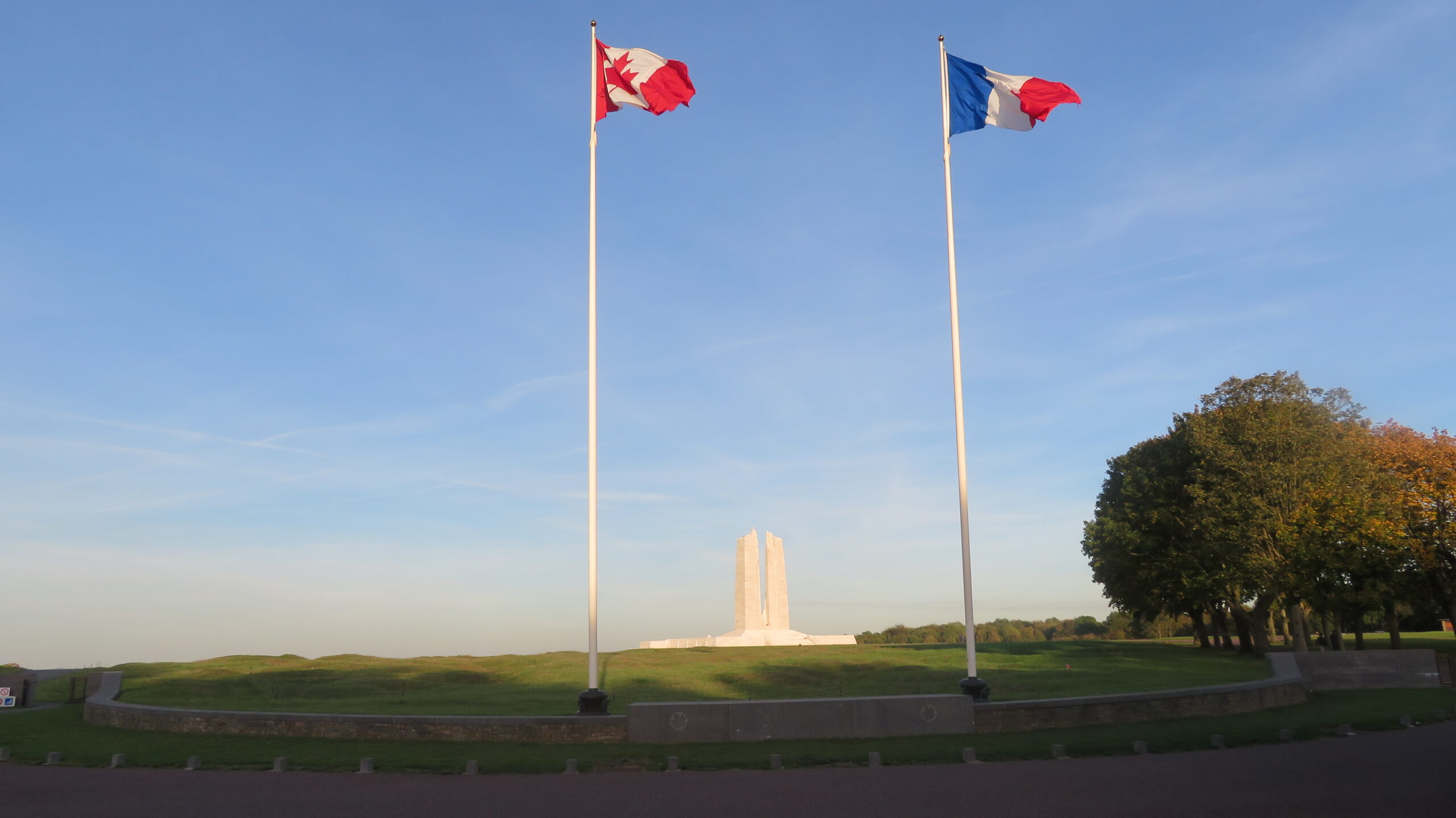
Introduction: Monument to a Nation
In the quiet French province of Pas-de-Calais, atop the historic Vimy Ridge, stands a majestic monument that has become not just a memorial to fallen soldiers, but a symbol of an entire nation’s formation. The Canadian War Memorial in Vimy is a colossal structure of snow-white limestone erected in memory of Canadian soldiers who fell during the First World War. But its significance goes far beyond a mere memorial: it is the physical embodiment of Canada’s national identity, a point of reference in the history of a young nation that finally realized its independence on the fields of the First World War.
Vimy Ridge is the site of a battle of special significance to Canadians in April 1917. For the first time, all four divisions of the Canadian Expeditionary Corps fought together as a unit and achieved an impressive victory that was a turning point not only in the military but also in the country’s national identity. The memorial, created by the talented Canadian sculptor Walter Allward, is not just a tribute to the dead, but an artistic expression of Canadian identity, its tragedy and triumph, grief and hope.
Historical significance of the Battle of Vimy Ridge
The military context of the battle
In the spring of 1917, a general Entente offensive began on the Western Front, with British forces conducting the Operation at Arras. As part of this operation, the Canadian Corps under General Julian Bing was tasked with attacking a strategically important high ground, Vimy Ridge, which German forces had turned into an impregnable fortress during more than two years of occupation.
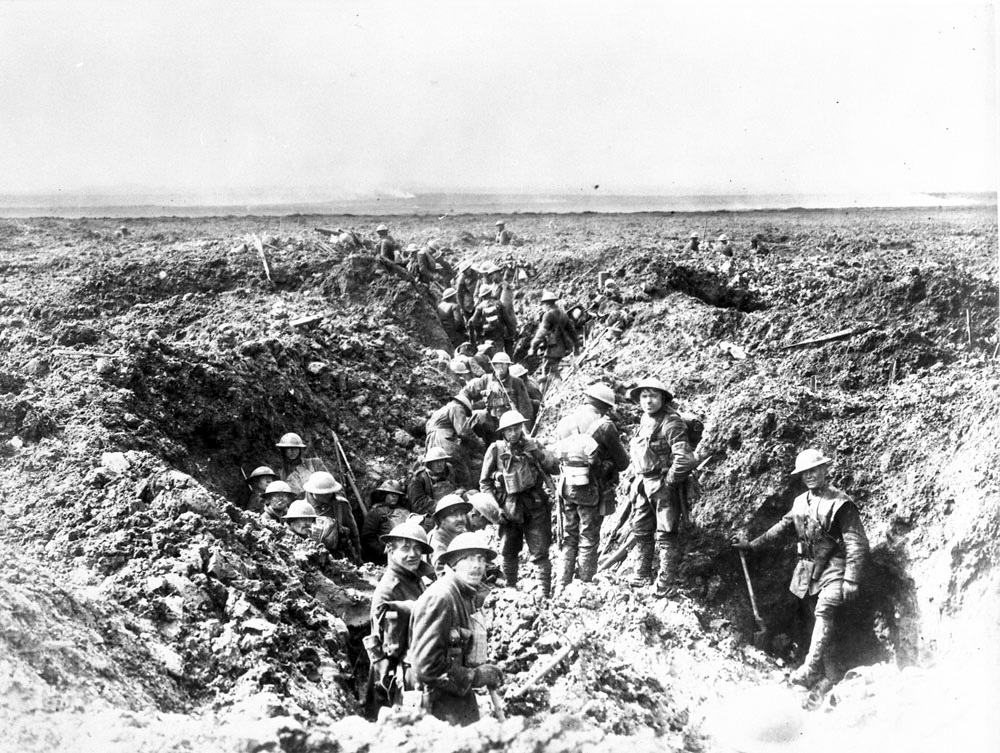
Vimy Ridge presented an exceptionally difficult target. Over the three years of the war, the Germans had fortified it with a multitude of defenses – three successive lines of trenches spread among a network of barbed wire, concrete machine-gun bunkers, underground rooms to shelter forward troops during artillery bombardments. French troops had previously attempted to capture this height twice in 1915, but failed with heavy casualties.
Four Canadian divisions began their assault on Vimy Ridge at 5:30 a.m. on April 9, 1917. The Canadian 4th Division attacked from the Souchette area on the left, while the 3rd Division and 2nd Division attacked in the center, on either side of Neville-St. Vaast. Skillfully interacting with artillery, the corps managed to capture 9,000 prisoners in a few hours and by the evening of April 9 to achieve a breakthrough of the German positional system at a distance of two to five kilometers. Most of Vimy Ridge was in the hands of the Canadians on the first day of the attack.
By the end of the first day of the offensive had not succeeded the only one of the four divisions – the 4th. It attacked on the extreme left flank, which included the most difficult targets – height 145 (the highest point of the ridge and the site of the current Vimy Memorial) and another high point, called by the Canadians “Pimple”. It was not until the next day, April 10, that Altitude 145 was finally in the hands of the Canadians. Two days later, on April 12, in a heavy battle under a snowfall was captured and “Pryshch”. The Germans were forced to retreat three kilometers to the east.
The victory came at a high cost: 3,598 Canadians were killed and more than 7,000 wounded. However, the success was undeniable and of enormous significance not only militarily but also morally.
From military victory to national consciousness
The victory at Vimy Ridge was a turning point in the formation of Canadian national identity. For the first time, the four divisions of the Canadian Expeditionary Corps fought as one, and this unified military effort symbolized the unity of the nation. Soldiers from different provinces, from the Atlantic to the Pacific, rallied to achieve a common goal.
As historian Desmond Morton notes, “Vimy was not so much a military victory as a confirmation that Canada could act as one and succeed where even powerful allies had failed.” The battle was the first significant success for Canadian forces in World War I and demonstrated the high level of training, discipline and tactical skill of Canadian soldiers.
Many historians consider the victory at Vimy Ridge to be the point at which Canada’s transformation from a British colony into a nation in its own right began. Poet and writer Pierre Berton called the battle “the moment when Canada ceased to be a colony and became a nation.” The preamble to National Vimy Ridge Remembrance Day states that “the Battle of Vimy Ridge on April 9, 1917 was the first time Canadians from coast to coast fought together against a common enemy.”
After the war, when the question arose as to where to erect a major memorial to honor Canadian soldiers who had fallen in France, Vimy Ridge, a site that has become a symbol of national unity and valor, was chosen. In 1922, the French government gave Canada a 107-hectare plot of land on Vimy Ridge for a memorial park and monument in perpetuity.
The creator of the memorial: Walter Allward and his vision
The sculptor’s life and work
Walter Seymour Allward (Walter Seymour Allward, 1874-1955) was a distinguished Canadian sculptor who created his greatest work, the Canadian National Memorial at Vimy. His path to the heights of mastery was not an easy one, but it was the hardships that tempered his character and shaped his unique artistic vision.
Allward was born in Toronto in 1874 to a family of artisans. Having received no formal art education, he left school at the age of 14 and began working as an apprentice to an architect. He gained his knowledge of sculpture from books in the city library and by studying plaster reproductions in the local museum. Despite these limitations, the young sculptor’s talent was quickly noticed.
At the age of just 19, Allward won his first competition to create a bronze sculpture for the Northwest Territory Rebellion Monument in Queen’s Park, Toronto. This was the beginning of a successful career that saw him create a number of significant monuments in Canada, including the Bell Memorial in Brantford, and war memorials in Stratford and Peterborough.
Allward’s style was influenced by the classical and neoclassical tradition, but he always strove to create his own recognizable handwriting. He admired the work of Auguste Rodin and, like the great French sculptor, tried to breathe life and emotion into the stone figures.
The concept and creation of the memorial
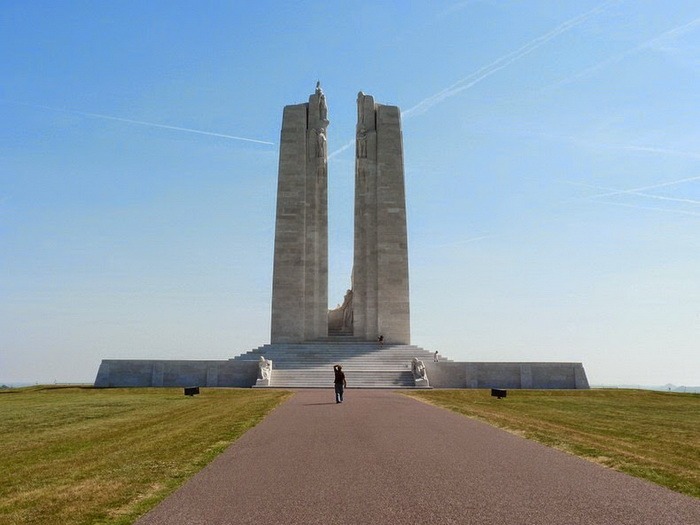
In 1921, the Canadian government announced a competition to create a memorial to Canadians who died in the First World War. Out of 160 designs submitted, Walter Allward’s design was chosen, which impressed the jury with its “individuality and complexity.” Allward’s design included two 30-meter pylons and 20 allegorical figures symbolizing different aspects of war, sacrifice and peace.
Work on the memorial began in 1925 and lasted 11 years. Allward moved to Europe to oversee construction and spent 14 years of his life there. He personally supervised every stage of the work, from material selection to the final finishing of the sculptures.
For the memorial, Allward chose the rare Brač stone (limestone) from the Croatian island of Brač because of its exceptional whiteness. More than 6,000 tons of this material were used for the construction, which was transported through Italy to France.
The sculptor worked with unprecedented care. He first created models of the figures in clay and plaster in his studio in London, after which they were enlarged and carved from stone directly on site. Stonecutters under the direction of Luigi Rigamonti used a special device, the pantograph, to create double-sized versions of the sculptures from solid blocks of stone.
In May 1934, Allward received the tragic news of the death of his son Donald, who had been assisting him in his work on the memorial and had fallen from a third-floor window while on vacation in France. Despite this loss and the added responsibility of raising his five-year-old grandson Peter, Allward continued to work to complete the project.
The final details, including the removal of temporary structures and a thorough cleaning of the monument, were completed by the end of May 1936. The memorial was unveiled on July 26, 1936, in the presence of 50,000 people, including King Edward VIII of Great Britain and French President Albert Lebrun.
After 14 years abroad, Allward returned to Canada, satisfied that he had created a monument “worthy of those who gave their lives” and a “quiet protest against the senselessness of war.”
Architectural and symbolic elements of the memorial
Architectural features and composition
The Canadian National Vimy Memorial is a grand structure located on the highest point of the Vimy Range. The centrepiece of the memorial are two white 30-metre pylons symbolizing Canada and France, two nations united in the struggle for a common goal. One pylon features a maple leaf, symbolizing Canada, and the other a fleur-de-lis, symbolizing France.

The memorial rests on a massive base of 15,000 tons of concrete, which ensures the structure’s stability on the ridge’s difficult geological surface. The base is 72 meters long, making it visible from a great distance and emphasizing the monumentality of the structure.
A special role in the composition is played by the material – a rare snow-white limestone from the Croatian island of Brac, which is mined only in one place on the planet. Allward chose this stone for its exceptional whiteness and its ability to retain its color under the influence of atmospheric phenomena. After the breakup of Yugoslavia in the 1990s, the quarry was reopened, allowing the monument to be restored with the same material in 2007.
The memorial offers a panoramic view of the surrounding landscape, including the forest, every tree in which was planted by Canadians after the war. This forest has become a living symbol of the rebirth of life in a place where death and destruction once reigned.
Symbolism of sculptural groups
The sculptural ensemble of the memorial includes 20 figures, each of which carries a deep symbolic meaning. At the top of the pylons is a group of 8 figures known as the “choir”, symbolizing the high ideals for which the soldiers fought: Justice, Peace, Hope, Mercy, Honor, Faith, Truth and Knowledge. These figures represent the spiritual values that Allward envisioned would prevail after the war.
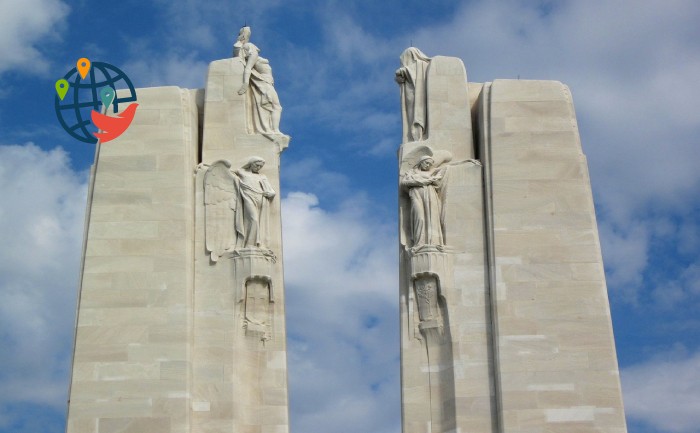
On the front of the base is an impressive composition depicting Canada Bereft, a figure of a young woman mourning the dead. This sculpture, in Allward’s own words, symbolizes “a young nation grieving for its dead.” The position of the figure looking down at the sarcophagus on the steps below conveys a deep sadness and respect for the fallen.
On either side of the staircase are figures of grieving parents, father and mother, who sent their sons off to war. They are separated by steps, symbolizing a nation forever without its sons.
The spirit of Sacrifice is embodied in the sculptural composition depicting a dying warrior passing the sword to his comrades, symbolizing the passing of the baton of struggle to the next generation.
It is also of great significance that the names of 11,285 Canadian soldiers who died in France and have no known burial place are inscribed on the walls of the memorial. These names serve as a reminder of the personal nature of the tragedy of war, that behind the statistics of casualties are real people with names, hopes and unfulfilled dreams.
The memorial as a place of remembrance and a symbol
The unveiling of the memorial and its significance for contemporaries
The Canadian National Memorial in Vimy was inaugurated on July 26, 1936, almost two decades after the battle. It was a grand event that drew some 50,000 people, including more than 6,000 Canadian veterans who traveled specially from Canada on five chartered liners.
The ceremony was presided over by King Edward VIII of Great Britain, who was also King of Canada at the time. French President Albert Lebrun was also present, emphasizing the importance of the event not only for Canada but also for French-Canadian relations.
In his speech, the King noted, “This glorious monument crowning Vimy Hill is henceforth and forever part of Canada…. We erect this memorial to Canadian warriors. It is an inspired expression in stone, carved by a skillful Canadian hand, of Canada’s salute to her fallen sons.”
Canadian Justice Minister Ernest Lapointe, speaking on behalf of Prime Minister Mackenzie King, who was unable to attend, said, “The greatest tribute we could pay to Canadian soldiers is to affirm that their sacrifices helped to introduce into our civilization its highest modern concept – universal peace based on the recognition of the fundamental human right to life and justice.”
For contemporaries, the unveiling of the memorial was a major event symbolizing the recognition of Canada’s contribution to the First World War and the assertion of its status as a nation in its own right on the international stage.
The Memorial in the context of Canadian national identity
Over time, the Canadian National Memorial at Vimy has taken on even greater symbolic significance for Canadian national identity. It became not just a memorial to the dead, but a material embodiment of the emergence of the Canadian nation as a distinct entity in international relations.
Historian Jonathan Vance notes: “Vimy became more than just a battle – it became the myth of the birth of a nation, the story of how Canada entered the war as a colony and emerged from it as a nation.” This narrative is deeply embedded in the Canadian national consciousness, especially after World War II, when Canada was already unquestionably a sovereign nation.
The choice to locate Canada’s main war memorial on Vimy Ridge, rather than on other battlefields where Canadians also displayed heroism, underscores the special place of this battle in shaping national identity. Vimy became a symbol not only of military success but also of national unity as Anglophone and French Canadians fought side by side for common ideals.
In modern Canada, the Vimy Memorial remains a key element of historical memory and national identity. Its image has appeared on Canadian coins and postage stamps, and it is mentioned in school textbooks as a turning point in the country’s history. The day of the Battle of Vimy Ridge (April 9) is observed in Canada as a national day of remembrance.
The memorial’s deep symbolic significance to Canadians is illustrated by the recent controversy surrounding the new design of the Canadian passport, which removed images of national symbols, including the Vimy Memorial. This sparked a heated debate in Parliament and the public, showing how important this symbol remains to the national identity of Canadians in the twenty-first century.
Conservation and restoration of the memorial
Conservation history of the memorial
The conservation history of the Canadian War Memorial at Vimy is closely tied to key events of the twentieth century and reflects both wartime hardship and international solidarity in preserving the memory of the First World War.
From its opening in 1936, the memorial was threatened just a few years later when the Second World War broke out. After the German occupation of France in 1940, there were fears that the Nazis might destroy the memorial as a symbol of Germany’s defeat in the previous war. However, contrary to expectations, the occupation authorities kept the memorial intact. According to some accounts, a German officer even posted a guard of honor at the monument as a tribute to the fallen soldiers. Nevertheless, the memorial suffered damage during the fighting in the liberation of France in 1944.
After the war, a slow restoration of the monument began. In 1947, the Government of Canada provided funds for initial repairs, which included cleaning the sculptures of dirt and repairing the most visible damage.
Periodic maintenance work was carried out on the memorial during the 1960s and 70s, but it gradually became clear that the monument was in need of more serious restoration due to exposure to atmospheric conditions and the natural aging of the materials.
Modern restoration and significance for future generations
In 2001, the Government of Canada announced a major restoration project of the Vimy Memorial at a cost of 30 million Canadian dollars. The main reason for the restoration was the deterioration of the masonry due to water intrusion and freeze-thaw during the winter months.
A particular problem was that the original source of the stone, a quarry on the Croatian island of Brač, had long been inaccessible due to the political situation in Yugoslavia. After the dissolution of the federative Yugoslav state in 1990, the quarry became accessible again, which made it possible to carry out a full restoration of the monument in 2007 using the same material.
The restoration work included cleaning and restoration of 20 sculptures, replacement of damaged stone blocks, restoration of names on the walls of the monument, strengthening of the foundation and improvement of the drainage system. Special care was taken to maintain the authenticity of the memorial and honor Walter Allward’s original intent.
In April 2007, to mark the 90th anniversary of the Battle of Vimy Ridge, the restored memorial was unveiled in the presence of Queen Elizabeth II, Canadian Prime Minister Stephen Harper and French President Jacques Chirac. More than 25,000 people, mostly Canadian schoolchildren and students, attended the ceremony, symbolizing the passing of the memorial to new generations.
A comprehensive management plan was developed to ensure the long-term preservation of the memorial, including regular monitoring of the condition of the stone and sculptures, preventative measures to protect against weathering, and educational programs for visitors. Today, the Vimy Memorial and surrounding area are managed by Veterans Affairs Canada to ensure that this unique memorial is preserved for future generations.
The importance of the memorial to future generations of Canadians cannot be overemphasized. It serves not only as a reminder of the sacrifices of the past, but also as a symbol of national unity and identity, a place where young Canadians can touch the history of their country and realize the high price their predecessors paid for peace and freedom. Each year, thousands of Canadian schoolchildren visit the Memorial as part of educational programs aimed at preserving historical memory and promoting citizenship.
Educational and cultural aspects of the memorial
Interpretive Centre and Educational Programs
To further understanding of the historical significance of the memorial and the Battle of Vimy, the Canadian Interpretive Centre was opened near the memorial in 1992. In 2017, in time for the centennial of the Battle of Vimy Ridge, it was completely modernized and expanded. The new visitor center is a state-of-the-art exhibit area that tells the story of the battle and its significance to Canada through interactive displays, audio-visual presentations and authentic artifacts.
The Centre offers regular tours of the memorial and the surviving trenches, which have been restored to showcase the conditions under which the soldiers fought. Visitors can see a system of trenches and tunnels, underground bunkers and observation posts that give a glimpse of the realities of the 1914-1918 positional warfare.
Special attention is paid to educational programs for young people. Each year thousands of Canadian high school and college students visit the memorial as part of the Battlefields program sponsored by the Government of Canada. Participants not only learn about history, but also participate in remembrance ceremonies, which fosters emotional immersion in the subject matter and fosters a personal connection to the historical events.
“The Vimy Young Guides Program gives Canadian students the opportunity to work as volunteer tour guides at the memorial during the summer months. This allows them to delve deeper into the history of the battle and share their knowledge with visitors from around the world, while developing public speaking and cross-cultural communication skills.
Memorial in Art and Literature
The Canadian National Memorial at Vimy has had a significant impact on Canadian art and literature, becoming a source of inspiration for many creative people seeking to conceptualize the experience of war and its impact on the formation of national identity.
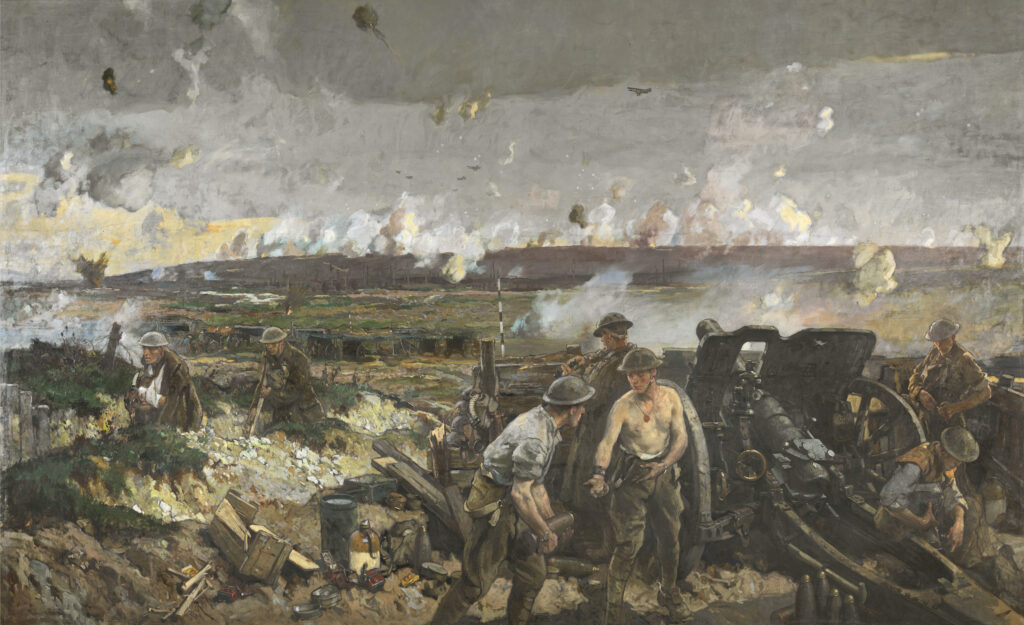
In the visual arts, the memorial has been the focus of many artists. Official Canadian war artists such as Richard Jack and Alfred Bastien depicted the Battle of Vimy Ridge in their paintings, which are now housed in the Canadian War Museum in Ottawa. Contemporary artists continue to turn to the image of the memorial as a symbol of national pride and sorrow. For example, artist Garnet Hazard’s series of works, Shadows of Vimy, uses silhouettes of the memorial to explore themes of collective memory and national identity.
The memorial and the Battle of Vimy Ridge have also been reflected in literature. Jane Urquhart’s novel The Stone Carver (2001) was an important work of fiction in which the Vimy Memorial plays a central role. The novel tells the story of the sculptor (whose prototype was Walter Allward) who creates the memorial and explores themes of memory, grief, and redemption. The book was nominated for the Giller Prize and received widespread critical acclaim, helping to revitalize interest in Allward and his work.
Poets have also addressed the theme of Vimy and the memorial. John McCrae’s poem “In Flanders Fields,” written during the war, although not directly referring to the Battle of Vimy, has become an integral part of the Canadian war poetic tradition. In later years, poets such as Alden Nowlan, Al Purdy, and Margaret Atwood explored the significance of Vimy to Canadian identity in their works.
The Battle of Vimy Ridge and the memorial have also been reflected in the film industry. The documentary Vimy: Birth of a Nation (2007), produced for the 90th anniversary of the battle, was one of the most significant works exploring the historical significance of the battle and its impact on Canadian identity. The film was shown on Canadian television and generated widespread public response, helping to revitalize discussions about the role of military history in national identity.
Musical works have also been inspired by Vimy’s theme. Composer John Estacio created the oratorio Vimy, which premiered in 2017, in time for the centennial of the battle. This work for orchestra, chorus and soloists conveys the drama and emotional depth of the event through musical narrative.
In this way, the memorial and related historical events continue to live on in the Canadian cultural space, enriching national identity and fostering a dialog between past and present.
The Vimy Memorial in the context of international relations
French-Canadian relations: the memorial as a symbol of cooperation
The Canadian National Memorial in Vimy is not only a symbol of Canadian national identity, but also an important element of French-Canadian relations. The very fact that France donated part of its territory for the construction of the memorial shows a deep respect for Canada’s contribution to the liberation of French soil.
In 1922, France donated 107 hectares of land on the Vimy Ridge to Canada for the creation of the memorial. This gesture had not only a practical but also a deeply symbolic meaning: a piece of French land, watered with Canadian blood, was becoming Canadian territory.
The inauguration of the memorial in 1936 was attended by representatives of the highest echelons of government of both countries, which emphasized the importance of this event for bilateral relations. King Edward VIII of Great Britain, acting as King of Canada, and French President Albert Lebrun together honored the fallen, symbolizing the unity of the allies in preserving peace.
The architectural design of the memorial also reflects the theme of French-Canadian unity. Two pylons symbolize Canada and France standing side by side in the struggle for common ideals. One pylon depicts a maple leaf as a symbol of Canada, the other a fleur-de-lis, the symbol of France. It is a visual embodiment of the union of two nations united by a common historical destiny.
For decades, the memorial has remained a symbol of the special relationship between France and Canada. In 2007, the unveiling of the restored memorial for the 90th anniversary of the Battle of Vimy Ridge was attended by Queen Elizabeth II, Canadian Prime Minister Stephen Harper and French President Jacques Chirac, again demonstrating the monument’s importance as a symbol of bilateral relations.
In 2017, for the centenary of the Battle of Vimy Ridge, another significant ceremony was held with representatives from both countries. Prince Charles, representing the British royal family, French President Francois Hollande and Canadian Prime Minister Justin Trudeau jointly honored the memory of the victims, emphasizing the enduring importance of remembering war and preserving peace in today’s world.
Memorial as part of World Heritage
Originally conceived as a memorial to Canadian soldiers, the Vimy Memorial has taken on a broader significance over time, becoming part of the world’s cultural heritage and a symbol of the international peace movement. In 2007, the French government listed the memorial as a site of outstanding historical and artistic value, and in 2017 it was nominated for inscription on the UNESCO World Heritage List as part of the “Burial and Memorial Sites of the First World War (Western Front)” serial nomination.
The memorial’s international significance extends far beyond bilateral French-Canadian relations. It is visited annually by more than 800,000 people from around the world, for whom it has come to symbolize not only the Canadian but also the universal tragedy of the world wars and the hope for a peaceful future.
Remarkably, the memorial retained its integrity even during World War II, when the area was occupied by Nazi Germany. Despite ideological contradictions, the German authorities preserved the monument, recognizing its artistic value and paying tribute to the fallen soldiers. This fact emphasizes the universal humanistic significance of the memorial, transcending national and political boundaries.
In the modern context, the Vimy Memorial has become an important platform for international dialog on peace and reconciliation. International conferences and meetings on the preservation of historical memory and the prevention of armed conflict are held here every year. Representatives of different countries, including former opponents in the world wars, gather at the foot of the memorial to reaffirm their commitment to the ideals of peaceful coexistence.
A special role in the international significance of the memorial is played by educational programs involving students and schoolchildren from different countries. They contribute to the development of a global civic consciousness based on an understanding of the tragic lessons of history and a desire for peaceful resolution of conflicts.
In this way, the Canadian National Memorial in Vimy, while maintaining its primary importance as a symbol of Canadian national identity, has simultaneously become a world heritage site and a platform for international dialog on peace and cooperation.
The Memorial today: tourism and remembrance ceremonies
Visiting the memorial: the tourism experience
Today, the Canadian National Memorial in Vimy is one of the most visited attractions in northern France and an important point on the First World War themed tourism itineraries. It is visited by more than 800,000 people each year, a significant proportion of whom are Canadians, for whom a visit to Vimy has become a pilgrimage of sorts to a place of national remembrance.
A visit to the memorial begins at the Visitor Center, which features state-of-the-art interactive exhibits about the Battle of Vimy Ridge, its historical context and its significance to Canada. Visitors can see authentic wartime artifacts including soldiers’ personal effects, weapons, equipment, photographs and letters. Particularly valuable exhibits include diaries and letters from Canadian soldiers, providing insight into daily life at the front.
Among the main attractions of the memorial are the preserved and partially reconstructed trenches and tunnels, where visitors can see in what conditions the soldiers lived and fought. Tours of the trenches and tunnels are accompanied by guides, many of whom are young Canadian volunteers with specialized training.
Another important element is the preserved landscape of the battle – shell craters overgrown with grass and trees, but still visible on the ground. These battlefield traces, combined with modern information boards, create an immersive historical effect, helping visitors to experience the atmosphere and scale of the battles.
The highlight of the visit is a tour of the memorial itself, a majestic white limestone monument visible from afar. Visitors can read the names of the dead on the walls of the monument, explore the symbolism of the sculptural groups and enjoy a panoramic view of the surrounding area from the top of the hill, which was once a strategically important military position.
Tourist facilities include a parking lot, a café, and a gift store where you can purchase books, postcards, commemorative badges, and other souvenirs related to the memorial and the Battle of Vimy. Many tour companies offer special tours of World War I battlefields, including a visit to Vimy as one of the key points on the route.
It is important to note that the visit to the memorial is organized in such a way as to maintain a balance between tourist interest and respect for the memory of the dead. The entire area of the memorial complex is treated as a war cemetery, which implies appropriate norms of behavior – silence, restraint, and respect for the place of remembrance.
Annual ceremonies and their significance for modern Canada
Each year on April 9, the anniversary of the beginning of the Battle of Vimy Ridge, ceremonies are held at the memorial, attended by Canadian and French officials, veterans, schoolchildren, students and thousands of ordinary Canadians who come from across the country and around the world.
The centerpiece of the ceremony is the memorial service, which includes a moment of silence, the singing of the national anthems of Canada and France, the laying of wreaths at the foot of the monument and the reading of the poem “In Flanders Fields.” An important part of the ritual is also the Last Post ceremony, a traditional military tune in memory of the fallen.
Particularly large-scale events are held in anniversary years. For the centennial of the battle in 2017, a grand ceremony was held with more than 25,000 people in attendance, including the Canadian royal family, Canadian Prime Minister Justin Trudeau and French President Francois Hollande. The event was broadcast live on Canadian television as well as over the internet, allowing millions of people to become virtual participants in the event.
In modern Canada, Vimy Ridge Day (April 9) is celebrated nationally, with ceremonies not only at the memorial in France, but also in various cities across the country. Schools, colleges and universities organize special events to commemorate the date, including exhibitions, lectures, discussions and art projects.
The significance of these ceremonies for contemporary Canada is multifaceted. They serve as a reminder of the sacrifices made by previous generations and promote national unity. In the multicultural and multinational Canadian society of the twenty-first century, the memory of Vimy remains one of the few shared historical narratives that unites English- and French-speaking Canadians, indigenous people and immigrants from around the world.
For younger generations of Canadians, remembrance ceremonies serve as an important educational experience to help them realize their connection to national history and develop a sense of civic responsibility. Many high school and college students are actively involved in preparing for the ceremonies by researching the stories of specific soldiers who wrote letters from the front or by creating art projects on the theme of war and peace.
The ceremonies at the Vimy Memorial also have important diplomatic significance, reaffirming the strong ties between Canada and France and the commitment of both countries to international cooperation and peaceful conflict resolution.
Conclusion: The Vimy Memorial and the Future of National Unity
The Canadian National Memorial in Vimy has, over more than eight decades of its existence, become something much more than just a memorial to fallen soldiers. It has evolved into a multi-layered symbol that unites different aspects of Canadian national identity – historical memory, cultural heritage, international relations and civic values.
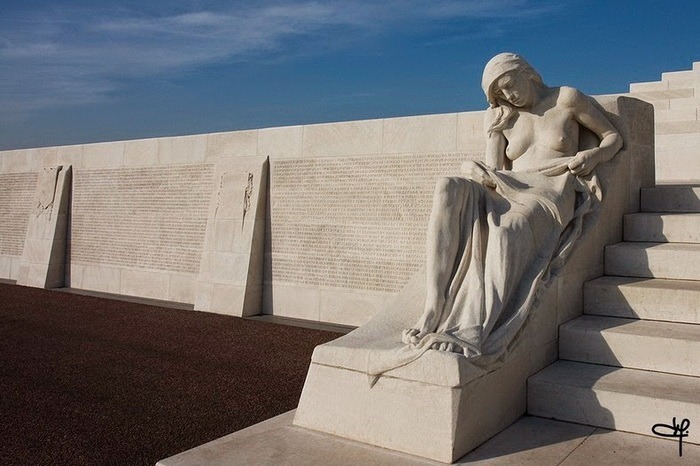
Created to commemorate a specific historical event – the Battle of Vimy Ridge – the memorial has witnessed and participated in the course of history: it has survived the Second World War, the Cold War, the period of intense globalization and the digital revolution. At each of these stages, its symbolic significance has been enriched with new meanings and interpretations.
For contemporary Canada, a multi-ethnic and multicultural nation striving to preserve its unique identity in a globalized world, the Vimy Memorial remains a point of reference, a tangible embodiment of a shared history and common values. In an era when traditional concepts of nation and nationality are being challenged, the memorial offers an inclusive model of national identity based not on ethnic or linguistic commonality, but on shared civic values and historical memory.
The memorial’s significance is especially important to the younger generation of Canadians, many of whom are descendants of immigrants who arrived in the country well after the First and Second World Wars. For them, visiting Vimy – through physical presence or virtual participation in ceremonies – becomes a way of connecting with national history, of accepting it as part of their identity, regardless of their families’ country of origin.
In the context of Franco-Anglophone relations, which have remained complex and sometimes tense throughout Canadian history, the Vimy Memorial acts as a unifying symbol. The Battle of Vimy Ridge was one of the few historical moments when Anglophone and Francophone Canadians acted as one, and this symbolism of unity continues to be relevant.
In the international context, the memorial reaffirms Canada’s status as a nation that has made significant contributions to global history and is committed to the responsibility of peacekeeping and international cooperation. It also serves as a reminder of the need to preserve historical memory as a means of preventing future conflicts.
As for the future, the Vimy Memorial will undoubtedly continue to evolve in its symbolic meaning, adapting to new historical circumstances and public demands. Digital technologies offer new opportunities for virtual access to the memorial and related educational resources, potentially expanding its audience and influence.
At the same time, the physical presence of the memorial – its majestic architecture and sculptural design, its location on the historic battlefield – retains a unique value that cannot be fully conveyed through digital means. It is this combination of the tangible and the symbolic that makes the Vimy Memorial a special place where the past, present and future of the Canadian nation meet in a common space of remembrance and hope.
Thus, the Canadian National Memorial in Vimy, created as a memorial to fallen soldiers, has become a living symbol of national unity, capable of inspiring and uniting Canadians across generations, ethnic and linguistic groups. In the changing world of the 21st century, its importance as an anchor of national identity and a reminder of the shared values for which previous generations have fought and died has only grown. And as the memorial’s white pylons rise above historic Vimy Ridge, they will continue to symbolize not only the tragic past, but also the hope for a united and peaceful future.
Author Information

I’m a journalist specializing in urban issues and city politics in the Vancouver region, which I’ve covered since 1994, and I also have a strong focus on the iGaming industry. In this endlessly changing city, I cover a broad range of issues: from drug policy, bike lanes, billion-dollar development projects, homelessness, and garbage debates, to the rapidly evolving world of online gaming, including regulatory landscapes, technological advancements, and market trends. I write frequently for the Globe and Mail’s B.C. section and Report on Business. From 2008 to 2015, I had a regular column in Vancouver magazine, “Urban Fix,” which apparently resonated with readers so much that it earned me a few regional and national awards.
