
Introduction
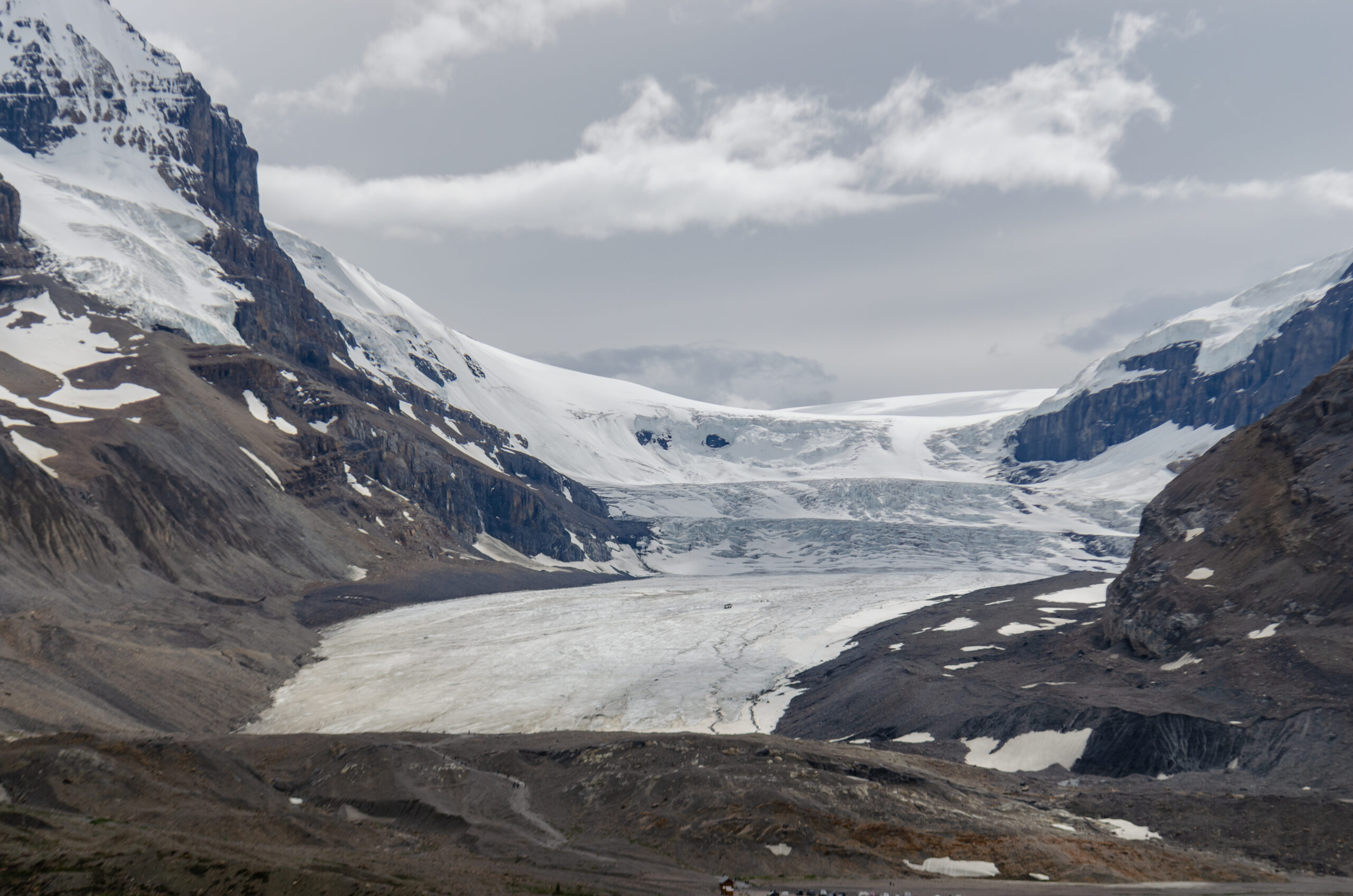
In the heart of the Canadian Rocky Mountains, between Jasper and Banff National Parks, lies a majestic creation of nature – the Athabasca Glacier. This snow-white wonder, formed by millennia of planetary evolution, is one of the six major “fingers” of the famous Columbia Icefield, the largest ice massif in the Rocky Mountains of North America. The history of the Athabasca Glacier dates back to the Great Glaciation, but today it has become a symbol not only of natural majesty, but also of the alarming changes in our planet’s climate.
These days, the Athabasca Glacier is not only a natural phenomenon, but also one of Canada’s most popular tourist attractions. Every year, thousands of travelers from all over the world come to see this icy hulk with their own eyes. However, the glacier has significantly decreased in size over the last century, and if the rate of melting continues, in a few decades only a memory may remain of it. That is why it is so important to understand the uniqueness of this natural object, to realize its importance for the ecosystem of the region and the planet as a whole, and to think about what we can do to preserve natural wonders like it.
Geographic location and characteristics
Athabasca Glacier is located in western Canada, in the province of Alberta, in the territory of Jasper National Park. Its coordinates are 52°11′27″ north latitude and 117°15′19″ west longitude. It is one of the most accessible major glaciers in North America, as its lower part is only a short walk from the Icefields Parkway connecting Banff and Jasper National Parks.
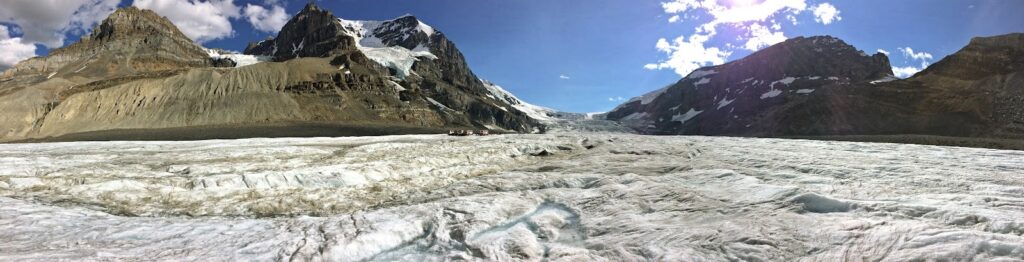
The glacier is about 6 kilometers (3.7 miles) long and has an area of approximately 6 square kilometers (2.3 square miles). The ice varies in thickness from 90 to 300 meters (300-980 feet), making it an impressive natural formation. The glacier descends from the heights of the Columbia Icefield, which straddles the continental divide between the provinces of Alberta and British Columbia.
The Athabasca Glacier is part of the vast Columbia Icefield, which covers an area of about 325 square kilometers. This ice field was formed during the Illinois Period (238,000 to 126,000 BC) and represents the remnant of the oldest ice masses that once covered much of North America.
In addition to Athabasca, the Columbia Icefield feeds seven other major glaciers: Castlegard, Columbia, Dome, Statfield, Saskatchewan, and others. This natural formation plays an important ecological role as a source of water for three ocean basins: the Pacific Ocean (via the Columbia River), the Atlantic Ocean (via the Saskatchewan and Nelson Rivers), and the Arctic Ocean (via the Athabasca and Mackenzie Rivers).
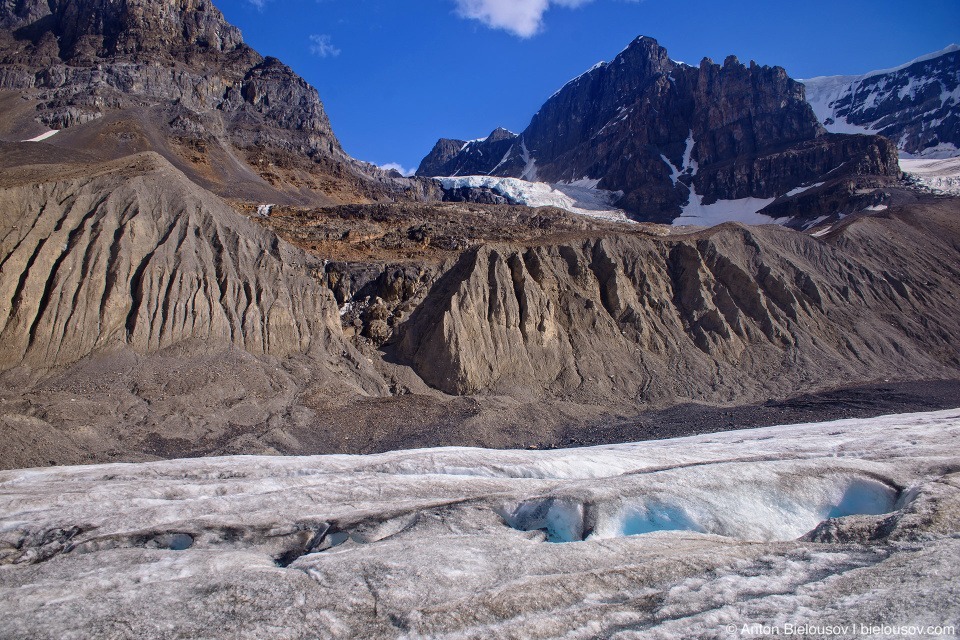
The glacier’s topography is a gradient that is fairly uniform and not too steep, making it relatively accessible for exploration. The upper part of the glacier passes into the ice dome of the Columbia Icefield, and the lower part ends in a terminal moraine, an accumulation of rocks left behind by the glacier as it retreated.
History of formation and discovery
The formation history of Athabasca Glacier is inextricably linked to the geologic history of the Earth and the Rocky Mountain region in particular. The Columbia Icefield, of which the glacier is a part, originated during the Great Glaciation, also known as the Illinois Period, which lasted from approximately 238,000 to 126,000 B.C..
During this period, large areas of North America were covered by an ice sheet, and the present Athabasca Glacier represents only a remnant of those ancient ice masses. The process of glacier formation continued for millennia as a result of snow accumulation and compaction in high mountain areas. Gradually, under its own weight, the snow turned into firn (dense granular snow, a transitional stage between snow and ice) and then into crystalline glacial ice.
The Athabasca Glacier and its surrounding areas became known to Europeans relatively recently. The first documented evidence of exploration of the Columbia Icefield dates back to 1898, when British mountaineers J. Norman Colley and Herman Woolley made the first ascent of one of the neighboring peaks and described the vast ice plateau.
The name “Athabasca” was given to the glacier in honor of the Athabasca River, which originates from the meltwater of this glacier and flows northward to the lake of the same name at a distance of more than 1200 km. The word “Athabasca” itself has origins in the Cree Native American language and translates roughly as “place where there are reeds” or “place where different waters meet”.
In the early 20th century, with the development of tourism in the Canadian Rocky Mountains, the Athabasca Glacier began to attract more and more attention. In 1885, the Glacier Trail (Glacier Trail) was built along the foot of the glacier, which became the predecessor of the modern Icefields Parkway. At that time, the glacier extended much farther into the valley than it does today, reaching where the road now runs.
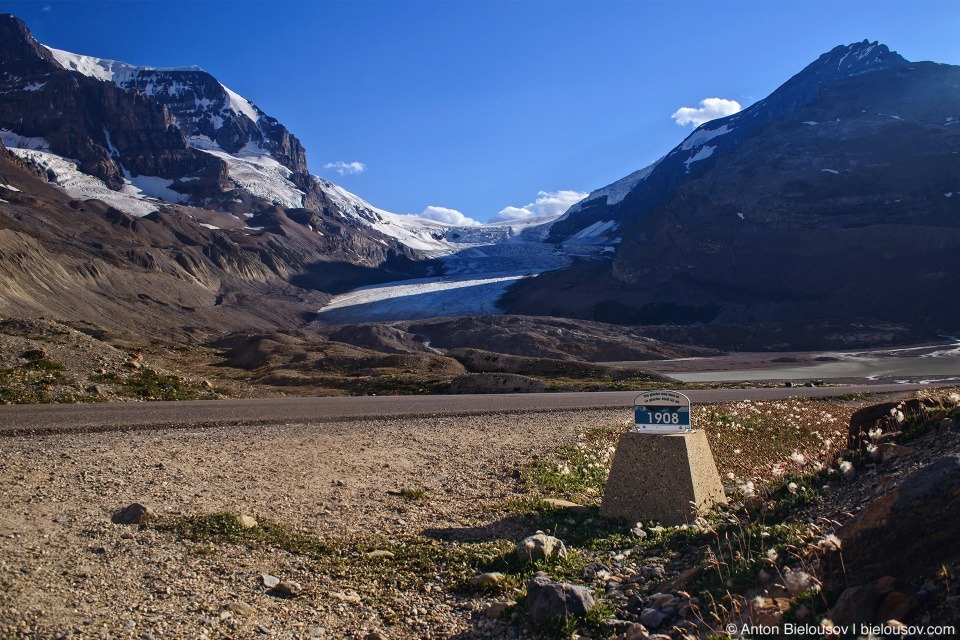
In 1908, a dirt road was built along the foot of the Athabasca Glacier, running much closer to the glacier than the modern highway. Documents and photographs from that time show that the glacier was only a few meters from the road.
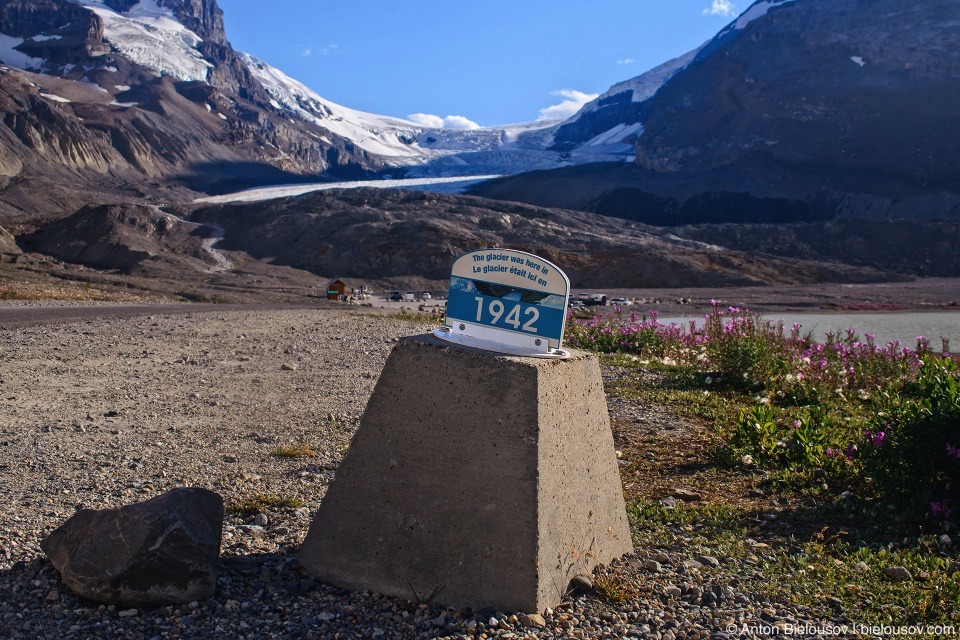
By 1942, a one-lane paved road was built, but by then the glacier had already receded about 200 meters from its position at the beginning of the century. This was the first documented evidence of Athabasca Glacier retreat.
In 1964, the Icefield Discovery Centre (Icefield Discovery Centre) was built opposite the glacier, which became the base for scientific research and tourist development of the glacier. From that moment the active development of tourist infrastructure around the Athabasca Glacier began.
Ecological significance
The ecological significance of the Athabasca Glacier extends far beyond its geographical boundaries. As one of the key elements of the Colombian Icefield, it plays an important role in the hydrological cycle of the region and affects ecosystems located hundreds of kilometers around it.
Water reservoir and source of rivers
One of the most important ecological functions of the Athabasca Glacier is the storage of fresh water and its gradual release into the environment. The glacier’s meltwater feeds the Sanvapta River, which flows into the Athabasca River. This water system extends more than 1,230 kilometers north to Lake Athabasca, and then through other rivers and lakes this water eventually reaches the Arctic Ocean.
The Athabasca Glacier is thus part of the Columbia Icefield, which serves as the source for waterways that flow into three different oceans: the Pacific, Atlantic and Arctic Oceans. This makes the area one of the few places on Earth known as a “hydrologic apex” – the point from which waters diverge to the different ocean basins.
Impact on local ecosystems
The water produced when a glacier melts has special characteristics: it is cold, rich in minerals, and often contains finely ground rocks that the glacier scrapes from its bed. These characteristics create special conditions for the development of unique ecosystems along the rivers fed by the glacier.
In the areas adjacent to the glacier, one can observe a successive change of plant communities from pioneer species, which are the first to inhabit the areas freed from ice, to more complex ecosystems. This makes it possible to study the processes of primary ecological succession – the gradual replacement of one biological community by another.
In the Athabasca River valley, from the glacier itself to the lower reaches of the river, various habitats are formed for many species of animals and plants. These include alpine fireweed, cottongrass and other plants adapted to the harsh conditions of the high mountains and short growing season.
Climate change indicator
The Athabasca Glacier serves as a kind of natural indicator of climate change. The speed and scale of its retreat are directly related to the increase in average temperature in the region. Studying the history of its retreat allows scientists to better understand the dynamics of climate change and its impact on natural systems.
Glacier retreat also provides a unique opportunity to study how ecosystems adapt to changing conditions. As a glacier retreats, new areas of land are released and gradually colonized by plants and animals, demonstrating processes of natural recovery and adaptation.
Geologic agent of landscape change
As an active geologic agent, the Athabasca Glacier continues to shape the surrounding landscape. During its movement, it transports large masses of rock, forms moraines (accumulations of debris), carves valleys, and creates distinctive topography.
The terminal moraine of the Athabasca Glacier, formed by the accumulation of stones and rocks that the glacier moved and deposited during its retreat, is an important geological object that testifies to the glacier’s past activity and climate change.
Open-air science laboratory
Because of its accessibility and documented history of change, Athabasca Glacier serves as a laboratory of sorts for studying glaciological processes, climate change and ecological adaptations. Scientists can observe processes here in real time that may not be available for direct study elsewhere.
Research at Athabasca Glacier is helping scientists make better predictions about future climate change and its impact on water resources, ecosystems, and the human communities that depend on these resources.
Glacier retreat: dramatic changes
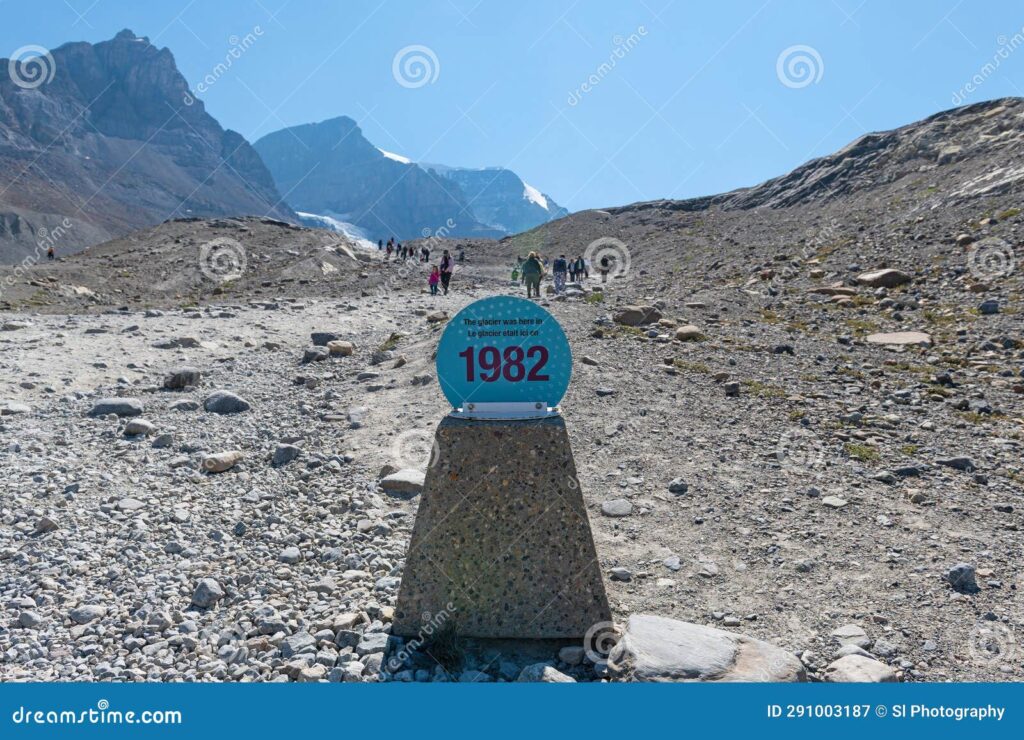
One of the most disturbing aspects of the Athabasca Glacier’s recent history is its rapid retreat, which is becoming a stark illustration of the climate changes underway. Documentary evidence and scientific data paint a dramatic picture of the transformation of this natural feature over the past century and a half.
Chronology of retreat
The history of observing the retreat of the Athabasca Glacier begins in the late nineteenth century. According to historical records and photographs, in 1885, when the first Glacier Trail was laid out, the glacier was reaching where the Icefields Parkway now runs. This means that over the past 135 years the glacier has retreated more than a kilometer.
In the early 20th century, the process of glacier retreat began to be recorded more systematically:
- In 1908, a dirt road ran directly along the foot of the Athabasca Glacier.
- By 1942, the glacier had retreated about 200 meters from its turn-of-the-century position.
- Over the next 40 years (by 1982), the glacier retreated another 700-800 meters.
- Currently, the glacier continues to retreat at a rate of about 5 meters per year.
In total, over the past 125 years, Athabasca Glacier has retreated more than 1.5 kilometers and lost more than half of its volume. This dramatic change is clearly visible from the markers placed along the hiking trail to the glacier, which indicate the position of its front in different years.
Causes of retreat
The main cause of the Athabasca Glacier’s retreat is global warming caused by anthropogenic factors such as greenhouse gas emissions. The increase in the average temperature in the region leads to more intense melting of the glacier in summer and less snow accumulation in winter.
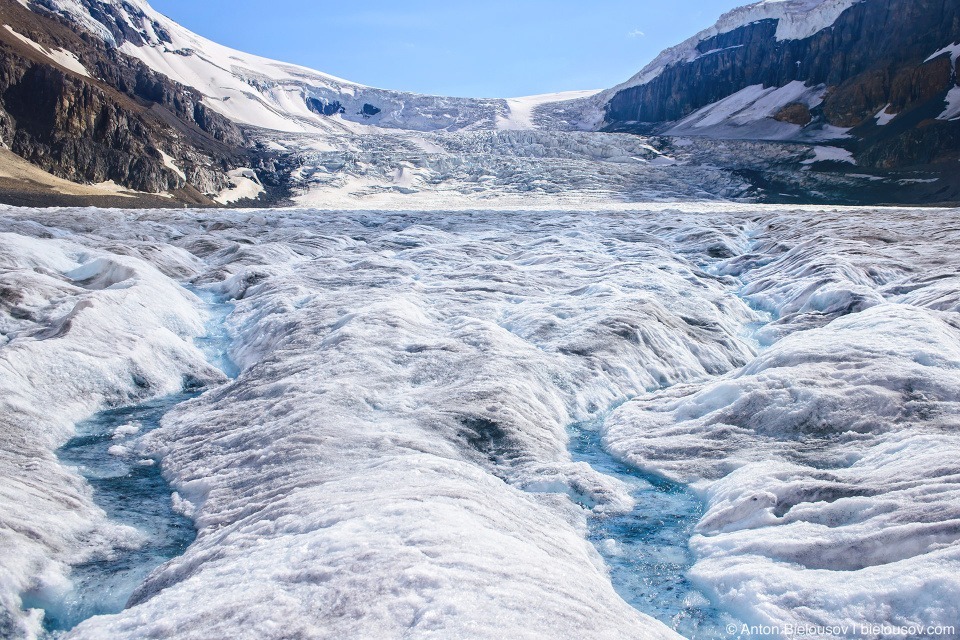
The retreat process is enhanced by so-called positive feedback mechanisms. For example, as a glacier melts, melt lakes and streams form on its surface, which accelerate further melting. In addition, the deposition of dust and other dark particles on the surface of ice reduces its reflectivity (albedo), resulting in greater absorption of solar radiation and thus faster melting.
Visual evidence
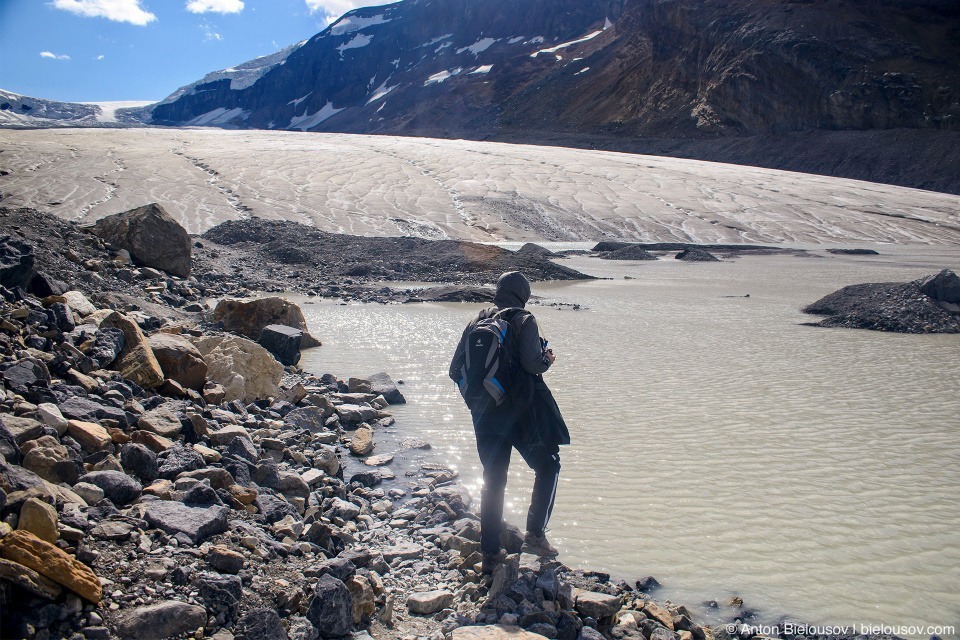
Visual evidence of the glacier’s retreat is the terminal moraine, a cluster of rocks and stones that the glacier moved and left behind during its retreat. Today, visitors must traverse this moraine to reach the edge of the glacier, which is now a considerable distance from the road.
Photographs taken from the same points in different years show the dramatic reduction in the size of the glacier. Particularly noticeable is the change in its frontal part – the edge where the ice contacts the ground. Over the last decades, this edge has not only moved backwards, but also significantly decreased in height.
Potential consequences of total disappearance
Experts estimate that if the current rate of melting continues, the Athabasca Glacier could disappear completely within the next 100 years. This would have serious consequences for regional ecosystems and water resources.
When the glacier disappears completely, a deep trench in the mountain slope between two lateral moraines is likely to form in its place, and a turquoise lake of meltwater may form in front of the former glacier front. Similar landscape changes have already been observed in places where other glaciers have completely melted.
The disappearance of the Athabasca Glacier will change the hydrologic regime of the Athabasca River and all associated water systems. Instead of a constant flow of meltwater from the glacier throughout the year, runoff would become more seasonal and dependent primarily on rainfall and seasonal snowmelt.
In addition, the disappearance of the glacier would mean the loss of an important climate archive. Glacier ice contains information about climatic conditions of past epochs, and when it melts, this information is irretrievably lost.
Indicator of global processes
The situation with the Athabasca Glacier is not a unique case, but rather a reflection of a general trend observed in glaciers around the world. Most mountain glaciers on all continents are experiencing a similar retreat, indicating the global nature of the ongoing climate change.
Scientists view the dynamics of Athabasca Glacier as an important indicator for understanding broader climate processes and predicting future changes. Systematic observations of the glacier help calibrate climate models and improve the accuracy of predictions about future environmental conditions.
Unique features and natural phenomena
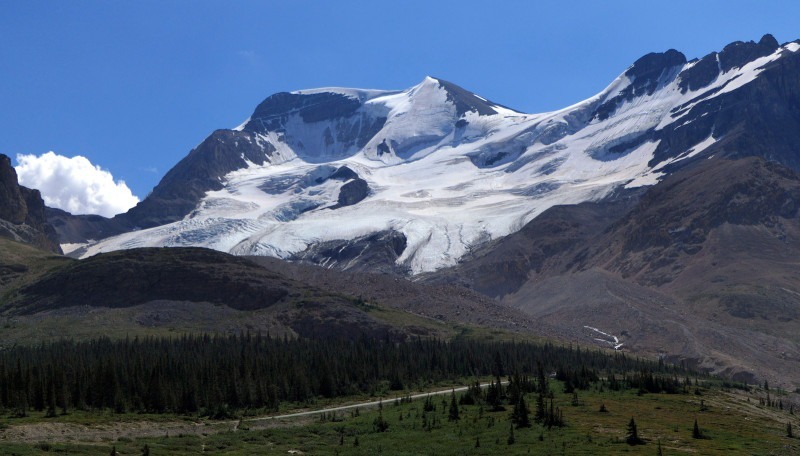
Athabasca Glacier is not just a massive accumulation of ice, but a complex natural system with a number of unique features that make it a particularly valuable object from both a scientific and aesthetic point of view.
Glacial structures and formations
One of the most impressive features of the Athabasca Glacier is the variety of glacial structures observed on its surface. Among them:
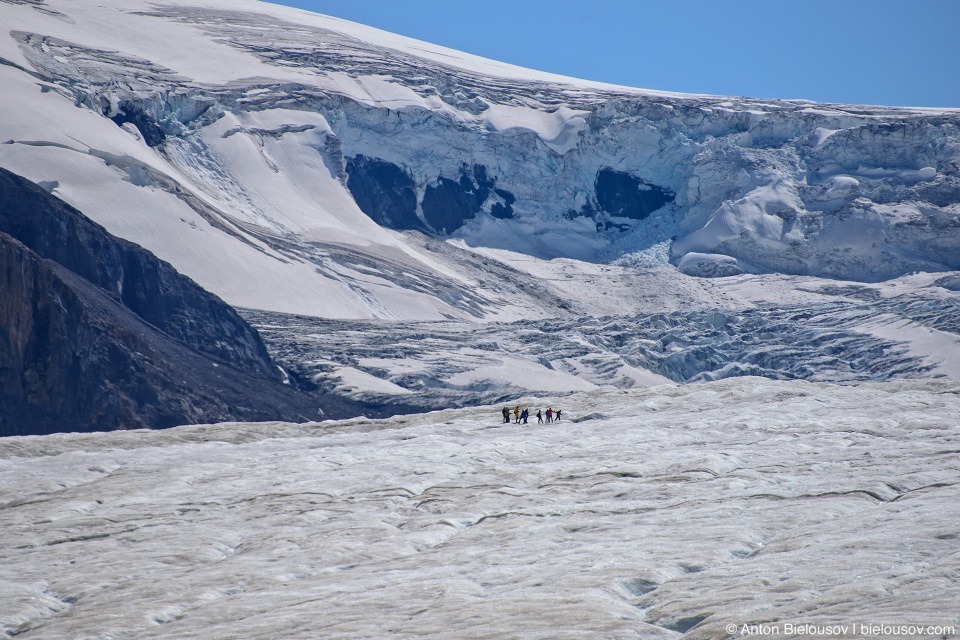
- Glacial crevasses (crévasse): Where the glacier passes through bedrock irregularities or changes its speed, deep crevasses form on its surface. These crevasses can reach depths of several tens of meters and are not only a spectacular sight, but also a serious danger for unprepared tourists.
- Icefall: At the top of the Athabasca Glacier, where it descends from the Columbia Icefield, there is an impressive icefall, a section of sharply steeper ice where the ice breaks into huge blocks and seracs (ice towers). The speed of ice movement in the icefall zone is ten times higher than in the rest of the glacier.
- Surface streams and lakes: During the warm season, a network of melt streams and lakes forms on the surface of the glacier. This system of surface water not only creates amazing visual effects, but also plays an important role in the dynamics of the glacier by accelerating its melting processes.
Optical phenomena
The ice of the Athabasca Glacier has special optical properties that create unique visual effects:
- Turquoise ice color: Pure glacial ice has a characteristic bluish or turquoise hue due to the way ice crystals absorb and scatter light. This color becomes more intense in deep crevasses and in areas of ancient dense ice.
- Sparkling surface: In sunny weather, the glacier surface sparkles and shimmers due to the reflection of sunlight from the many ice crystals. This effect is especially noticeable on areas of fresh snow or firn.
- Refraction of light in ice formations: Within transparent ice structures, light is refracted and creates amazing lighting effects that change depending on the viewing angle and time of day.
Geologic processes and landscape formation
The Athabasca Glacier actively shapes the surrounding landscape, demonstrating a number of interesting geologic processes:
- Glacial grinding and polishing: Moving down the valley, the glacier grinds and polishes the bedrock, creating distinctive smooth surfaces, sometimes with parallel scratches indicating the direction of ice movement.
- Formation of moraines: Various types of moraines – accumulations of rocks transported and deposited by the glacier – can be observed around the glacier. Particularly impressive are the lateral moraines located on both sides of the glacier and the terminal moraine in front of its front.
- Erratic boulders: At some distance from the glacier, one can find huge boulders that have been transported by the glacier considerable distances from their places of origin. These erratic boulders often have a composition different from the local rocks, indicating that they have traveled far.
Interaction with solar radiation
An interesting phenomenon observed on the Athabasca Glacier is the process of differential melting:
- Stone tables: Large rocks on the glacier surface protect the ice beneath them from melting, while the surrounding ice melts faster. As a result, the stones end up on ice pedestals, creating a kind of “glacial tables”.
- Cryoconite pits: In contrast, small dark particles such as dust or fine sand absorb solar radiation and accelerate the melting of the ice beneath them, forming small depressions in the glacier surface.
These and other phenomena make the Athabasca Glacier a unique natural laboratory where one can observe a variety of physical, geological and ecological processes in their natural development.
Tourism and accessibility
Athabasca Glacier is one of the most visited glaciers in North America due to its relative accessibility and developed tourist infrastructure. Hundreds of thousands of tourists from all over the world visit it every year to see this impressive natural phenomenon with their own eyes.
Accessibility and infrastructure
The Athabasca Glacier is located in close proximity to the Icefields Parkway (Highway 93), which connects Banff and Jasper National Parks and is considered one of the most scenic roads in the world. This makes it easily accessible to the general public.
Across from the glacier is the Columbia Icefield Discovery Center, which serves as the main visitor center and starting point for excursions. At the center, visitors can find:
- Informational displays about glaciers and their formation
- Restaurant and café
- Souvenir store
- Ticket offices for various excursions
- Restrooms and other facilities
From the center to the foot of the glacier there is a specially equipped pedestrian path, which passes through the terminal moraine and allows tourists to get closer to the edge of the glacier. Along the trail there are information boards and signs indicating the position of the glacier in different years, which clearly demonstrates the extent of its retreat.
Tourist offerings
There are various options for visitors to explore the glacier:
- Self-guided visit: Tourists can follow the trail to the glacier free of charge and walk to the marked safe zone at the edge of the glacier. This allows a close up view of the glacier, but does not involve going to the surface.
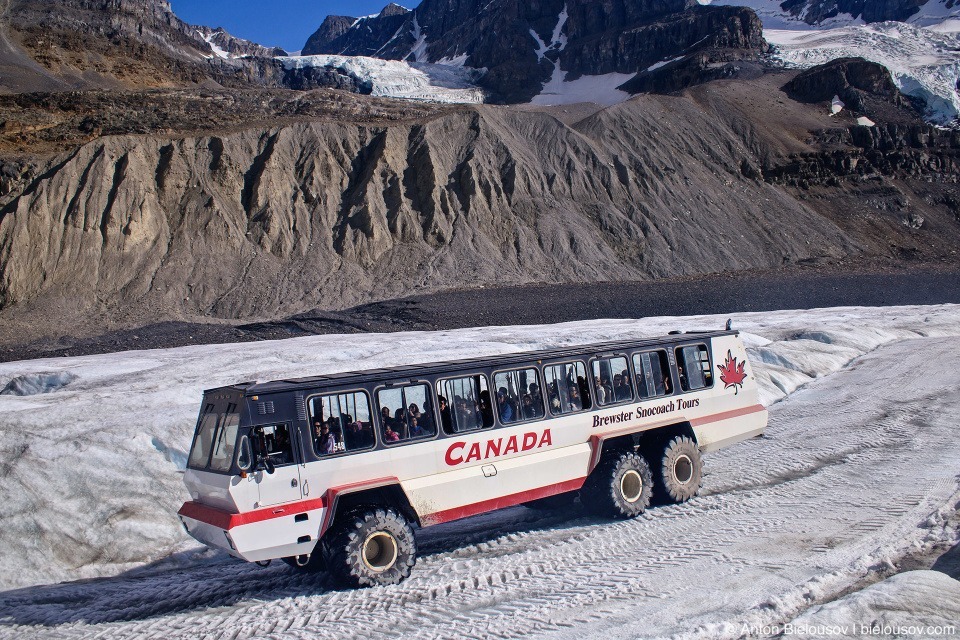
- Excursions by special transportation (Ice Explorer): One of the most popular options is a tour on specially designed off-road buses known as Ice Explorers. These massive six-wheeled vehicles are capable of traversing steep slopes and safely navigating the glacier surface. During the tour, visitors can go out on the glacier in a specially designated area and spend about 15-20 minutes there, which gives them the opportunity to experience the glacier “from the inside”.
- Guided Walking Tours: Guided walking tours with professional guides are available for a more in-depth experience of the glacier. These tours range in duration from a few hours to a full day and allow you to explore different parts of the glacier, including areas inaccessible to regular visitors. Participants are provided with the necessary equipment: ice climbers (crampons), ice axes and, if necessary, safety ropes.
- Ice Climbing: For experienced climbers, the Athabasca Glacier offers ice climbing opportunities of varying difficulty. Local companies offer both instructional courses for beginners and more challenging routes for experienced athletes.
Safety precautions and restrictions
Visiting the Athabasca Glacier carries certain risks, so the administration of Jasper National Park has imposed a number of restrictions and safety rules:
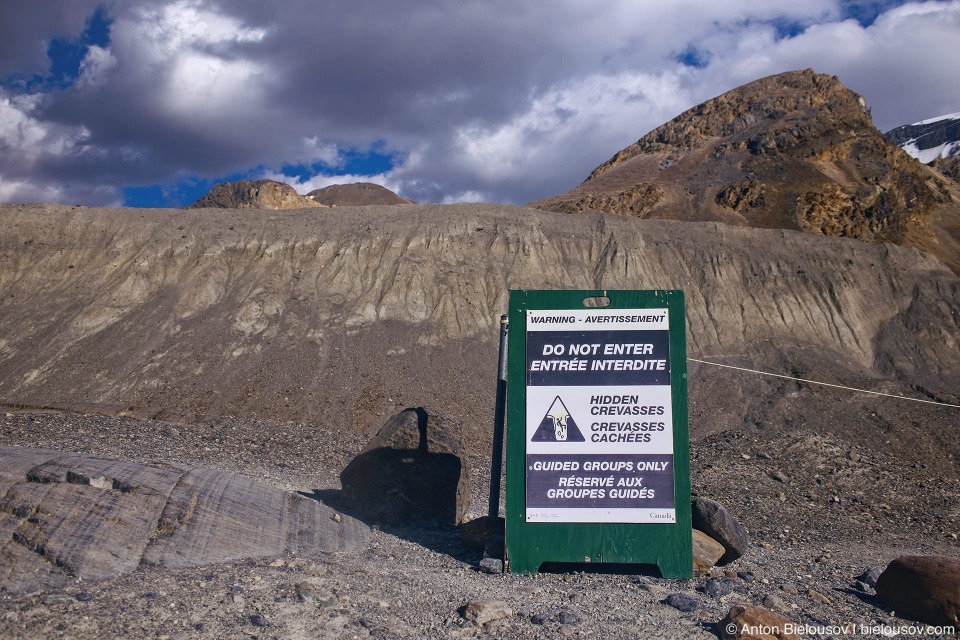
- Restricted access: Independentaccess to the glacier beyond the designated safe zone is not recommended and is actually forbidden without the accompaniment of professional guides. This is due to the presence of hidden crevasses and other hazards that may not be visible to the inexperienced eye.
- Warning signs: There are numerous warning signs along the trail and around the safe zone, informing you of potential hazards and reminding you to respect the boundaries of the safe zone.
- Recommended equipment: Even for a simple visit to the edge of the glacier it is recommended to have suitable shoes with good traction, warm clothing (even in the summer months) and sunglasses, as the reflection of the sun from the icy surface can be very intense.
- Seasonal Restrictions: the Icefield Research Center and some travel offerings are only available during the summer season, roughly mid-April to mid-October. During winter, access to the glacier may be limited due to weather conditions and increased risks.
Impact of tourism on the glacier
Mass tourism has some impact on the glacier and the environment:
- Physical impact: The regular movement of heavy buses on the glacier surface can accelerate its melting and change the microrelief of the surface.
- Pollution: Despite strict litter regulations, some pollution of the area is inevitable. Ice Explorer diesel exhaust also contributes to air pollution and to the deposition of soot particles on the glacier surface, which may accelerate its melting.
- Infrastructure pressure: The construction and maintenance of tourist infrastructure such as parking lots, buildings and roads puts pressure on the environment.
- Educational aspect: On the other hand, tourism also has a positive effect – it raises public awareness of glaciers, their importance and the problems associated with climate change. Many visitors, after seeing visual evidence of glacier retreat, begin to take the issue of global warming more seriously.
Recommendations for visitors
For the most complete and responsible introduction to Athabasca Glacier, it is recommended:
- Plan the visit in advance: Especially during the high tourist season (July-August) book excursions in advance to avoid disappointment.
- Choose the right time: Visit the glacier early in the morning or in the evening, when there are fewer tourists and the lighting creates particularly beautiful effects on the ice surface.
- Dress appropriately: Even in the summer months, it can be significantly colder on the glacier than in the valleys, and the weather can change quickly. Layered clothing, a waterproof jacket, good shoes, a hat and sunglasses are the bare minimum required.
- Follow the rules: Strictly follow the park service’s directions and recommendations, and do not go beyond authorized areas without being accompanied by professional guides.
- Minimize your impact: Follow the “leave no trace” principle – take all trash with you, do not pick up or move natural objects, and do not build stone pyramids (inukshuki) out of rocks.
Scientific research and monitoring
The Athabasca Glacier, due to its accessibility and documented history of change, has become an important site for scientific research in glaciology, climatology, and ecology. Long-term observations of this glacier provide valuable data for understanding climate change processes and their impacts.
Research and monitoring methods
Scientists use a variety of methods to study Athabasca Glacier and monitor its dynamics:
- Ground-based measurements: Regular field studies include measuring the position of the glacier front, its thickness, and its speed of movement. Geodetic instruments, radars that penetrate through the ice, and other specialized instruments are used for this purpose.
- Remote sensing: Satellite imagery and aerial photography can track changes in glacier area and volume over the long term. Modern technologies such as LIDAR (light detection and ranging) provide highly accurate three-dimensional models of the glacier surface.
- Hydrological observations: Measurements of meltwater flow and its chemical composition provide information on the rate of glacier melt and the processes occurring within and beneath the glacier.
- Meteorological observations: Permanent meteorological stations in the glacier area record temperature, precipitation, wind speed and other climatic parameters, making it possible to relate glacier changes to meteorological conditions.
- Glacial cores: Although Athabasca Glacier is not an ideal site for deep drilling due to its relatively small thickness, analyzing ice cores from suitable sites can provide data on atmospheric composition and climatic conditions of past epochs.
Key scientific discoveries
Studies of the Athabasca Glacier and Columbia Icefield have made significant contributions to our understanding of glacial processes and climate change:
- Rate of retreat: The documented history of Athabasca Glacier retreat shows an acceleration of this process during the second half of the 20th and early 21st centuries, which correlates with global temperature increases over the same period.
- Hydrological regime: Studies have shown that maximum meltwater runoff does not occur on the hottest days, but when high temperatures are combined with rain, resulting in increased surface melting and release of water stored within the glacier.
- Ecological Succession: Observations of areas freed from glacier cover have provided a deeper understanding of the processes of primary ecological succession – how life gradually colonizes new land, starting with pioneer species of lichens and mosses and gradually progressing to more complex plant communities.
- Mechanisms of glacier movement: Measurements of glacier movement rates at different sites and in different seasons have helped to better understand the mechanisms of glacial movement and the factors that influence it, such as subglacial melting, the amount of water on the glacier bed, and the slope of the underlying surface.
Projections of future development
Based on years of observations and current climate models, scientists are making predictions about the future of Athabasca Glacier:
- Continued retreat: If current trends of increasing global temperatures continue, the glacier is expected to continue to retreat at an increasing rate.
- Changing hydrologic regime: As the glacier volume decreases, the flow regime of rivers fed by its meltwater will change. Peak flows are expected to shift to earlier in the year and decrease in duration.
- Potential extinction: Some models predict that the Athabasca Glacier could disappear completely within the next 100 years if current melt rates continue.
- Ecosystem implications: The glacier’s disappearance would have cascading effects on the ecosystems that depend on its meltwater, including changes in the species composition of plants and animals in the region.
International cooperation
Studies of the Athabasca Glacier and the Columbia Icefield often take place as part of international scientific programs such as:
- World Glacier Monitoring Service (WGMS): An organization that collects standardized data on glacier fluctuations worldwide.
- International Association of Cryospheric Sciences (IACS): Promotes the coordination of research on various aspects of the cryosphere, including glaciers.
- High-Country Climate Project (HCCP): Focuses on studying the effects of climate change on high mountain regions, including glaciers.
This international effort compares the dynamics of Athabasca Glacier with other glaciers around the world and integrates the findings into global climate models.
Impact of climate change on Athabasca Glacier
Climate change is the primary driver of the current dynamics of Athabasca Glacier. Global warming is having a complex and dramatic impact on this glacier, as it is on most glaciers around the world.
Direct consequences of rising temperatures
- Increasedmelting: Increased average annual temperatures in the Rocky Mountain region result in more intense glacier melting over a longer period of the year. The increase in the number of days with positive air temperatures is especially noticeable during spring and fall.
- Reduced accumulation period: Shorter and warmer winters mean a shorter period when snow accumulates on the glacier. In addition, some winter precipitation falls as rain rather than snow, which does not contribute to glacier replenishment.
- Change in mass balance: As a result of the above processes, the balance between snow accumulation in winter and melting in summer is disturbed. When melting exceeds accumulation, a negative mass balance occurs, leading to glacier retreat.
Mechanisms amplifying the effect
Several mechanisms amplify the effect of warming on glacier melt rates:
- Albedo effect: As a glacier melts, its surface becomes dirtier due to the accumulation of dust and small rocks. A darker surface absorbs more solar radiation, which speeds up melting. This creates a positive feedback: the more a glacier melts, the darker its surface becomes, and the faster it continues to melt.
- Surface meltwater: During warm periods, streams and lakes of meltwater form on the surface of a glacier. This water can penetrate cracks and reach the base of the glacier, lubricating its contact with the bedrock and accelerating the glacier’s movement, which in turn can cause it to break up more rapidly.
- Thermal effect of rain: Summer rains bring warm water to the glacier surface, which promotes melting. Each gram of rainwater, when cooled to 0°C, generates enough heat to melt a significant amount of ice.
- Change in surface elevation: As it melts, the surface of the glacier lowers, bringing it into warmer layers of the atmosphere. This creates another positive feedback that accelerates melting.
Comparison with historical data
A comparison of current observations of Athabasca Glacier with historical data shows a dramatic acceleration of retreat:
- Historical rates: For most of history since the end of the Little Ice Age (since about 1850), Athabasca Glacier has been retreating at a rate of about 10 meters per year.
- Current rate: In recent decades, the rate of retreat has increased to 15-20 meters per year, and in some years has reached 30 meters.
- Glacier thinning: In addition to the front retreat, there is significant thinning of the glacier. According to some estimates, its thickness is decreasing by 5 meters per year, further accelerating its degradation.
Future projections in the context of different climate change scenarios
The future of the Athabasca Glacier will depend largely on global efforts to reduce greenhouse gas emissions and mitigate climate change:
- Business-as-usual scenario: If greenhouse gas emissions continue to increase at current rates, it is projected that the Athabasca Glacier could disappear completely by 2100 or even sooner.
- Moderate Emissions Reduction Scenario: With moderate efforts to reduce greenhouse gas emissions, the glacier will still continue to retreat, but perhaps a small portion of it will remain by the end of the century.
- Aggressive abatement scenario: Even if greenhouse gas emissions are reduced as much as possible and the Paris Agreement targets of limiting global warming to 1.5-2°C are met, the Athabasca Glacier will still lose a significant portion of its mass. However, under this scenario, there is a chance that it will not disappear completely.
Global context
The Athabasca Glacier situation is part of a global trend of glacier shrinkage:
- Global statistics: According to the World Glacier Monitoring Service, more than 90% of the world’s glaciers are shrinking, and this decline has accelerated over the last 30 years.
- Parallel Processes: Similar retreat processes are observed for most mountain glaciers in the Alps, Himalayas, Andes, Alaska, and other mountain systems around the world.
- The canary in the coal mine: Glaciers are often called the “canary in the coal mine” of climate change – they are the most sensitive to temperature changes and the first to show a response to global warming.
Changes in the Athabasca Glacier are not just a localized phenomenon, but a reflection of global climate change that has far-reaching implications for ecology, water resources, global ocean levels, and human communities around the world.
Conservation and adaptation measures
While it is not possible to completely prevent the retreat of the Athabasca Glacier without a fundamental change in global climate policy, a number of measures can help slow the process and adapt to the changes that are occurring.
Local protective measures
- Restricting access: Strict regulation of tourist activity on the glacier helps minimize direct anthropogenic impacts. Established routes and a ban on unguided, self-guided travel on the glacier reduce the risk of damage to the glacier surface.
- Sustainable tourism: The introduction of moreenvironmentally friendly vehicles for glacier excursions, such as electric or hybrid Ice Explorers instead of diesel-powered vehicles, can reduce carbon dioxide emissions and soot pollution on the glacier surface.
- Monitoring and research: Continuous scientific monitoring of glacier conditions allows for a better understanding of glacier change processes and the development of more effective adaptation strategies.
- Educational Programs: Informing visitors about changes and their causes through information booths, tours, and educational programs at the Columbia Icefield Center increases public awareness of climate change.
Regional Adaptation Measures
- Water management planning: Developing water management strategies that take into account projected reductions in glacier runoff helps ensure water security for water-dependent communities and ecosystems.
- Protecting biodiversity: Establishing ecological corridors and protected areas that allow plant and animal species to migrate to more suitable altitudes or to other climatic zones as conditions change.
- Economic diversification: Developing alternative forms of tourism not directly dependent on the glacier, such as eco-tourism, cultural tourism, wildlife watching, helps local economies adapt to inevitable changes.
Global responses to climate change
- Reducing greenhouse gas emissions: The most effective measure to conserve the Athabasca Glacier and other glaciers around the world is a global reduction in greenhouse gas emissions in line with the goals of the Paris Agreement.
- Transition to renewable energy: Active development of solar, wind, hydro and other renewable energy sources is helping to reduce dependence on fossil fuels and CO2 emissions.
- Energy efficiency: The introduction of energy-saving technologies in industry, construction and transportation reduces overall energy consumption and, consequently, greenhouse gas emissions.
- International cooperation: Strengthening international cooperation on climate policy and technology exchange allows coordinated efforts between countries and greater results.
Education and awareness raising
- Interpretation programs: Developing more in-depth and informative programs for visitors to the glacier, explaining not only its natural features but also the causes and consequences of its retreat.
- School programs: Incorporating information about Athabasca Glacier and climate change into educational programs in schools and universities, especially in Canada.
- Media Campaigns: Use traditional and new media to disseminate information about the glacier and the need for action on climate change.
- Citizen Science: Engaging the public in citizen science projects, such as photographing the glacier from specific locations to document its changes over time.
Research and Innovation
- Future Modeling: Developing more accurate models to predict glacier changes and their effects on the hydrologic regime and ecosystems of the region.
- Glacier conservation technologies: Research and possible application of experimental glacier conservation technologies, such as covering parts of a glacier with protective materials to reduce melting or creating artificial snow to increase albedo.
- Alternative Water Sources: Investigate the development of alternative water sources for regions that may experience reduced runoff due to glacier shrinkage in the future.
- Documenting Change: Comprehensive documentation of the glacier’s current status and changes through photographs, 3-D scanning, and other methods creates an important archive for future generations of researchers and the public.
While it is unlikely to completely halt the retreat of the Athabasca Glacier in the near future, a combination of local protection measures, regional adaptation, and global climate change mitigation efforts can help slow the process and minimize its negative impacts on the ecosystems and human communities that depend on the glacier’s waters.
Conclusion
The Athabasca Glacier is much more than just an impressive natural landmark in the heart of the Canadian Rocky Mountains. It is a living testament to the geologic history of our planet, a water reservoir that feeds entire ecosystems, and at the same time, a sad indicator of ongoing climate change.
The history of this amazing glacier spans millennia: from its formation during the Great Glaciation to the present day, when it is retreating at an ever-increasing rate. Over the past 125 years, Athabasca Glacier has lost more than half of its volume and retreated more than 1.5 kilometers. If current trends continue, there is a risk that in 100 years there may be nothing left of it but memories and photographs.
The dramatic changes taking place with the Athabasca Glacier reflect a broader global picture. Glaciers around the world are retreating at an unprecedented rate, providing clear evidence of the impact of human activity on our planet’s climate. Increased concentrations of greenhouse gases in the atmosphere caused by the burning of fossil fuels, deforestation and other human activities have increased global temperatures, directly impacting glaciers, including Athabasca.
That said, the Athabasca Glacier is not only a problem, but an opportunity. Because of its accessibility, it offers a unique chance for millions of people to see the effects of climate change with their own eyes, which can be a powerful catalyst for changing societal attitudes. Each visitor who sees markers of the glacier’s past positions and realizes the scale of its retreat
Author Information

I’m a journalist specializing in urban issues and city politics in the Vancouver region, which I’ve covered since 1994, and I also have a strong focus on the iGaming industry. In this endlessly changing city, I cover a broad range of issues: from drug policy, bike lanes, billion-dollar development projects, homelessness, and garbage debates, to the rapidly evolving world of online gaming, including regulatory landscapes, technological advancements, and market trends. I write frequently for the Globe and Mail’s B.C. section and Report on Business. From 2008 to 2015, I had a regular column in Vancouver magazine, “Urban Fix,” which apparently resonated with readers so much that it earned me a few regional and national awards.
